Your thoughts and the NRSC

An ad from the National Republican Senatorial Committee showed up in my GMail this week, asking me to take a survey.  The survey was pretty basic – asking which issues I care about, and things like that.  But with unofficial Campaign Kickoff Weekend just a week away, it’s a good idea.

The NRSC has been taking some flack this week, but this is a pretty good idea – and not just because surveys and petitions make it easier to capture my email address and information.  Even better, it follows a good pattern – between this, America Speaking Out, and YouCut, there’s a consistent pattern of engagement with voters and activists.  That outreach in the context of the NRSC survey will help them craft communication that speaks a bit more directly to me when they follow up.

If you’re an optimist, it’s about connecting with the voters; if you’re a cynic, it’s about refining strategy so match talking points with the things people actually care about.  Either way, it’s a good strategy.

Better yard signs? We have the technology

Supporters love yard signs.  Not only is it an easy way to demonstrate support for a candidate, it also offers an unofficial measure of how a campaign is doing.  Driving through a neighborhood amid an ocean of your favored candidate’s name is a big morale builder.

Political activists hate yard signs.  They’re expensive, and a volunteer sticking a signpost in the ground is generally not a volunteer walking through a precinct and talking to his or her friends and neighbors.  To that point, Alex Lundry has a great post about the utility of location-based apps, and mentions how campaigns may be able to use location-based services to give their yard signs greater impact.

A Spanish company, whimsically called Macanudos, is going one better.  They’re working on creating a quick-response (QR) code technology that would allow users to scan images and instantly “like” something.  These QR codes would operate like bar codes, and if they’re on a lawn sign, someone walking down the street could immediately like a candidate with a smartphone.

Of course, Facebook followers are like lawn signs: they both provide a nice stat that is, without further action, ultimately meaningless.  But what happens if we mash up Lundry’s idea for incorporating location-based services with Macanudo’s ability to instantly scan-like something?  Campaigns might then be able to figure out roughly where the scan-likes were coming from and give the list to the appropriate precinct captains, who could then in turn follow up with the individual voter.

Creepy?  Maybe a little.  But hey, you wanted yard signs…

A quarter million doesn’t go as far as it used to

Rand Paul’s $250,000 money bomb is being treated like a dud for failing to meet the lofty $400,000 goal the campaign set for it.  For a Kentucky Senate race, a cool quarter mil is far from chump change, but the dour coverage shows the value of managed expectations in setting benchmarks for online metrics.

Paul inherited from his father a reputation for both staunch libertarianism and savvy online organizing, which make his swings-and-misses at online fundraising and Facebook recruitment much more pronounced.  But Paul isn’t the only one who falls into the trap of easy metrics: dollars raised online, Facebook “likes”, Twitter follower counts, and other obvious numbers are easy to understand, so issue and candidate campaigns alike will use them as benchmarks for impact.

Two problems stem from this.  First, metrics which are easy to understand are not always easy to obtain.  Second, having big numbers doesn’t always translate to big impact.  Having 100,000 Facebook followers who don’t vote is just like having 100 Facebook followers who don’t vote.  Further, there comes a time when a campaign must balance the effort of recruitment with the reality of mobilization.

In the particular case of the campaign’s recent online fundraising attempt, Rand’s supporters may be suffering from money bomb fatigue, since the campaign has used the tactic regularly.  They might be feeling the pinch of a tough economy, and giving $25 where they would have given $50.  But none of that would be in the discussion if, at the outset, the campaign had set a reasonable benchmark for dollars.  There are plenty of completely legitimate explanations for why Paul raised “only” $250,000 – but what really requires explanation is the original expectation for $400,000.

New Diggs

Digg got a lot more relevant after announcing upgrades that make it a true social news service this week.

The old Digg was pretty straightforward: people submit stories, everyone votes, the top links appear on the home page and drive thousands of hits worth of traffic.  The problem is that the top stories for one user are the top stories for every user – and means that the site experience is a reflection of the aggregated community, rather than a user.

Breaking into a system like that means joining with like-minded users to promote content more favorable to your side.  Alternet called that “censorship” a few weeks back, but is really just a form of political organizing.  It was an attracting but ultimately useless expenditure of time; while Digg could drive traffic, it’s probably not going to be an important front in the war on ideas.

A more user-oriented model downplays the need for such a strategy (while promoting further social engagement) because the front page is no longer the Holy Grail.  It opens up the possibility of niche communities.  In politics and advocacy circles, it means you no longer need to have a high-profile race for Digg to be a viable part of your social strategy.

Smart phone strategy

With Facebook announcing its Places geo-networking service – and with it, countless opportunities for social networking gone terribly wrong – it’s tempting to keep the discussion going about how campaigns can use location-based networks.  But it’s worth noting that using these networks and applications is part of a much bigger strategy – reaching voters on their mobile phone.

A friend who runs a political text message contact/mobile marketing technology shop recently pointed out that only a handful of the top targeted Senate races have texting strategies.  This is amazing considering how direct and effective the mobile phone is in terms of reaching someone:

Scott Goodstein ran Obama’s mobile communications campaign operations. He  said, “262 million Americans are using mobile phones. That’s roughly 84% of the total population… It’s the only device that’s truly with people for 15 to 24 hours a day.”

Another plus: mobile is a spam-free zone. One has to opt-in to receive texts, and a whopping 92% of  text messages are read by the recipient.

(Via TechRepublican.)

Location-based engagement and smartphone apps are great, but at the end of the day they are part of a bigger picture: getting into that little gizmo that just about everyone carries around almost every waking hour.

Location based social networks and the 2010 campaign

As discussed previously, no one is quite sure what to make of location-based networks yet – to the point where Christopher Walling of Project Virginia makes a compelling case that such technology won’t be impactful until at least 2012:

Not only are campaigns unable to reach a significant amount of voters, but I also don’t see using an LBSN [location-based social network] to disclose your candidate’s location as an overly effective tactic.  Most of the venues that candidates will “check-in” at are campaign events or fundraisers, which most would expect them to attend anyway.  If candidates choose to “check-in” at more “off-the-radar” locations, then they are essentially giving political trackers and their opponents an upper-hand, (don’t forget this is the year of the tracker) which could lead to more unsavory “gotcha” moments.

Not only is Walling right on about the time frame, he’s also right on about the concept of candidates checking in being kind of dumb – thought not because of the army of interns on both sides with flip video cameras and attitude problems.

Social networks involve two-way communication rather than one-way broadcast communication.  That’s why good online strategists look for opportunities to engage with supporters, rather than simply building giant email lists.  The bottom line is that few voters give a crap where a candidate is.

On the other hand, an activist may want everyone to know that he or she just checked into Campaign HQ to stuff envelopes for three hours; or they may want to know where polling places are.  If they have three hours to kill on a weekend, they may want to know if there’s a neighborhood nearby where no one has gotten around to knocking on doors.

In other words,it isn’t important for the candidate to be active for a campaign to get a lot out of a location-based social network; but as Walling mentions early on in his post, the supporters sure have to be.

Is Maxine Waters about to be James O’Keefe’s next YouTube star?

Mr. ACORN pimp himself, James O’Keefe, announced via Twitter today that Rep. Maxine Waters would be the subject of his next series of videos.  Here’s the preview:

Two things are evident: O’Keefe still understands the power of online video, and he still understands the power of timing.

The ethics charges flying around various Democrats are starting to look like a trend – much like Republican scandals leading up to the 2006 election painted the picture of a power-happy party inviting a rude awakening at the hands of voters.  Getting Waters on camera in a sting operation like this could make the ethics violations very real to voter and underscore the broken promises of Democratic gains in 2006 and 2008.

But on top of that, you can’t say enough about O’Keefe’s media-savvy release strategy, either.

By releasing a teaser, O’Keefe capitalizes on this week’s news cycle about Waters and her ethics charges.  After controversy surrounding his presence in a Senate office earlier this year (and the storm surrounding his associate Andrew Breitbart’s role in the Shirley Sherrod affair), he can expect that this initial release will lead to a round of denouncement from left-leaning talking heads; for a while the story will be that James O’Keefe has a Waters video.  The Congresswoman’s office will likely be asked to comment; maybe she’ll even say something embarrassing and unwittingly drum up more coverage.

True, O’Keefe could have gotten just as much coverage this week by releasing a completed video.  But what about next week?  This strategy allows O’Keefe, after the initial frenzy, to drop a second video and get another round of coverage.  And, the vile and hatred he receives from the left this week may make the release of the full video that much more newsworthy.

If it sounds familiar, it should – it’s exactly how O’Keefe and Breitbart set up ACORN to take itself down.

Timing made the HOPA hoax a win

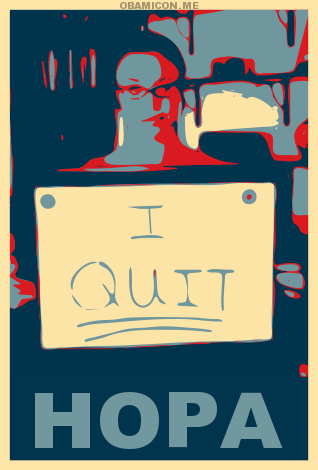
Yesterday, the story of a young go-getter who quit her job via a series of dry-erase board messages due her boss’s sexual harassment burned up the internets.  The girl was dubbed “HOPA” (after her boss’s mistaken acronym for “hot piece of ass”) or “Jenny DryErase” by supportive Facebook followers and commenters.

Today, the story was revealed to be false.  Yet it is still an excellent career move for an aspiring actress and an aspiring comedy website – and illustrates the value of timing in capturing the short attention span of folks online.

The original post, on comedy site The Chive, was set up to go viral for a couple reasons.  First, the act of quitting a job and metaphorically burning the place on your way out Jerry Maguire-style isn’t completely out of left field; even doing it through a variety of emailed photos isn’t even that out there.  It’s her signs and her emotive facial expressions that makes the user laugh.  Second, and more important, the girl’s story works equally well if it’s true or not.  So it wasn’t unbelievable, and investing in the story didn’t mean believing it was true – creating a low barrier of entry.  The stage is set.

But as with all comedy, timing is everything.  The Chive struck gold by releasing the pictures on the same day that an airline steward became an international folk hero for leaving his job down the escape chute, a beer in each hand.  profanity-laced goodbye to his own job, so quitting was in the news.  They couldn’t control the news cycle, but it worked to their favor.

What they did right on their own, however, was debunk the story of HOPA girl the day after attention peaked.  Announcing the hoax in a month, or even in a week, would have meant reaching people well after they had forgotten the Jenny DryErase post and moved onto the next Hitler/Downfall parody.   In other words, it would have been irrelevant, and there would be no lasting benefit.

The real HOPA girl, actress Elyse Porterfield, has her name everywhere; people who might be in a position to help her career know now that she can pull off a pretty good photo shoot. The Chive has the added web traffic and the street cred with that comes with manipulating web audiences into taking a hoax viral.  Advertisers like sites that can, occasionally, draw big numbers for a few days.

The tactic of a fake viral picture isn’t really translatable to campaigns, which have to be somewhat transparent in their messaging.  But it is important to understand how fast online communications work.  Windows of opportunity aren’t open wide and they aren’t open for long.

Grading the new new GOP.com

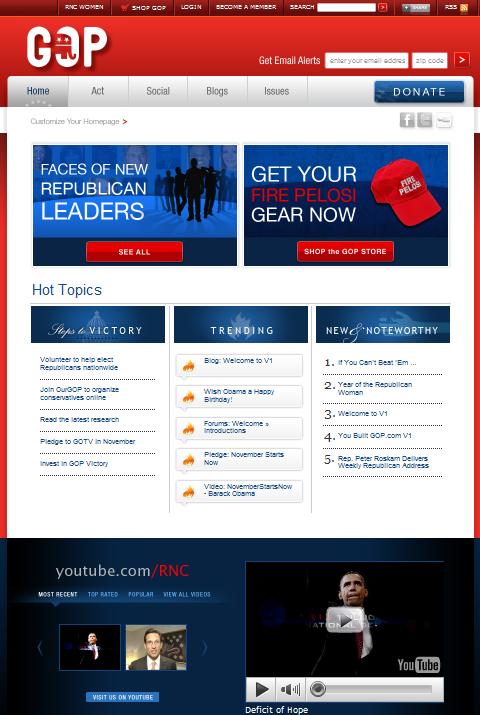
The RNC re-relaunched GOP.com this week.  The last reboot, back in October, was a better site than they had before, but was met with scorn and derision from the tech world. So how is the new version any different?

Design: B-

The site is clean, simple, and open, and the red-white-and-blue motif isn’t terribly over the top.  It’s definitely pleasing to the eye, even if it is a bit boxy.  It moves much quicker than the old site, which was bogged down with technical problems from day one.

But use the site some more and there are a few things that are just out of place.  For instance, GOP.com incorporates video into several blogs and other elements, but these videos are sometimes tough to find.  For instance, in the screen shot on the left, the video player is buried at the bottom.  That may be due to the fact that President Obama’s image is on the player, but that’s still too valuable to bury.  Further, other sections of the site miss out on drawing the eye with video – opting instead to post a link to the YouTube channel rather than a recent video.

Content: C-

The good news is that a section highlights Republican women running for office this year, which is something the party should be playing up.  Unfortunately, some of the cringe-inducing aspects of the old site remain – such as a Republican Hall of Fame featuring Jackie Robinson (who wasn’t a Republican) and Frederick Douglass in a bend-over-backward attempt to reclaim the black vote.

The Issues section has a nifty carousel of the big issues of the time, plus a brief blurb on each.  This is a missed opportunity; in 2008 Barack Obama used the issues section of his campaign website to dive deep into various policy proposals.  Obviously, a party is different from a candidate in that there are many different opinions and angles on any given issue.  The solution might be to have candidates and party VIPs weigh in with policy briefs.  The RNC could set overarching policy positions, but the site could act as a repository of opinions from Republican politicians. It’s the same principle both parties use in tapping a specific elected leader – rather than the party chairman – to deliver rebuttals to the State of the Union address or the party’s weekly address.

I also found it hard to find out who the Republican candidate is in my Congressional district and what I could do to help.  I ended up going through the state party’s website to do so.  Also missing on the main Action center was any obvious link to voter registration information, which is pretty basic.

The chairman still has a blog – mercifully not called “What up?” anymore – and the RNC seems intent to create most of the official content in-house.  This is a waste of effort down on South Capitol street – it seems like an aggregation of Tweets, blogs, and conservative media outlets would be a better way to go, and underscore that the party’s ideals permeate outside the beltway.

Now, the good news: the Blogs section, while having maybe one or two blogs more than they need, has a developers blog to discuss technological aspects of the party infrastructure.  That could be fun to watch.

Utility: A

This isn’t the most obvious part of the site – I had to click around a bit to stumble on it – but the our.GOP.com community aspect has some promise.  Aside from the basics of allowing users to set up profiles and blogs, there’s this:

And this:

These two features allow Republican activists to define for themselves what it means to be a Republican activists.  That invites involvement, which makes it easier later on to ask those activists to participate in more defined campaign activities when the time comes.  It could also make activists better, not just by promoting great ideas but also by tapping into the wisdom of crowds to help fine-tune messages and materials.

The site also integrates user IDs from other online sources, so you can easily sign up with a Facebook, Aol, Google, etc. account.  Besides streamlining the process, that will help the GOP identify where and who the activists are, and target future communications accordingly.  It also translates actions taken on GOP.com to social networks, and increases the likelihood of virality.

Overall: A-

I logged on to the new RNC.com wanting to hate it, but even with plenty of room for improvement, is has the elements of a very good tool for activists.

I spent 16 years of school trying to convince teachers and professors that grading on potential rather than actual product.  They didn’t buy it, but I did, and that gets GOP.com over the hump and into the A-range.  What it lacks in content can be made up for by the social elements of our.GOP.  For the rank and file voter, the lack of local information and voter registration details makes this site less helpful; hard core activists, however, should find it useful.

5 reasons Facebook advertising is up 1000%

Businesses are advertising on Facebook more – ten times more, to be exact.  This is more than simply another channel for businesses and brands to reach internet users and peddle wares – although the fact that Facebook is the web’s top-ranked site doesn’t hurt.  (Political races have already felt a limited impact of Facebook ads – recall that in 2008, a $51 ad buy helped a Dartmouth college student win a county treasurer race, and 2010 Congressional candidates are building their follower lists now.)

So leaving aside the obvious reason of the network’s large – and growing – audience, what has been driving the rapid growth of Facebook’s ad platform?

1.  Budget justification through analytics, flexibility, and (most important) measurable results

The internet has been to advertising what the Moneyball approach has been to baseball – it allowed stat-crunchers and analysts to break down real-world activity into numbers, and optimize their activities according to what yielded the best results.  (This had, of course, been going on as long as advertising had been around, but the internet allowed for more variables and more precise measurements.)

Like any successful online ad platform, Facebook allows advertisers to examine what trends work and what don’t, and change things like creative and targeting accordingly. This is what has made Google the world’s biggest advertising company.

It’s especially important for Facebook because, as ubiquitous as the site is, many businesses are concerned about dipping a toe in Lake Facebook.  Put another way, the question for the budget-masters to ask themselves is: What if we built a Facebook page, and no one likes us?  Having a dead Facebook page is worse than having no Facebook page at all.

Facebook ads can give advertisers and brand managers ammunition to go to these budget managers and identify key, reachable metrics to justify not only the ad flight, but an entire Facebook strategy.
2.  Ease of use for advertisers

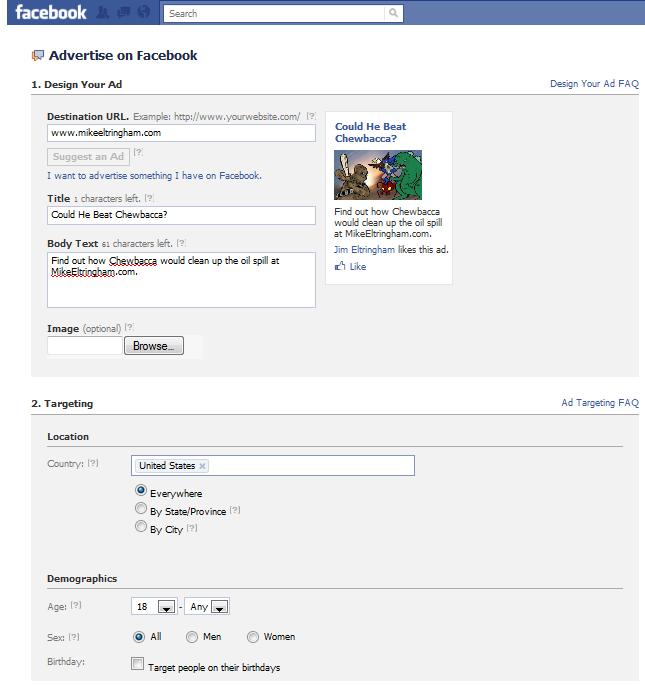
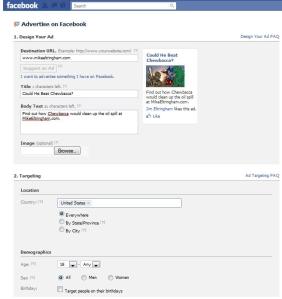
Another page from the Google playbook for online advertising is the ease with which anyone can build a Facebook ad.  It requires creativity, strategy, and writing skill, but you don’t have to be a technological genius.

This is important for two reasons.  First, if you’re in the business of selling ads (either directly or as part of an overall brand or issue management strategy), the advertising model is easy to understand and sell to a potential client.

Second, it expands the universe of potential advertisers.  Local businesses could target users in their neighborhood with limited buys that are put together the same way as the ads of a national brand like Old Spice.  Like Google, Facebook makes very powerful advertising tools accessible to small businesses and individuals as well as large companies.

3.  Peer pressure

The first two drivers of Facebook’s ad success involve its adoption of features that Google and other networks perfected; the next two involve advantages Facebook enjoys over Google search advertising.  The first and most obvious is the “like” feature on ads, which allows users to see whom among their friends has clicked on it.  This is a small feature, but it taps into what has always been the driving force of activity on Facebook: the idea that people get most of their information from their friends.  That’s a big reason why Facebook drives more web traffic to news and other sites than Google.  By leveraging peer pressure where it can, Facebook gives its ads that much more impact.

The platform also allows advertisers to target friends of existing members of fan pages or group members.  For instance, if my friend likes Organizing for America, then OFA can direct an ad at me, figuring that I might be a potential supporter as well.

4.  Attractive ads

Back in the early days of online advertising, display ads checkered websites the way print ads checker newspapers and magazines.  Google’s search ads were less attractive but more effective, since they were based on a user’s searches and interests.  There were no pictures, because that would have only cluttered the space.

Facebook’s text ads with a small thumbnail both draw the eye and allow for some illustration of the brief message.  Facebook ads require the same pithy writing as Google ads, but the small picture makes a big difference.

5. Cost

Facebook’s ad prices haven’t grown with its user base, so it has remained a cheap cost-per-click option for advertisers.  That, combined with an extremely flexible pricing structure, results in a platform that lends itself to very limited and easy ad flights.  This allows for a $10 or $20 test campaign – low enough that curious individuals can run one on their own, or front the costs on a project for a client and work on a contingency basis.  That low barrier of entry that promotes experimentation helps win over new advertisers – and, once they figure the platform out, gives them a reason to stay.