New and improved but with room for improvement

GOPscreenshot

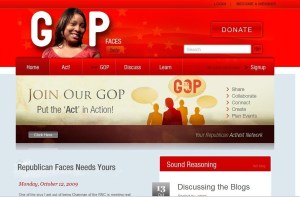
The Republican Party re-launched GOP.com today.  In addition to discussions about the party platform, the site includes multiple opportunities for grassroots participation.  The home page shows the latest from the most important social networks.

These are all positive elements, and the timing is good – Republican excitement is naturally regenerating after the defeats of 2006 and 2008 just like a starfish regenerates an arm, and this provides an channel for that excitement.

The site seems to be a bit slow, though – which makes it tough to explore since the content is spread out fairly widely across the site.  With multiple blogs and action centers, the site has lots of nooks and crannies.  That’s probably better in the long term, but as an infant site, GOP.com looks a little light on content.  Sub sections feel a little barren.

Because content is king, the Republican Party will need more meat on the bones.  Since they have good avenues for user generated content, that’s more about increasing visibility – something they should have the infrastructure to do anyway.

One BILLION hits… per day

On the third anniversary of its acquisition by Google, YouTube is celebrating that it now averages a billion views each day.

There’s another way to measure their success, though: The term “YouTube video” has also entered the cultural lexicon to define short, viral, online video – the same way “Xerox” was used for years as a synonym for photocopies.  YouTube isn’t just on your computer screen, it’s in your head.

For $3, I would have posted this earlier

The entire readership of this blog emailed me about the story that the Associated Press may try to charge a fee for their displaying their news content early.  (Thanks, Mom.)  At first, this seems dumb – trying to delay access to online content sound like trying to put toothpaste back in a tube – once it’s out, it gets everywhere.  But this is less about re-inventing content distribution than it is about recognizing what AP CEO Tom Curley calls an “enviable moment.”

A year ago, relevance meant the top result on a Google search – and doing whatever Google said you had to do to make that happen.  In general, that’s still true.  But since Microsoft is serious about making their Bing search engine a serious competitor to Google, that means that both Google and Bing must be more mindful of that their search results deliver content which is relevant.  If Bing’s news aggregator is posting AP stories before Google News, that’s one more reason for users to move over.

For the AP, it’s not a long-term business strategy – but it is a chance to take advantage of a brewing search war.

Cheetohs are delicious

The news that the Federal Trade Commission has instituted new rules for blogging almost made me spit out the delicious Diet Dr. Pepper I was enjoying – and I was enjoying it, since it tastes so much like Dr. Pepper it’s hard to believe it’s a diet drink.  Bloggers now must report any in-kind gifts or samples they receive for reviews.  This is a good business practice for any blogger looking to build credibility – though mandating it makes for an inconsistent public policy.

A few years ago, when I worked in PR, I was tasked with promoting a documentary about leftist ideology (which was so bad it doesn’t deserve a link).  As part of the launch, we held a media screening, leading to an internal discussion about serving alcohol.  (Incidentally, the argument was not on the morality, but the expense.)    The argument that won the day is that members of the media won’t come out to a reception without booze because other, similar events would serve them.  Reporters expect freebies.

Relating that back to the FTC’s new rules, does that mean a blogger sitting at that screening, munching on a dish of Orville Redenbacher’s delicious, movie-theater butter-flavored popcorn and sipping on a tall, smooth lager from Yuengling – America’s Oldest Brewery – would have to report these niceties, while the reporter next to him would not?

The FTC rules seem to make a distinction, and are clearly meant to snuff out pay-to-post schemes the way the fast-acting ingredients in Maalox snuff out heartburn and indigestion.  Like anything, though, the results will not be found in the wording of well-meaning regulations but in the enforcement. If the FTC has set up a structure where blogs will be treated like billboards while print newspapers are handled like non-profits, it’s a serious infringement on freedom of the press.

Angry skanks are why I don’t use Blogger anymore

Manhattan’s Supreme Court has ruled that Google must surrender the name of the blogger behind Skanks in NYC, which was hosted on their Blogger platform (but is no longer active).  The ruling came in response to Canadian model Liskula Cohen, who the blogger allegedly accused of being a skank (apparently while she was in NYC).

The first reaction of many freedom-loving people upon seeing a story like this is to worry about limits to the first amendment – especially as it pertains to emerging online environments.  After all, doesn’t an individual have the right to post anonymous speech? This particular case, however, isn’t quite so simple.

First, the blogger in question was posting on someone else’s platform – in this case, Google’s – so they transfer many of their rights to that host.  Google fighting to keep their identity private was probably a good business decision, but in no way an obligation.

Second, the court ruling did not force the blog to stop publishing or stay down (which could have violated the US Supreme Court’s ban on prior restraint of speech).  All it did was ask the person to come from behind the curtain.

Cohen and her legal team will likely pursue a defamation of character suit against the blog – claiming that she is not, in fact, “a psychotic, lying, whoring, still going to clubs at her age, skank” – as the blog describes her.

The Manhattan Supreme Court Ruling doesn’t judge Cohen’s defamation case – and, based on previous US Supreme Court case law, as a public figure her burden of proof is high.  Essentially, Cohen must prove that Skanks in NYC acted with “actual malice” – that they knowingly portrayed her as a skank even though they knew, factually, that she was in fact not a skank.

It’s a tough case but one Cohen has every right to pursue – but there can’t be a case without a defendant, and the identity of that defendant has implication on their knowledge of Cohen’s skankiness or lack thereof.  The Manhattan ruling is the equivalent of a search or arrest warrant – since there may have been an offense committed, they are allowing Cohen’s legal team to pull back the curtain and investigate.

Depending on the circumstances, I would tend to side with the blogger – for many of the reasons outlined by his or her attorney, according to CNET:

The lawyer also offered the view that blogs have “mere venting purposes, affording the less outspoken a protected forum for voicing gripes, leveling invective, and ranting about anything at all.”

I doubt anyone will look at Cohen any differently because of this blog.  Most smart people take blogs with a grain of salt commensurate in size with the reputation of the blogger.  I never saw Skanks in NYC (at least, not the blog) but would imagine most of its fan base read the posts to laugh.

The US Supreme Court has warned about the “chilling effect” limits on free speech would have, and for that reason all courts must be careful – especially when considering cases like this.  Popular free speech rarely has to be defended; it’s the unpopular speech that tests our societal resolve for open discussion.

The Manhattan Supreme Court has ruled that the case is at least worth taking a look at – and that Cohen deserves her day in court, regardless of the outcome.  And, so far, that is all they have ruled.
Facebook and FriendFeed: Boardwalk and Park Place

The news which broke yesterday about Facebook acquiring FriendFeed makes good business sense, but it won’t be the last big deal of its kind where two online properties merge.  And once those deals and mergers become more common, you can be sure that Washington, DC will start looking at social networks in a whole new way.

With rumblings already beginning that Google’s near-ubiquitous nature may create trust concerns among federal regulators,  Facebook is moving toward it’s own kind of ubiquity.  For example, FriendFeed used to be a central place to aggregate your social network activity; once the details of the merger are worked out, you’ll be doing that on Facebook.  Facebook won’t just be one place where you share your life online, it will have the ability to be the central hub.

And that seems to be the ultimate goal for Facebook – to be the internet extension of your life.  Just as you might walk out the front door to enter the real world (assuming you live outside of Washington, DC) Facebook would be the place where you start your activity on the web – whether connecting with friends, shopping, or catching up on the news.

If it sounds ambitious, think about Google’s current online dominance.  How many people do you know who have a Gmail account?  How many have Google as their home page, or check current events through Google News?  When you want to find out about someone’s background, how do you start?  By Googling them, of course.  Considering that, 10 years ago, no one knew anything about Google other than it was a 1 with 100 zeroes after it, that makes Facebook’s apparent ambitions pretty reasonable.

That is, until someone at the Securities and Exchange Commission who understands technology starts asking whether losing niche social networks/social media services (like FriendFeed) hurts consumers through a shrinking marketplace where the currency is personal data.  If the current administration isn’t thinking about this yet, it will almost definitely be on the radar screen of the next.  And then the online mergers and acquisitions may be come very big deals.

URL shortner gets tr.immed; GM goes online

There are a couple businesses in the news today which have an interesting connection: GM and tr.im.  One that is closing its doors because it couldn’t make money; one still exists even though it couldn’t make money but it making thoughtful use of its second chance.

Tr.im is a URL shortener.  If you’re a user of Twitter or any other microblogging service, this type of tool is important – when you communicate in 140 characters, shrinking the web addresses of articles and links is critical.  The problem for tr.im is that there are a few other services out there that are just about identical – bit.ly, ow.ly, is.gd, take your pick, and they all have two things in common: they pretty much do the same thing as every other service, and they don’t have any obvious monetization opportunities.  Tr.im has been on the outside looking in in terms of use and traffic, therefore the site is shutting down.

General/Government Motors was in a similar predicament – offering a product that others could produce cheaper and losing money – but one government bailout and structured bankruptcy later, and GM is announcing a new way to sell cars: eBay.  Prospective car buyers will be able to drive prices down – no pun intended – from “buy it now” prices by underbidding.

Sure, it sounds like GM got the idea from a Video Professor infomercial, but it’s a good shot in the dark to increase car sales and build a stronger business.  More important than another venue to sell cars, eBay gives GM a way to determine the worth of their cars to consumers – important data that can help set prices in the future.

Blogging about blogs: we’re through the looking glass, people

Wrap your head around this one: this blog post is about a blog post about blogs.  (It’s also about newspapers and journalism, though, so rest easy.)

Writing for one of my favorite blogs, Mashable, Stan Schroeder takes on the common theme among “real” journalists that blogs muddy the water of news reporting.  Schroeder correctly points out that old models of news reporting simply can’t assemble all the information out there:

I’ll tell you what’s also news. When someone notices that Digg’s algorithm has changed and that tiny blogs will have a harder time getting on the front page. When someone finds a vulnerability in the iPhone’s latest firmware. When someone digs through Google Trends data and finds that no one is searching for “sex” anymore (yeah, that’s likely to happen).

I’ll also tell you who writes about these things: blogs. This is why blogs are popular, not because they’re rehashing news from big media publications, writing their opinions without contributing with facts. They’re popular because somewhere there’s a guy who took great interest in figuring out which airplane seats are the best to be seated in and he started a blog writing about it, and you cannot find this information in any major newspaper.

This is astute analysis.  I would add that blogs allow news segmentation – in other words, you can get information in the hands of the people to whom it is most relevant much easier.

After a softball game a few weeks ago, I had a conversation with a pair of fellow UMass journalism alums about Politico, which had just recently become profitable.  The shortstop, who works for an education newspaper, made the comment that media outlets like his and Politico were the future of media.  “News should be organized around a topic, not a geographic region,” he wisely said.

I discussed that theme from a different angle last week when talking to a group at the Leadership Institute’s Public Relations School about writing press releases.   The old ways of doing PR have changed; press releases have to be blog friendly – which may include having supporting information, like pictures and video, more available.  From an organizational perspective, this is good for two reasons.  First, it means more avenues for getting news out there.  Second – and more importantly – it means your target audience is easier to reach than ever.

For instance, if I’m releasing a new social networking platform, I’ll attract more  attention – at least, more of the right attention – if it’s covered on a blog like Mashable than if it’s on the front page of the New York Times.  The developing media landscape helps channel the flow of information.

And if you still feel like you need “professional” journalism… well, watch The Today Show every morning for a week, and tell me if you’re still as confident in “professional news.”