Timing made the HOPA hoax a win

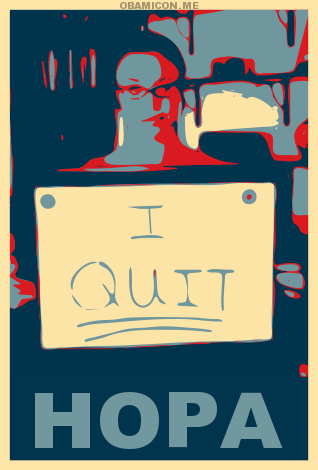
Yesterday, the story of a young go-getter who quit her job via a series of dry-erase board messages due her boss’s sexual harassment burned up the internets.  The girl was dubbed “HOPA” (after her boss’s mistaken acronym for “hot piece of ass”) or “Jenny DryErase” by supportive Facebook followers and commenters.

Today, the story was revealed to be false.  Yet it is still an excellent career move for an aspiring actress and an aspiring comedy website – and illustrates the value of timing in capturing the short attention span of folks online.

The original post, on comedy site The Chive, was set up to go viral for a couple reasons.  First, the act of quitting a job and metaphorically burning the place on your way out Jerry Maguire-style isn’t completely out of left field; even doing it through a variety of emailed photos isn’t even that out there.  It’s her signs and her emotive facial expressions that makes the user laugh.  Second, and more important, the girl’s story works equally well if it’s true or not.  So it wasn’t unbelievable, and investing in the story didn’t mean believing it was true – creating a low barrier of entry.  The stage is set.

But as with all comedy, timing is everything.  The Chive struck gold by releasing the pictures on the same day that an airline steward became an international folk hero for leaving his job down the escape chute, a beer in each hand.  profanity-laced goodbye to his own job, so quitting was in the news.  They couldn’t control the news cycle, but it worked to their favor.

What they did right on their own, however, was debunk the story of HOPA girl the day after attention peaked.  Announcing the hoax in a month, or even in a week, would have meant reaching people well after they had forgotten the Jenny DryErase post and moved onto the next Hitler/Downfall parody.   In other words, it would have been irrelevant, and there would be no lasting benefit.

The real HOPA girl, actress Elyse Porterfield, has her name everywhere; people who might be in a position to help her career know now that she can pull off a pretty good photo shoot. The Chive has the added web traffic and the street cred with that comes with manipulating web audiences into taking a hoax viral.  Advertisers like sites that can, occasionally, draw big numbers for a few days.

The tactic of a fake viral picture isn’t really translatable to campaigns, which have to be somewhat transparent in their messaging.  But it is important to understand how fast online communications work.  Windows of opportunity aren’t open wide and they aren’t open for long.

Messaging Social Security

The Washington Examiner’s Chris Stirewalt correctly writes today that Republican lawmakers have to craft a better, pro-active message to take advantage of voter disillusionment this year.  Townhall’s Maggie Gallagher throws a wet blanket on an issue that gets many on the right-of-center side excited: Social Security reform.

Gallagher claims that any effort to include an overhaul of social security into the talking points would meet with utter doom, citing President Bush’s failed 2005 effort as evidence that the American people are not on board with the concept:

[P]olls showed the more he talked, the less Americans liked it… “Three months after President Bush launched his drive to restructure Social Security by creating private investment accounts, public support for his program remains weak, with only 35 percent of Americans now saying they approve of his handling of the issue, according to a new Washington Post-ABC News poll,” The Washington Post reported on March 15, 2005. “Moreover, 58 percent of those polled this time said the more they hear about Bush’s plan, the less they like it.”

And this was before the stock market crashed, and ordinary people at or nearing the age of retirement lost huge chunks of their investment portfolios. Yet in 2010, one of the GOP’s bright young stars, Paul Ryan of Wisconsin, pulled together a deficit reduction plan that called once again for the partial privatization of Social Security, and leading conservatives piled on the praise.

Gallagher may be right that Social Security is a difficult election year, but it isn’t impossible.  Entitlement reform is tricky, with demagoguery from parties who feel they will be injured.  But remember that the American people were for Social Security reform before they were against it.  And entitlement reform will have much better traction in the current political environment if properly framed

Bush’s mistake in 2005 was that he was left vulnerable to a coalition of labor and senior voices.  The effort to make the necessary reforms will need a few new messages and strategies, such as:

  • Accurately positioning reform as the creation of the retirement system of the future, versus the retirement system of 1930.
  • Appeals to seniors that promising to protect their benefits while allow their children and grandchildren more freedom for their own retirement.
  • Engagement of young (age 22-35) members of the work force, who have the most to lose from a government-run retirement plan.
  • Tracking and satirizing Democrat, union, and AARP efforts to smear the plan.
  • Putting a real face on the people who stand to benefit from reform.

Gallagher is dead-on, however, in identifying Social Security as a probable Democratic talking point in 2010 (why stop now, after all?).  It has already started in the Nevada Senate race.  The need to counter this messaging is critical for Republicans.

November expectations

The bar has been set for the GOP in November: outside of a takeover of the House and Senate, all electoral gains will be failures.  At least, that’s the expectation according to the Democrats.

The White House is openly discussing the prospect of a Republican Congress.  The Democrats’ ploy to tie BP to the GOP this week – the clever microsite BP Republicans – says that the politicians it highlights “will be guiding U.S. Policy if the Republicans can regain control of Congress this November.”

This rhetoric sets the stage for effective policy messaging assuming the Republicans don’t retake the majority.  A post-November Congress with fewer Democratic seats but maintaining a blue majority would give President Obama the opportunity to use the “I won the election and you lost” argument he was so fond of early in his Presidency. And if Republicans do re-take the House, the shock is lessened somewhat because, after all, they would only have accomplished what was expected.

Despite the complaints from some of the people actually running, the White House is smart to set the bar high for Republicans and low for Democrats.

LeBron James owns the message

Politicians are clamming up, Politico says, because they’re worried about becoming the next YouTube sensation.  Candidates are refusing to talk to camera-wielding activist journalists.  With more communications channels than ever, politicians are opting not to use them:

“The irony is that in an political environment in which voters are demanding authenticity, candidates find themselves in a technological environment that exploits authenticity,” lamented Mark McKinnon, a longtime political strategist and top adviser to George W. Bush and John McCain. “So rather than show more of themselves as voters want, candidates are showing less of themselves for fear of revealing too much.”

This is probably better than speaking off the cuff and apologizing for gaffes, but it isn’t a winning strategy.   These would-be-elected-officials would do well to take their advice from a monarch: King LeBron James, the most popular man in sports, and the subject of a much-criticized special on ESPN in a couple hours.

When James’ decision on where to play next year is finally revealed tonight, a new chapter will start in his professional life – not only as the signature star of the NBA, but as a player expected to win a championship.  Joel Sherman of the New York Post likens James’ situation to that of Alex Rodriguez, who used to be the best player ever to not win a championship. He’ll have plenty of questions, and will be the closest thing the sports world has to a politician for a week.

That’s why the ESPN special is a fantastic idea.

James is announcing his signing in an hour long special, and according to ESPN radio this morning, the big news will come in the first 15 minutes.  That means there will be 45 minutes where James will discuss his decision in the controlled, traditional, and respectful environment of ESPN.  That discussion will fuel tomorrow’s bloggers and drive-time hosts, and will extend into weekend coverage.

And most of it will echo the things James wants out there.  He’s answering demand by engaging in media overload.  In doing so, the King will rule over the message.

Now, if only LeBron would take control of the Knicks in the same way…

Hunting Macaca

Politico’s headline “Democrats seek ‘Macaca moments” aptly describes the DNC’s new Accountability Project, which invites citizens to record and upload videos of Republican politicians saying dumb things.

Because it’s actually a good idea, this has resulted in some hand-wringing on the right amid fears that Democrats are better at grassroots internetting than Republicans.  But that ignores why this is a good idea: the Accountability Project is a national aggregator and message device.  It seeks to crowdsource the Democrats’ messaging to take to most loony Republicans they can find and hold them up as the standard.  It is a pretty clear attempt to re-gain the reins of the national policy debate, which have slipped through the Democrats’ fingers in the past few months.

All that said, by driving messages that show the Republicans are out of touch, Democrats will save their skin and keep control in November.  (They may have done so anyway, but a few macaca moments will help curb GOP momentum.)

So how to combat this?  It’s pretty easy.

Republicans have cameras too, and Democrats are just as prone to saying and doing stupid stuff in front of those cameras.  What if some enterprising conservative with a flip cam catches them in a gaffe, then uploads the video?  It would seem the obvious way to hold the Accountability Project accountable.

It’s still better than WGN

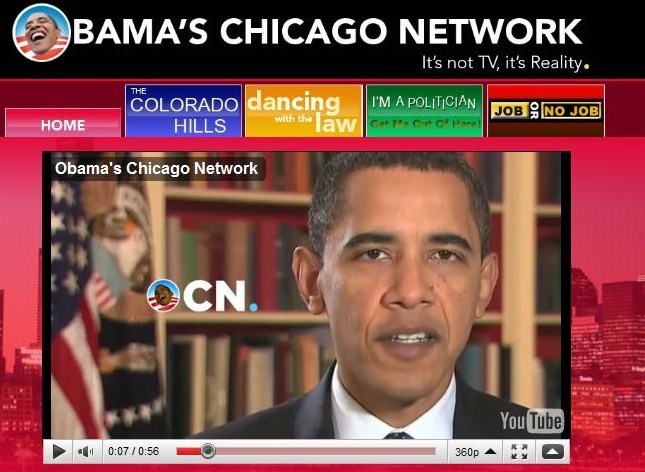
Looking to keep stories about the White House’s dabbling in primary elections alive, the RNC launched the “Obama Chicago Network” in an email to supporters this afternoon.

The site boasts four “shows” that deal with various negative stories surrounding the Sestak/Romanoff could-have-been-bribery affairs, plus Rod Blagojevich thrown in for fun:

Even if it is somewhat dated in the pop culture references (some of the shows they are spoofing are past their prime or canceled), it’s pretty funny, makes good use of news clips, and has a poll to collect people’s contact information.  With Blagojevich in the news, it does a good job of tying the administration As a lead generator, the site is good, but it’s missing something that could make it a really useful tool for Republican messaging: a section where users could “pitch” their own shows.  Not only is audience participation a good thing, but it might make for some must-see TV.

Politics, policy, and the President’s speech

Criticism of the President’s speech last night ranged from the lack of specific policy asks to the aggressive tone he took in describing what BP would be forced to do.  But those elements are what made the speech a short term winner – and possibly the only viable course of action.

Though it breaks a personal moratorium on referencing Ronald Reagan, the purpose of this speech should have been similar to the 1986 speech after the Challenger disaster.  That speech sought to restore confidence in American ingenuity, which had just taken a very dazzling and public hit.

Obama’s speech had a similar goal – channel and focus people’s emotions.  In his case, he wanted to empathize with Gulf residents and all Americans who will feel the environmental brunt of a company’s mistake.  The policy ideas he put forward are window dressing for the bigger message – he feels your pain, and he’s going to inflict some of it on BP through a relief fund that the oil company will fund but not direct.   (Something that would have been a good idea for BP to set up in the first place.)

Could he come out of this swinging and missing?  Could BP challenge the seizure of their assets in court – and, conceivably, win?  Perhaps, but after waiting 57 days to make this statement, it’s the best message the President has.

Plus, if BP weasels out of the bill some how, the President will still have a chance to make them the bad guy.  Just because a James Bond villain jumps in an escape pod and eludes capture doesn’t make Bond’s effort any less heroic.  It just means that Obama will have to find new and creative ways to hold BP accountable – something like tax credits for owners of local BP gas stations  owners who want to change  their affiliation.

It may not be good policy, but it’s good politics.  As the old saying goes, when you see a mob coming with pitchforks and torches, either grab a torch and join the crowd or start running in another direction.

BP slogs, Exxon blogs

This week, Exxon Mobil launched Perspectives, a blog about “issues, policies, technologies, and trends” surrounding energy development.  Yes, that includes oil, and yes, they kick off by talking about the mess in the Gulf of Mexico.

No, Lionel Osbourne is not a featured blogger.

BP has received the lion’s share of the public scorn since the spill, but other companies remain vulnerable to regulations and increased taxes.  It isn’t an immediate challenge, but Exxon Mobil didn’t wait for the problem to come to them.

It would have been easier, in the short term, for Exxon Mobil to act like the accomplice of the kid who gets punished for a grade school food fight – sit on their hands, let BP continue to be yelled at by authority figures, and keep quiet hoping none of the outrage falls on you.  The problem with that strategy is that, eventually, the story will not be about BP’s specific failings but the failings – and potential failings – of the industry as a whole.

Of course the blog is biased and slanted, but Exxon Mobil makes no effort to hide its involvement.  Perspectives is clearly branded as the official Exxon Mobil company line – take it for what its worth.  And doing that now will help Exxon Mobil’s credibility (at least somewhat) in future discussions about what their obligations should be.  Plus they’ll likely to have some thoughts on what BP’s obligations are too.

Fantastic.

What’s spreading faster, oil or failure?

A local television station in Louisiana ran into some problems trying to interview some spill cleanup workers – and in doing so, highlighted one more way BP is not helping itself in its response to the spill:

Cleanup workers might not be media savvy, but they remain the best face that BP could put on their cleanup efforts (certainly better than a clearly foreign CEO).  Whether the glorified rent-a-cop in this video (and his backpack-clad sidekick) are following orders that contradict BP’s official statements on press availability or they are carrying out a legit safety function isn’t clear.  What is clear is that they are not communications experts.

At least BP can rest easy knowing that, no matter how sophisticated their PR strategy, they weren’t coming out of this oil spill clean.  The administration’s inability to escape criticism is particularly fascinating (and means I have to eat a plate of oil-soaked crow).

Most recently, the President compared the oil spill to 9/11.  Perhaps that’s his way of getting tougher on BP – as the polls are apparently asking for him to do.  The problem of course, is that the President is doing everything he can do – and that just isn’t that much.  After coming into office with promises that he could make government work for people again, the spill underscores that government simply isn’t qualified for the job.

Ultimately, that puts the US government and BP on two sides of the same coin.  Both wind up despised by the people – BP for wielding too much power; the government for impotence.