Stupak your bags

Rep. Bart Stupak has been the object of derision and scorn since he famously flipped his health care vote.  Because of that, his seat has been a big part of the electoral calculus for this fall’s Congressional elections – and despite his retirement, it still is.

Nationally, Democrats were able to win the debate on health care, thanks in large part to Stupak.  His last-second flip gave cover to other pro-life Democrats to support the bill – and he pulled enough votes with him that other Democrats in conservative districts, like Heath Shuler, could continue to oppose the bill.  (Shuler was promptly replaced by Donovan McNabb.)

As such a key figure, Stupak might as well have drawn a giant bullseye on his back.  But it was a national bullseye, as a friend of Stupak told Politico:

The friend said he believes Stupak would have won, adding: “More than 95 percent of the opposition from left and right has come from outside of his district.”

And Republicans have rallied around surgeon Dan Benishek, a tea party favorite, who received very little attention until Stupak voted for the health care legislation even without the anti-abortion language in the bill . Benishek is expected to raise more than $100,000 this quarter, according to GOP sources, a large amount for a first-time candidate who had virtually no campaign infrastructure before Stupak received national attention over his health care positioning.

While he was running, Stupak was a lightning rod; even if he lost his race he would at least soak up resources.  Like he did a few weeks ago, he would have run interference for his fellow Democrats.  Other Democrats in tough races may find themselves touched by the ripples of his retirement.

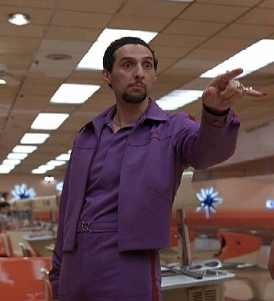
Eight-year-olds, Dude

Erick Erickson of Redstate reports on a county council race in Ohio that features candidate Tim Russo.  The twist: Russo was arrested and convicted in 2001 on charges of soliciting minors for sex – turned out, the minor was actually an undercover FBI agent.

But Russo has an ardent defender in blogger Howie Klein.  Klein calls the 2001 incident “the most boring episode of To Catch a Predator ever” in a cross-posting at both DownWithTyranny and The Huffington Post:

Easily the most reactionary pope since Hitler’s boy Pio, Ratzinger didn’t have a problem with priests raping young boys– as long as they stuck with conservative dogma. When he ran the Munich diocese that was also the birthplace and heartland of the Nazism that he once fully and openly embraced, the future Pope had hundreds of child rapists and mentally unbalanced priests in his ranks and he never said a word beyond, “don’t get caught, boys.”

My mistake – that last paragraph was Klein criticizing the Pope and the Catholic Church for covering up instances of adults taking advantage of minors.  It was written way back in those simple times of late March 2010.

Of course, Klein has a point – no matter how much you agree with someone philosophically, if they do something wrong that has consequences.  Unless, apparently, it’s a political candidate Klein supports:

Russo has the sort of leadership experience Cuyahoga County desperately needs at this dangerous, hopeful crossroads. But local media are doing their best to scuttle his campaign before it really begins. Why? Because in November 2001 he solicited sex from an FBI agent posing online as a minor and was made Pervert of the Day for an entire 24-hour news cycle. Local media want him to pay for that for the rest of his life.

Clearly, Russo has paid for his crimes, but there are a few mistakes which you simply can’t pay off – and soliciting minors for sex is one of them. As Edwin Edwards famously quipped, the scandals which end political careers are getting caught in bed with a dead girl or a live boy.

Russo has compounded his crime with his own words, sounding more defiant than understanding of the reluctance to embrace him.  “Bottom line, I survived it. Many would not have. That should tell you all you need to know,” he writes – just before asking for donations.

We all get unicorns? Oh, it’s April Fools…

The National Republican Senatorial Committee celebrated April Fool’s Day by releasing a well-timed video chronicling the difference in President Obama’s promises and results:

Messaging on April Fool’s Day can be tricky for political groups.  As a private company with a reputation for lightheartedness, Google can make annual fake announcements without fear of retribution.  (This year they are renaming the company “Topeka” – reciprocating the promise of the free-broadband-seeking Topeka, Kansas to rename their city “Google” for a day.)

The NRSC did a good job with the video.  Because it’s obvious and over the top, it’s clearly an April Fools joke from the beginning.  Sure, that might make it a bit less funny, but the NRSC isn’t going for an award from a comedy film festival.  They were looking to do just what they did: use measured humor and creativity to deliver an important – and well-timed – political message.

3 Unfortunate Predictions about Health Care

Sunday looks like D-Day for President Obama’s push to overhaul health care.  There is plenty of speculation flying around about votes in the coming days and what those mean for votes in November.

How will health care affect the political environment over the coming eight months?  Some humble predictions:

1. Health care will only be a short-term political liability for Democrats if it doesn’t pass – if it does, it will be a short-term benefit.

The bitter battle over health care is one reason that voters are souring on everybody in Washington.  The sooner that debate is over, the sooner Democrats can focus on things like regulatory reform and passing out money like Jack Nicholson’s Joker in Batman ’89 while asking, “Who do you trust?” – both of which are much easier to craft messages for.

But there’s more than that.  The opposition to Obamacare (both official and unofficial) has highlighted long-term effects for the American health care system and federal budget – unfavorable comparisons to British and Canadian health care systems, excessive cost, and even shortages of care and care givers.  These won’t take effect by November 2010 or even 2012.

If the health care overhaul passes – and the expected state challenges are quick and quiet – Democrats will trumpet their progress for the next three years while accusing Republicans of lies and scare tactics.  Obama is right to link the passage of health care and his party’s political fortunes.

2. It’s probably going to pass, and it doesn’t matter how.

As Dan Flynn opines, the reason there hasn’t been a vote already is because there aren’t enough votes.  Until Nancy Pelosi can amass 216 Democrats to support whatever parliamentary gymnastics she has to do to get a bill through the House, there will not be a vote.  When the vote comes up, bet the house – it’s getting through.

3.  The “Repeal Obamacare” movement will get less traction than one might expect.

Entitlements are the gifts that keep on giving.  They don’t actually help end poverty, they don’t give people a comfortable retirement, and they don’t help people who have lost their jobs find new ones.  They do provide platforms for politicians to promise even more entitlements.  When entitlements fail to fix the problem they were meant to solve (or make it worse), the answer is generally to dump more funding into the failed program.

Even failed programs can be elevated to third-rail status.  Remember the left-wing backlash against President George W. Bush’s Social Security reform?  You can expect a similar reaction to future attempts to roll back Obamacare.

Like Social Security reform, real health care reform – that involves doing more than just getting more people into a broken system – will require a long-term, sustained effort that changes how our culture views our government.

Bonus prediction: By the way, whatever the outcome of the vote on Sunday, people with money will always get the health care they need and want.
Carly’s Boxer Blimp

The Carly Fiorina campaign has released a follow-up to their much-lampooned “Demon Sheep” web video.  In this one, Barbara Boxer turns into a giant blimp because she’s full of hot air.  (Getcha popcorn ready, because it’s almost eight minutes long.)

Despite the ribbing from Fiorina’s primary opponents, ad maker Fred Davis claimed victory for the viral hit, pointing to its high number of YouTube views.  Davis might have a point.  The funny part of the Demon Sheep video – the campily costumed and Keds-clad sheep – came at the end, after the video had railed on fellow Republican candidate Tom Campbell’s fiscal street cred.  The Boxer Blimp wouldn’t attract nearly as much attention if it hadn’t been for its fluffy forefather.

Still, the video is as unfocused as it is comical and over the top.  The message shifts from the Senator being arrogant to incompetent to out of touch, and discusses taxes, environmental policy, financial restraint, national security, and Boxer’s personality with clumsy or non-existent segues.  The imagery is often uneven; at one point, the announcer accuses Boxer of being progressively “less and less effective” during her Senate tenure just as her image is smashing through the Capitol dome.

It does, however, tell a good story about Carly Fiorina – but unlike the Demon Sheep, the story comes after the CGI blimp attack.

But regardless of what anyone thinks of the style of the ads or how many viewers they attract, the one measure of effectiveness is at the polls.  That’s an area where Fiorina still lags behind.

(By the way, if you look closely, I’m pretty sure the shots of San Francisco include Alamo Square – more notably known as “Full House Hill” for its inclusion in the opening credits of the legendary and classic sitcom.)

The politics of fear

Washington is still buzzing about the RNC’s leaked fundraising presentation, especially the use of the word “fear” as a means to win support.

Why couldn’t the Republicans be more like our President, who speaks in rational terms about ideas, just like he did in Pennsylvania today:

Every year, the problem gets worse.  Every year, insurance companies deny more people coverage because they’ve got preexisting conditions.  Every year, they drop more people’s coverage when they get sick right when they need it most.  Every year, they raise premiums higher and higher and higher.

See the difference?

Hunting Demon Sheep

The Chuck DeVore for Senate campaign has declared open season on Demon Sheep.  Visitors to demonsheep.org can squish, shear, crisp, or mock the ill-conceived star of a Carly Fiorina campaign video:

Aside from being a fun concept, the microsite does all the right things – it lets users share their demon sheep hunting with friends, and hits hunters up for small donations.

The original “Demon Sheep” web video was designed to distinguish Fiorina from GOP primary opponent Tom Campbell – casting Campbell as a FCINO, or “Fiscal Conservative in Name Only.”  The campy quasi-religious imagery a low-budget sheep costume that looks like it was a pilfered sample from a carpet store made for internet mockery.  But it also made for viral viewing, giving an audience for the negative points the video makes about Campbell.

Though the Demon Sheep video doesn’t mention DeVore, he’s doing his best to capitalize – and as Matt Lewis and I discussed weeks ago, DeVore’s campaign stands to gain the most if Fiorina and Campbell descend into a harshly negative campaign that damages both.

This effort can be successful in targeting conservative activists nationwide for support and donations.  The drawback for the DeVore folks is timing.  Demon Sheep is a month old, and while bizarre, the opportunity to latch onto the initial wave of coverage has long passed.

Buh-Bayh

Evan Bayh’s decision not to run for re-election this year not only hurts Democrat chances of retaining any clear Senate majority, but robs them  of one of their moderating influences. If the Democrats hold 51 seats in January 2011, what will that majority agenda look like?

Bayh has helped temper more liberal policies, from business regulation to health care.  Other retirees, like Chris Dodd, and troubled incumbents, like Blanche Lincoln and Harry Reid, have shared that role at various times in their careers.  Perhaps the likes of Mark Warner or Max Baucus can fill that void – or, perhaps the diminished moderate ranks are quieter in the gridlock that comes from having less than 60 votes.

But maybe the most telling story about the relationship between Democrats and the electorate comes from the curious primary challenger Bayh faced – a fringe candidate who claims to be closing in on the signature requirements which would make her an official candidate.  If true, Tamyra D’Ippolito – who claims the state party is an “old boys’ club” – would have a cakewalk to the nomination.  If she misses the cut (which happens at noon today), state party officials could hand-pick a better-funded, better-known candidate to run in Bayh’s place.

If you’re scoring at home, that means the state Democratic party would like to select their candidate with as little democracy as possible.  As Republicans in New York’s 23rd Congressional District can attest, that’s a recipe for disaster.

The Contract with America ain’t walkin’ through that door

Washington, D.C. is concluding a week under a blanket of snow with a promise of a new Contract With America… sort of.  Under the headline, “Conservative Manifesto coming soon,” Politico reports that leaders of the inside-the-beltway Conservarati are drafting a “mission statement for the right.”

There are two problems with this.  Just as Republican presidential candidates fell all over themselves to quote Ronald Reagan in last year’s primaries, Republicans hopeful that 2010 is the next 1994 are looking to resurrect the Contract with America.

There are two problems with this.

First, establishment conservatives are not the most appropriate voices for an anti-establishment message – and if anything is clear about the electorate, it’s the anti-establishment sentiment.

Second, and more important, the original contract was a political platform, a promise to voters that, if elected, Republicans would follow a certain policy course.  It was not a statement of principles, but a set of specific policy goals.  From tea party groups to conservative organizations, the institutions creating these new Contracts are asking for something from government.

The best “Contract with America 2.0” I’ve seen was written by Matt Lewis, who actually thought through policy ideas and has proposed laws which would roll back free speech restrictions, promote personal retirement savings, and promote national security.  But forward-thinking policies should not find themselves listed under a recycled term.

The Contract with America was a great idea in 1994.  Sixteen years later, conservatives should be looking forward to the next big thing – not the last.

State of the Unions

Washington, D.C. is under about eight feet of snow, the federal government has called it a week already, and the House has started their Presidents’ Day Recess a few days early.  Heck, the Metro isn’t even running trains to outdoor stations.  With no action on Capitol Hill, a Quinnipiac University poll showing that Republicans are gaining public trust has become the big political news of the day.  Analysts have pondered the falling support of the Obama administration among independents and speculated about what that means for the electoral chances among Democrats.

It’s a valid question, but Politico brings up an even more relevant issue: falling support of Congressional Democrats among their own Big Labor base:

Union leaders warn that the Democrats’ lackluster performance in power is sapping the morale of activists going into the midterm elections.

“Right now if we don’t get positive changes to the agenda, we’re going to have a hard time getting members out to work,” said United Steelworkers International President Leo W. Gerard, in an interview.

Please note that the term “work” in Gerard’s quote refers not to the members’ day jobs, but their efforts on the campaign trail.  As many jokes present themselves about this being the only time a hardcore union activist actually works, this is an important source of energy for a Democratic campaign.  These are the folks that make phone calls, knock on doors, march in parades, and do all the other things that are so important leading up to election day.  And even though many snide remarks could be added about using a blackjack as a get-out-the-vote program or a beat down rod as a debate strategy, the truth is that boots on the ground that know what they’re doing make those things unnecessary.

Now, Democrats have some tough choices.  Pushing the Big Labor agenda means things like removing secret ballots from union formation elections and other ways to drum up union membership – meaning more union dues are siphoned out of paychecks, meaning more money in the coffers of the AFL-CIO, UAW, and their fellow travelers.  After unsuccessfully trying to sell the health care overhaul as a matter of “the people” versus “special interests” how does a Congressman face his or her constituents with a vote to whip up union membership fresh on the voting record?