Internet schminternet

Ironically, Newsweek’s online archive is the best place to find this article from 1995 decrying the hype around the internet (which was emailed to me by a business associate).  Almost 15 years ago, Clifford Stoll claimed it was ludicrous to expect the online world to provide news, information, and social interaction.  “Baloney,” Stoll says.  “Do our computer pundits lack all common sense? The truth [is] no online database will replace your daily newspaper, no CD-ROM can take the place of a competent teacher and no computer network will change the way government works.”

Stoll’s arguments make sense if you remember the internet in 1995.  Back then, the online experience started with a screeching modem, and downloading a file took minutes rather than seconds.  And sending money was dicey to say the least, which made e-commerce a non-starter:

We’re promised instant catalog shopping–just point and click for great deals. We’ll order airline tickets over the network, make restaurant reservations and negotiate sales contracts.  Stores will become obsolete.  So how come my local mall does more business in an afternoon than the entire Internet handles in a month?  Even if there were a trustworthy way to send money over the Internet–which there isn’t–the network is missing a most essential ingredient of capitalism: salespeople.

Today, there are probably major malls that don’t do as much business during the Christmas season as the internet does in the blink of an eye, thanks to secure online payment systems.  It turns out, people don’t need salespeople when they have hordes of consumer sites and online reviews to get unvarnished information from.

But the shift has been more than technological.  There is a cultural acceptance of the online world that didn’t exist 15 years ago.  Further, the online world has self-organized in a way that Stoll and others did not anticipate.  For instance, Stoll bemoaned the Usenet bulletin boards, claiming that because everyone had a voice, everyone would get drowned out.  A similar criticism could have been made ten years later as blogs became more prevalent.  As society has become more comfortable online, they have found the sources of information they trust the most.  Anyone can have a blog, but not everyone will have a well-respected or popular blog.

Stoll was right about one very important thing, and that is the role of the internet in personal relationships.  “What’s missing from this electronic wonderland? Human contact.” Stoll concluded.  “Discount the fawning techno-burble about virtual communities. Computers and networks isolate us from one another.”  In 1995, internet enthusiasts envisioned a way to connect with people from around the world – “Play Mortal Kombat with a friend from Vietnam,” was the promise Jim Carrey made in The Cable Guy – and maybe Stoll was right to dismiss that idea.  As the internet evolved, though, it became a tool to maintain connections that would have otherwise frayed.  Facebook can make every day a twenty-first century high school reunion.

It’s hard to predict how technology will change in 15 years.  It’s hard to predict how people will change, too.
Everyone quit breathing!

The Obama administration is expected to name carbon dioxide a pollutant today – which makes it easier to regulate without Congressional approval.  According to second grade science class, carbon dioxide is one of the essential ingredients for life – plants need it for photosynthesis.   Still, too much of anything is bad, which begs the question of whether dihydrogen monoxide – a substance which can now be found on over three quarters of the Earth’s surface – is next:

Basketball with a public option

What’s the problem with having a public option as part of a health care reform package?  This video does a good job of exposing the fallacy that a government-run insurance program simply expands competition on an even field – or, in this case, court.

enator Dodd

Letters:

· Ted Keyes – Financial professional, active member of numerous greater Hartford business organizations and Dodd supporter ( has spoken with Dodd over the years on litigation reform issues, specifically Class Action).

· Ryan Kennedy – Former personal aide to Dodd.  Ryan began a career in financial services about 5 years ago after leaving Dodd’s staff.  He is a supporter, contributor and son of Dodd’s close friend, Brendan Kennedy.

· Mark Austin – Private Capital Group

Web postings:

· http://philosophyofexperience.blogspot.com/2009/11/dodd-turns-bank-reform-into-gift-to.html

· http://donpesci.blogspot.com/2009/11/dodd-dancing-with-scheme-liability.html

Sen. Bayh

Letters:

· Martin Wright – CPA and the CFO for Laibe Corp.

· State Representative Matt Bell (R-Avilla) – He is forwarding a previous securities letter along with a new cover letter.

· Deirdre Tiernan – CPA for the Indiana Rural Electrical Cooperatives.

· Michael Brenner – CPA for the Indiana Rural Electrical Cooperatives.

Phone call:

· Chris Belch – Partner in the bankruptcy firm Lynch and Belch. He spoke to Ellen Chube, Senator Bayh’s Banking LA.  According to Ellen the Senator is reviewing the language and she could not speak specifically to section 984. She did say the Senator feels the House version provides too much financial regulation.

Web/Email:

· Indiana Manufacturers Assoc. – Included language on the Bill in their morning email blast to 8,000 members on 11/17.

Sen. Schumer

Letters/email:

· Mark Gjonaj – Treasurer, Albanian American Chamber of Commerce, to Marty Brennan with a copy of a letter he had previously sent in on scheme liability.

· Ralph Coti – Owner of Coti and Sugrue, a well-known law firm in New York City. He’s dealt with Schumer in the past.

· George Darden – Mayor, Village of Spring Valley

Phone call:

· Armen Meyer – High level staffer for NYS Banking Superintendent Richard Neiman.  Called Jona Crain, Schumer’s LA for the banking committee, to express the superintendent’s views about the single regulator proposal and the negative impact it has on New York: destabilization of the state charter, removing expertise of a state partner, and giving banks no reason to stay in New York. He said JC wasn’t forthcoming with position of Schumer, but was very receptive to the opposition points despite public comments made by Schumer.

MSNBC would never say that (about a Democrat)

“Barack Obama is a stupid #$@&ing socialist!”  So said the Twitter feed @MSNBCHeadlines, which has since been discontinued after a profanity-laced Twitter tirade (twirade?) on Friday, as documented by TechCrunch.  Previously, it had just served up exactly what it promised – MSNBC headlines, without comment or blue language.

It’s easy to chalk this up to the feed being hacked, but as TechCrunch reports that Twitter account was never owned by MSNBC.  So here’s another possibility: @MSNBCHeadlines was a sleeper Twitter account built for the express purpose of saying things like “Chris Matthews sucks.”  But in order to maximize the impact, the owner of the account simply fed MSNBC headlines for a few months to build a follower base.

It’s pretty easy to do, and it might not be the last time we see something like this.  With big 2010 House and Senate races coming up, now would be the time to register a Twitter account like “@PASenateHeadlines.”

Let’s say you work for Joe Sestak, the Democrat Congressman challenging Arlen Specter for the nomination.  It would be easy to feed the account with the daily news stories about the race that run in various newspapers around the state thanks to Google news.  There wouldn’t need to be any slant to the stories, and the lack of a slant would attract more followers; interested parties (especially reporters) would follow the account just to get straight news from various sources that they may have missed.

The account exists on autopilot and seems innocuous for a few months.  Then, weeks before election day, you take more direct control of the account.  Instead of automatically feeding it any old story about the Pennsylvania Senate race, you serve up more consistent anti-Specter news.  If you have some potentially damaging information about Specter (like video of him hanging out with George W. Bush) you could use this Twitter feed to attract attention.

Maybe @MSNBCHeadlines got hacked.  But maybe it was a prank that provided a blueprint for an effective campaign tactic.

Are you sure your real name is Bob McDonnell?

After an election season of making fun of Creigh Deeds’ ads, Bob McDonnell has to get his in the interest of equal time. Variants of this commercial – with McDonnell talking into a camera about generic, I-have-a-nine-point-lead-and-don’t-want-to-risk-anything themes – have been making the rounds on Washington stations:

It may be a testament to Deeds’ failure as a candidate that he is likely going to lose to a candidate who looks like the father, uncle, older brother, or possibly even the older version of Bruce McCulloch of Kids in the Hall:

St. Barack of Chicago

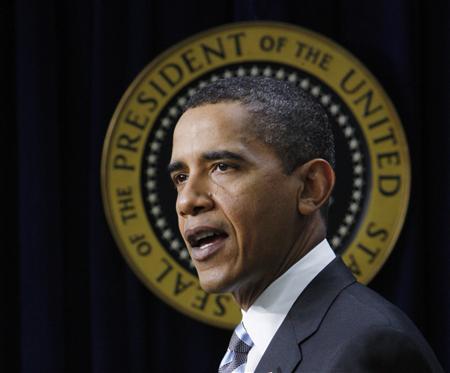
An enterprising Reuters photographer – likely with a sense of humor – took this picture of President Obama today:

Obama

The President was speaking about his administration’s programs to help small businesses.  No word on whether he said anything about money-changers.

An image like this is probably not set up on purpose.   The White House communication staff will probably have to spend a little more attention to the sight lines for photographers at future press events.

Although, we probably should not judge them, lest we be judged.

Friday Fun: Max Baucus look-alike contest

baucusSen. Max Baucus is all over the news, meaning there are pictures of him everywhere. This is troubling to me because the Senate Finance Committee Chairman looks eerily familiar – not an exact look-alike for anyone in particular, but close enough that he could be related.
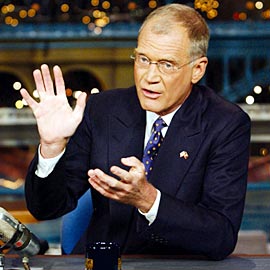
At first, I thought it might be David Letterman, who has also been making news lately:

124533__letterman_l

If the revelation came out tomorrow that Baucus and Letterman had been separated at birth, I don’t think anyone would be surprised.  But another entry in this half-assed little contest could be Chelcie Ross, an actor who you know even if the name isn’t familiar.  You may know him from Hoosiers, or as the evil coach in Rudy.  Or, in his you might know recognize his theological rhetoric from Major League:

So who do you think looks more like Sen. Max Baucus?  Letterman?  Eddie Harris?  Someone else?