The Family Foundation, a socially conservative Virginia organization, is putting a new twist on the old tactic of a candidate scorecard by releasing theirs as a video:
It’s good, but pretty basic. The video format gives the opportunity to include powerful imagery, and a group like the Family Foundation should be able to capitalize – shots of folks sitting down to dinner, or other family-friendly scenes would be much better than the waving American flag in the background.
(The Family Foundation may have had a good reason for being spartan – taking or even implying a stance for or against a candidate could have repercussions on tax-exempt status. And hey, at least they’re trying.)
As the net neutrality argument heats up, pro-regulation groups are bashing AT&T’s efforts to mobilize their employees against the measure. When AT&T sent an email detailing the issue and inviting workers to post comments opposing net neutrality, Free Press, a liberal media reform group, called them the a-word – “AstroTurf.”
Free Press, of course, admits to doing the same thing – but argues that their email messages to subscribers driving traffic to online comment forms are somehow different. Their activists, apparently, REALLY oppose net neutrality; AT&T’s employees acting through fear of losing their jobs.
AT&T workers should be fearful of losing their jobs – regulating AT&T’s internet will have an impact on its bottom line. Free Press has a flimsy argument if you think about it – but it certainly wasn’t made to evoke thought.
In this age, a stellar reputation built over years can turn to spit in a few clicks of a mouse… In the few hours in between film clip posting and absolution by MLB, every save in Rivera’s illustrious career was put in question.
Sherman’s fear of a rogue blogger making unfounded and senseless claims is understandable, especially given the fact that Major League Baseball at least payed lip service to the idea they were “investigating” the charges. But Mariano Rivera’s reputation is not in danger.
Rivera has people standing up for him now because of his entire career – not for the success he’s enjoyed, but because of how he enjoyed it. A recent Sports Illustrated article summed it up nicely. David Ortiz and Jonathan Papelbon – from the Red Sox – gushed about their respect for his personality:
“I have respect for Mariano like I have for my father,” says Boston designated hitter David Ortiz. “Why? He’s just different. If you talk to him at an All-Star Game, it’s like talking to somebody who just got called up. To him, everybody else is good. I don’t get it. To him everybody else is the best. It’s unbelievable. And he is the greatest.”
Sure, coming from a steroid cheat that may seem tainted, but Ortiz isn’t the only one singing Rivera’s praises – or the only one whose respect Rivera has won.
Writer Tom Verducci reminded readers that Rivera taught Roy Halladay – a pitcher for a rival team – how to throw his signature pitch during the 2003 All Star Game. While over the past 30 years, great closers like Dennis Eckersley and Francisco Rodriquez have celebrated strikeouts the way NFL players celebrate touchdowns, Rivera shows respect to every hitter he dominates.
It’s an important lesson in image management: for all the power of online communications, there is no substitute for genuine substance. So when a blogger posts an accusation – with flimsy evidence – accusing Rivera of cheating, you can bet there’s a reputation at stake.
A new study reports that young male voters for non-winning 2008 Presidential candidates experienced drops in testosterone levels after the results were announced. Males who voted for Barack Obama maintained higher levels of testosterone than they otherwise would at night. Aside from being a little funny, it underscores a simple truth – politics is about more than just rational debates over ideas, but also about emotional and physical reactions to candidates. Put more simply, politics is of the heart at least as much as it is of the mind.
This commercial started running earlier in the NFL season, but seemed to get less airplay after Troy Polamalu’s injury. With the safety back on the field for the Steelers, this commercial is back in the Sunday afternoon lineup. And, for aspiring PR flacks, it offers a good lesson for staying on message:
Note that Polamalu answered his own questions – not the reporter’s – and even found a way to pivot off the reporters’ line of discussion (“You asked with your eyes…”) onto his own. Textbook – even if it is just a commercial.
Sen. Max Baucus is all over the news, meaning there are pictures of him everywhere. This is troubling to me because the Senate Finance Committee Chairman looks eerily familiar – not an exact look-alike for anyone in particular, but close enough that he could be related.
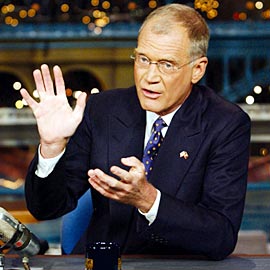
At first, I thought it might be David Letterman, who has also been making news lately:
If the revelation came out tomorrow that Baucus and Letterman had been separated at birth, I don’t think anyone would be surprised. But another entry in this half-assed little contest could be Chelcie Ross, an actor who you know even if the name isn’t familiar. You may know him from Hoosiers, or as the evil coach in Rudy. Or, in his you might know recognize his theological rhetoric from Major League:
So who do you think looks more like Sen. Max Baucus? Letterman? Eddie Harris? Someone else?
The idea of the app itself is actually impressive, strategically. Pepsi and AMP know their target audience, and their target audience is interested in hooking up with young women and telling their friends – or at least sophomoric humor about hooking up with young women and telling their friends. So the app provides information and enables users to brag about their conquests. The content may be offensive, but the basics of the social strategy are sound: combining education with channels of communication.
Evan Coyne Maloney is one of the best independent filmmakers out there. Not only does he almost guarantee hilarity, but he makes intelligent points as well. This video is a bit long (ten minutes) but interesting and worth a watch:
The study evaluates 102 top trade associations, membership organizations, and other groups with political advocacy goals and charts their use of a number of online tools – everything from collecting email sign ups to Twitter to blog badges to Facebook and everything in between. Most of the tools considered were either free or low-cost; yet the study found a surprising lack of use:
Overall, there is a lag in the implementation of the new media tools. Many of the organizations reviewed in this report have not yet embraced or employed many of the readily accessible online communication and social media tools… 76% of the most commonly used social media tools are not being utilized to communicate with members, voters and other constituencies.
On the heels of the Obama Campaign, Washington D.C. was abuzz with the possibilities of online campaigns. So what gives?
There are three things to consider when wondering why the digital wave hasn’t crashed the banks of the Potomac. First, online and social media are new, and some of the key decision-makers in these groups may not understand them fully. Being fully committed to online activity means surrendering some message control and directly engaging people who have negative comments. That may resonate with the front line folks, but senior management will usually have to deeply consider what amounts to a change of strategy.
The second item to consider – which draws a bit from the first – is that social media activity can be difficult to quantify to important stakeholders. Anyone can build a Facebook page with 5,000 fans given the resources; but translating that to action can be difficult. In other words: if you work for a health insurance trade group, and you recruit 5,000 Facebook fans or Twitter followers from all over the country, how many are going to be able to call Sen. Olympia Snowe’s office to tell her she shouldn’t bow down to the Democrats’ health care overhaul?
There’s a third and final item to keep in mind. The study itself admits that it doesn’t evaluate the effectiveness of the various tactics employed by each organization – in other words, the study simply charts charted whether a group has a presence on Facebook, but not whether that presence helped further their policy goals. Just like a real-world toolbox, and online toolbox has implements for a variety of uses. But just as you wouldn’t use a screw driver to pound nails into a plank of wood, you might look at your online goals and decide that Twitter or LinkedIn just isn’t right for you.
 Sen. Max Baucus is all over the news, meaning there are pictures of him everywhere. This is troubling to me because the Senate Finance Committee Chairman looks eerily familiar – not an exact look-alike for anyone in particular, but close enough that he could be related.