How one Florida Gator scored a PR win

The University of Florida looked putrid in a victory over Miami of Ohio on Saturday (college football is the only sport where a 22-point victory can be called putrid with a straight face).  Their offense could not get into a rhythm, in part because newly converted center Mike Pouncey kept snapping the ball down around quarterback John Brantley’s feet. Since Brantley, like most Division I-A quarterbacks, throws with his arm, this was one of the big storylines on Sunday.

On Monday, ESPN Radio’s Scott Van Pelt reported something unusual: Pouncey was available for media interviews.  According to Van Pelt, Sports Information Directors tend to shield student athletes who have had rough games from press interviews.  But Pouncey calmly answered questions and took the blame for the team’s disappointing performance.  And he didn’t give ESPN the exclusive, also sharing his mea culpa with Florida papers like the Miami (of Florida) Herald:

Showing the maturity of a valued team leader, Florida center Mike Pouncey took the blame for his offense’s unflattering start to the 2010 season… After the game, Pouncey said he planned to arrive at UF’s football facility “early in the morning” Sunday to begin correcting his shotgun snaps. When asked whether his hands were injured, Pouncey said they were not; rather, he said the ball was slipping off his fingertips.

So what will the announcers talk about next week?  Probably the fact that Pouncey is a stand-up guy.  Sure, there will be questions about Pouncey’s technique, but none about his intelligence, commitment, or fortitude.  If he keeps snapping worm burners, the assumption will be that he should return to his original position at guard and that he simply doesn’t have the physical ability to snap the ball, despite trying his hardest.  There would not be loud whispers that he’s psyched out by the pressure of performing.

(And it’s worth noting that Pouncey will probably get the lion’s share of attention this week – taking some of the heat off the rest of the underperforming offense and endearing himself to his teammates even more.)

It helps that Pouncey has a track record of success to point to.  More than that, though, the way he handled his failures honestly and proactively will win him the benefit of the doubt heading into next week’s game – and the best chance to turn those failures into successes.
Winning on Iraq

Last night’s Presidential address on Iraq was written and shaped, in part, by John Boehner.  Boehner re-drew the rhetorical battle lines on Iraq, neutering the administration looking for a win heading into campaign season.

Throughout August, Boehner and Republicans have been talking about Iraq with a fairly consistent message of thanks to the troops for their service in Iraq, crediting them for victory.  It’s not a controversial message, but one they beat the drum on pretty well.  That made it difficult for the Obama Administration to give the speech they probably would have liked to give last night.

Did you notice (as  Politico’s Roger Simon did) that the thrust of the speech had little to do with the Iraq war itself?  When the President spoke on Iraq, he echoed Boehner’s talking points in speaking about the troops’ resolve.  The final half of the speech delved into future military strategy, and then wended into domestic policy in an awkward attempt to tie policy consensus to support for the troops.

In a vacuum, a skilled orator like Obama might have claimed credit for ending the conflict started by his predecessor – a tack he has used repeatedly for his economic policies – and called for unity after a long national nightmare.  There might have even been a few digs at the rationale behind the war in the first place, Easter eggs for the far left supporters who will be crucial campaign activists in the coming elections.

Instead, Obama gave a speech which reads like it could have been given by John Boehner.

UPDATE: I meant to include this earlier, and just plum forgot.  To get a sense of what the speech may have looked like in the imagined vacuum, check out the opening of the email Organizing for America sent around last night over the President’s signature:

Tonight marks the end of the American combat mission in Iraq.

As a candidate for this office, I pledged to end this war responsibly. And, as President, that is what I am doing.

Since I became Commander-in-Chief, we’ve brought home nearly 100,000 U.S. troops. We’ve closed or turned over to Iraq hundreds of our bases… Ending this war is not only in Iraq’s interest — it is in our own. Our nation has paid a huge price to put Iraq’s future in the hands of its people. We have sent our men and women in uniform to make enormous sacrifices. We have spent vast resources abroad in the face of several years of recession at home.

Is Maxine Waters about to be James O’Keefe’s next YouTube star?

Mr. ACORN pimp himself, James O’Keefe, announced via Twitter today that Rep. Maxine Waters would be the subject of his next series of videos.  Here’s the preview:

Two things are evident: O’Keefe still understands the power of online video, and he still understands the power of timing.

The ethics charges flying around various Democrats are starting to look like a trend – much like Republican scandals leading up to the 2006 election painted the picture of a power-happy party inviting a rude awakening at the hands of voters.  Getting Waters on camera in a sting operation like this could make the ethics violations very real to voter and underscore the broken promises of Democratic gains in 2006 and 2008.

But on top of that, you can’t say enough about O’Keefe’s media-savvy release strategy, either.

By releasing a teaser, O’Keefe capitalizes on this week’s news cycle about Waters and her ethics charges.  After controversy surrounding his presence in a Senate office earlier this year (and the storm surrounding his associate Andrew Breitbart’s role in the Shirley Sherrod affair), he can expect that this initial release will lead to a round of denouncement from left-leaning talking heads; for a while the story will be that James O’Keefe has a Waters video.  The Congresswoman’s office will likely be asked to comment; maybe she’ll even say something embarrassing and unwittingly drum up more coverage.

True, O’Keefe could have gotten just as much coverage this week by releasing a completed video.  But what about next week?  This strategy allows O’Keefe, after the initial frenzy, to drop a second video and get another round of coverage.  And, the vile and hatred he receives from the left this week may make the release of the full video that much more newsworthy.

If it sounds familiar, it should – it’s exactly how O’Keefe and Breitbart set up ACORN to take itself down.

Timing made the HOPA hoax a win

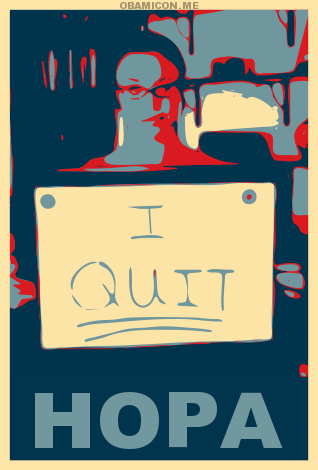
Yesterday, the story of a young go-getter who quit her job via a series of dry-erase board messages due her boss’s sexual harassment burned up the internets.  The girl was dubbed “HOPA” (after her boss’s mistaken acronym for “hot piece of ass”) or “Jenny DryErase” by supportive Facebook followers and commenters.

Today, the story was revealed to be false.  Yet it is still an excellent career move for an aspiring actress and an aspiring comedy website – and illustrates the value of timing in capturing the short attention span of folks online.

The original post, on comedy site The Chive, was set up to go viral for a couple reasons.  First, the act of quitting a job and metaphorically burning the place on your way out Jerry Maguire-style isn’t completely out of left field; even doing it through a variety of emailed photos isn’t even that out there.  It’s her signs and her emotive facial expressions that makes the user laugh.  Second, and more important, the girl’s story works equally well if it’s true or not.  So it wasn’t unbelievable, and investing in the story didn’t mean believing it was true – creating a low barrier of entry.  The stage is set.

But as with all comedy, timing is everything.  The Chive struck gold by releasing the pictures on the same day that an airline steward became an international folk hero for leaving his job down the escape chute, a beer in each hand.  profanity-laced goodbye to his own job, so quitting was in the news.  They couldn’t control the news cycle, but it worked to their favor.

What they did right on their own, however, was debunk the story of HOPA girl the day after attention peaked.  Announcing the hoax in a month, or even in a week, would have meant reaching people well after they had forgotten the Jenny DryErase post and moved onto the next Hitler/Downfall parody.   In other words, it would have been irrelevant, and there would be no lasting benefit.

The real HOPA girl, actress Elyse Porterfield, has her name everywhere; people who might be in a position to help her career know now that she can pull off a pretty good photo shoot. The Chive has the added web traffic and the street cred with that comes with manipulating web audiences into taking a hoax viral.  Advertisers like sites that can, occasionally, draw big numbers for a few days.

The tactic of a fake viral picture isn’t really translatable to campaigns, which have to be somewhat transparent in their messaging.  But it is important to understand how fast online communications work.  Windows of opportunity aren’t open wide and they aren’t open for long.

Baiting and switching the NAACP

Last week, the NAACP looked to deflate the influence of the tea party movement by calling it racist, a charge echoed and kept alive by lawmakers on Capitol Hill even if it was through denials. The easy counter was to condemn the NAACP’s own sordid record of race-baiting.  But Andrew Breitbart went one step further.

When Breitbart releasing a video of an Obama Administration official making what appeared to be racist comments at an NAACP event, the NAACP denounced Shirley Sherrod and she lost her job in the progressive administration in which she served.

Now comes the rest of the story, which shows Sherrod is actually making a larger point about racial harmony.  The USDA is trying to give Sherrod her job back and the NAACP repudiating their repudiation.  (If I were Sherrod, I’d forego the job in favor of the eventual lawsuit settlement.)

The NAACP blamed Fox News, but really this is a bait and switch executed by Breitbart.  By releasing the bad part of the video before the context, he coaxed the NAACP to do exactly what it did to the tea party movement – make a wild accusation without examining the whole context of the comments.  (Breitbart may lose some cache for doing the same thing, but his reputation will be restored with the next sensational video he releases.)

Lest one think this gives Breitbart too much credit, remember that he, James O’Keefe, and Hannah Giles  used a similar strategy with their series of videos exposing ACORN, releasing the videos one at a time to build momentum.

The desired result of Breitbart’s masterstroke are two-fold: first, the NAACP is exposed for jumping on any charge of racism without evaluation.  Second (and, with campaign season around the corner, possibly more importantly) media outlets may be more guarded when looking at videos that show comments which appear, out of context, to be racist.

November expectations

The bar has been set for the GOP in November: outside of a takeover of the House and Senate, all electoral gains will be failures.  At least, that’s the expectation according to the Democrats.

The White House is openly discussing the prospect of a Republican Congress.  The Democrats’ ploy to tie BP to the GOP this week – the clever microsite BP Republicans – says that the politicians it highlights “will be guiding U.S. Policy if the Republicans can regain control of Congress this November.”

This rhetoric sets the stage for effective policy messaging assuming the Republicans don’t retake the majority.  A post-November Congress with fewer Democratic seats but maintaining a blue majority would give President Obama the opportunity to use the “I won the election and you lost” argument he was so fond of early in his Presidency. And if Republicans do re-take the House, the shock is lessened somewhat because, after all, they would only have accomplished what was expected.

Despite the complaints from some of the people actually running, the White House is smart to set the bar high for Republicans and low for Democrats.

LeBron James owns the message

Politicians are clamming up, Politico says, because they’re worried about becoming the next YouTube sensation.  Candidates are refusing to talk to camera-wielding activist journalists.  With more communications channels than ever, politicians are opting not to use them:

“The irony is that in an political environment in which voters are demanding authenticity, candidates find themselves in a technological environment that exploits authenticity,” lamented Mark McKinnon, a longtime political strategist and top adviser to George W. Bush and John McCain. “So rather than show more of themselves as voters want, candidates are showing less of themselves for fear of revealing too much.”

This is probably better than speaking off the cuff and apologizing for gaffes, but it isn’t a winning strategy.   These would-be-elected-officials would do well to take their advice from a monarch: King LeBron James, the most popular man in sports, and the subject of a much-criticized special on ESPN in a couple hours.

When James’ decision on where to play next year is finally revealed tonight, a new chapter will start in his professional life – not only as the signature star of the NBA, but as a player expected to win a championship.  Joel Sherman of the New York Post likens James’ situation to that of Alex Rodriguez, who used to be the best player ever to not win a championship. He’ll have plenty of questions, and will be the closest thing the sports world has to a politician for a week.

That’s why the ESPN special is a fantastic idea.

James is announcing his signing in an hour long special, and according to ESPN radio this morning, the big news will come in the first 15 minutes.  That means there will be 45 minutes where James will discuss his decision in the controlled, traditional, and respectful environment of ESPN.  That discussion will fuel tomorrow’s bloggers and drive-time hosts, and will extend into weekend coverage.

And most of it will echo the things James wants out there.  He’s answering demand by engaging in media overload.  In doing so, the King will rule over the message.

Now, if only LeBron would take control of the Knicks in the same way…

McChrystal unclear

That General McChrystal’s rift with his commander-in-chief was aired in a Rolling Stone interview is a troubling sign for more reasons than simple insubordination.

NewsBusters notes the airing of previous greivances – although none of the situations are quite as bad as McChrystal’s.  But the Washington Post draws an interesting comparison that puts the real problem in context:

Much of McChrystal’s career was spent in the military’s secretive special operations community, which has little experience dealing with the press… The general’s relationship with the press contrasts significantly with that of Gen. David Petraeus, who spent a far larger segment of his career in Washington and is far more practiced in dealing with reporters and the civilian leadership.

Disagreements are not wrong, but clumsily airing those disagreements is.  Unless he’s angling for a dismissal and job as a military expert talking head (or a spot on the GOP ticket in 2012), McChrystal’s misstep seems to come from his lack of savvy in how his comments would look in print.

Combined with the previous criticism, the clear trend is that PR expertise is becoming a requirement fgor military leadership – along with an aptitude for killing people and breaking things, which is the core competency of the military.

Or at least, it’s supposed to be.

The smart move would have been to turn down the interview with Rolling Stone.  In this failing, McChrystal can’t be alone – surely there were several more information officers who thought the interview would be a good idea.  The concept of the “celebrity general” isn’t new – heck, we have one printed on our most-used currency, and several Presidents have followed.  But as with any project or campaign, the folks who speak to the press should be ready to do so – and not pushed out there because of an overly-politicized media environment that seems to demand that everyone have something to say.  It isn’t fair to the general, the troops, or the people watching the news.

It’s one thing to dress a spokesman up in a warrior’s fatigues for the cameras; it’s much more difficult to stuff a warrior into the civilian role of PR director.

BP slogs, Exxon blogs

This week, Exxon Mobil launched Perspectives, a blog about “issues, policies, technologies, and trends” surrounding energy development.  Yes, that includes oil, and yes, they kick off by talking about the mess in the Gulf of Mexico.

No, Lionel Osbourne is not a featured blogger.

BP has received the lion’s share of the public scorn since the spill, but other companies remain vulnerable to regulations and increased taxes.  It isn’t an immediate challenge, but Exxon Mobil didn’t wait for the problem to come to them.

It would have been easier, in the short term, for Exxon Mobil to act like the accomplice of the kid who gets punished for a grade school food fight – sit on their hands, let BP continue to be yelled at by authority figures, and keep quiet hoping none of the outrage falls on you.  The problem with that strategy is that, eventually, the story will not be about BP’s specific failings but the failings – and potential failings – of the industry as a whole.

Of course the blog is biased and slanted, but Exxon Mobil makes no effort to hide its involvement.  Perspectives is clearly branded as the official Exxon Mobil company line – take it for what its worth.  And doing that now will help Exxon Mobil’s credibility (at least somewhat) in future discussions about what their obligations should be.  Plus they’ll likely to have some thoughts on what BP’s obligations are too.

Fantastic.