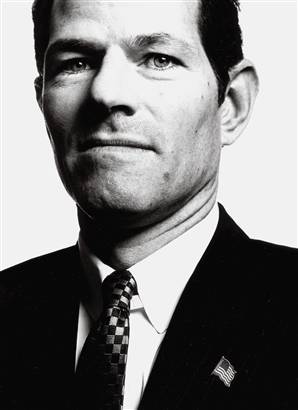
Tonight on CNN: “Ratings Grab” with Eliot Spitzer

Spitzer
Photo from mhpbooks.com

The Most Trusted Name in News is putting it’s prime time show in the hands of a guy who broke laws at night that he enforced by day.

Phil Donahue accused MSNBC of trying to “out-fox Fox” when it fired him in 2003.  He meant it as a slight to MSNBC’s political leanings, but it goes a little deeper than that. Fox’s format is based on a complement of breaking news during the day (often car chases and such) and heavy opinion and analysis during primetime.  (It should be noted that Donahue was 175 at the time MSNBC canceled him, though.)

There’s the formula for news success in primetime.  Fox got to the top of the ratings with O’Reilly and Hannity and Colmes (before Colmes bounced); MSNBC – which was all but dead in the early 2000s – rebounded with Olbermann and Maddow on the other side of the aisle.

Neither network’s success is purely ideological – each of those four programs features strong, unique personalities.  News channel viewers aren’t looking for news at all; they’re looking for people they either love or love to hate. Enter the Love Gov – who, despite the fact that he’ll be sitting opposite a Pulitzer Prize winner, will be the headliner on what is ostensibly a news show.

But will another personality show succeed?

If everyone in a shopping mall is selling shoes, and you open up a new shoe store, folks are going to need a compelling reason to leave their existing shoe store and come to yours – especially since they already have so many options.  And selling the same types of shoes as every other store doesn’t give you an advantage.  So the new show will have to have more than just a controversial name to bring in viewers.

Of course, if Spitzer interviews Marion Barry every now and then, CNN might have ratings gold on their hands.

No one likes citizen journalism

This week may be called anti-indie journalism week.  Consider these three stories:

Each story, in its own way, is based on a lack of understanding of the modern media landscape.  But door number three is the most egregious.

Risen’s comments about bloggers could be appropriate – the downside of a media universe with more outlets is that there are more outlets tat just spew crap, and it is up to the reader to be more discerning.  He doesn’t summarily dismiss the concept of blogs, though he does come off as an arrogant schmuck.  Similarly, the “student” who questioned Etheridge never identified himself as a reporter, which would have been the smart thing to do.

The FTC, on the other hand, is just way out in left field.  The document, which outlines options such as granting tax-exempt status or other allowing reporters to copyright “hot news.”  Really, though, these recommendations are simply reactions to the fact that print newspapers have fallen on hard times:

Although many of the issues confronting journalism cut across different news media platforms, such as broadcast television and radio, most of the discussion in this document will use the perspective of newspapers to exemplify the issues facing journalism as a whole. Studies have shown that newspapers typically provide the largest quantity of original news to consumers over any given period of time. We include within the term “newspapers” online news websites run either by an existing newspaper or by an online-only news organization.

That an online news aggregator like the Drudge Report would seem to count as a newspaper to the FTC isn’t the biggest problem.  The big problem is the concept of establishment journalism, which is the bedrock of the FTC report: professional and somehow specially qualified reporters paid to investigate and package stories for consumption by the reader.   That mindset is what leads a reporter for a prominent newspaper to lash out at internet critics or a Congressman to take umbrage with a question from a reporter without a press pass.

When the reporter or the politician does thinks that way, it’s just stupid.  When the FTC thinks that way, it could also become the law.

Facebook reporting

New York Times tech blogger Nick Bilton tweeted an “off-the-record” quote from an unnamed Facebook official today.  The groundbreaking revelation: CEO Mark Zuckerberg scoffs at privacy.

The leak was ill-timed for Facebook.  As Wired’s coverage points out, the “official” nature of an off-the-record conversation means that it probably shouldn’t have been repeated:

“‘Off the record’ restricts the reporter from using the information the source is about to deliver,” reads NYU’s Journalism Handbook, in one definition of the phrase.  “If the reporter can confirm the information with another source who doesn’t insist on speaking off the record (whether that means he agreed to talking on the record, on background, or not for attribution), he can publish it.” “On background” usually means that information can be used, but can’t be attributed to a specific person.

In other words, the person making the quote might have thought the information was private, but the conversation was set up so that information was revealed.  Boy, wouldn’t that be instant karma.
In reality, the unnamed source apparently understood that he would be quoted – which is good.  In media relations as well as Facebook, nothing is really off-the-record.

Signs, signs, everywhere are signs

Arizona’s new immigration has, predictably, led to protests.   John Hawkins of Right Wing News chronicles some of the disturbing signs that the pro-illegal immigration protesters have been waving about.  Here’s my favorite:

These signs in and of themselves aren’t really relevant, but as Hawkins points out, outlets like the Huffington Post love to bring their cameras to tea party rallies to capture the “shocking” rhetoric they see there. It’s an astute parallel to draw: If you want to judge the tea partiers by their most extreme elements, don’t you have to judge the pro-illegal immigration movement the same way?

Doing either misses the bigger images that each movement brings to the table.  For instance, in many of the pictures Hawkins displays, extreme signs calling for the overthrow of America obscure protesters with American flags in the background.  The undercurrent of the immigration debate is a quest for the American dream, not the racist rhetoric on the signs – a revelation which puts the debate in a new perspective, even if you don’t agree with what they’re saying.

That might be a good lesson to kind in mind for those covering the tea parties, too.

iJournalism or iReceiving stolen goods? (Or something iElse?)

The lather over Gizmodo’s exposure of the new iPhone 4 has ignited some debate over whether the techno-geek blog went too far in buying a possibly lost and/or stolen iPhone prototype for their exclusive.  Joe Wilcox does a pretty good job summarizing how Gizmodo’s scoop broke the law:

California’s “Uniform Trade Secrets Act” is unambiguous, partly defining “trade secret” as “information, including a formula, pattern, compilation, program, device, method, technique, or process.” The Act uses several definitions of “misappropriation,” of a trade secret with one being: “Acquisition of a trade secret of another by a person who knows or has reason to know that the trade secret was acquired by improper means.”

An unreleased phone accidentally left in a bar and sold to Gizmodo surely qualifies as acquisition “by improper means.” Proper means would be purchase of the device from Apple, following its public release.

Wilcox also mentions the recourse Apple would have if they chose to pursue it.  At this point, it doesn’t look like Apple is going to make a move – and from that fact follows the point which makes the whole discussion moot: Apple doesn’t want Gizmodo to take down their “exclusive look” at the iPhone – not even the post where the phone gets dissected it like a science class frog – ostensibly, the party that tips Apple’s hand the most to industry competitors.

Of course Apple wants the pictures up on the internet, and of course they want everyone talking about the brand new secret product.  Consider that Apple announced the existence of the iPad months before the official release date; this staged rollout allowed Apple to break into two news cycles.

Not to play conspiracy theorist, but Apple could benefits from three rounds of coverage – the current stories about the leak, stories about the announcement, and finally the release (complete with the requisite long lines around the block early in the morning at an Apple store near you).  Is it far-fetched to think Apple would have left this “lost” phone in plain view as a brilliant guerrilla marketing move?  Then again, maybe Apple wouldn’t have any security systems in place that would prevent an engineer from taking a super-secret prototype out of a lab and into a bar.  Apple may not have purposefully leaked the iPhone 4, but they clearly aren’t crying about it now.

Rove, Rove, Rove your boat

Despite some stirrings on the right, there’s nothing wrong with Matt Lauer’s interview with Karl Rove, part of which aired yesterday morning.  The Today Show host was a bit combative, but journalists are supposed to be that way when talking with political figures.  (And sparring with a Republican is at least better than recycling the same five stories every morning and pretending like something is new.)

Matt Lewis had Rove on his podcast yesterday and came at the interview from a different angle.  If you are a politics junkie, it’s a good interview to listen to.  (For instance, Rove shares a hilarious story of a then-college-aged Lee Atwater’s first meeting with George H.W. Bush.)  It’s definitely worth a listen.

Where do you get your news from?

Eighteen months ago, Vice Presidential nominee Sarah Palin was roundly criticized for being unable to answer Katie Couric’s question about what newspapers she read frequently to get her news.  Palin’s answer was “most of them.”

It’s actually a good answer poorly worded.  According to a report from the Pew Internet and American Life Project, 92% of American’s “graze” on news from multiple sources and on multiple platforms. Only 35% even have a “favorite” source.  So even if the dinosaurs of traditional media – such as the CBS Evening News – are losing viewers, it doesn’t mean the public is less informed.  Actually, it probably means the opposite.

Perhaps Palin should have responded to Couric’s ridiculous question with something like: “Well, Katie, even up here in Alaska it’s a digital age.   The morning newspaper and the evening news are important, but you can’t stop there, and we have access to news sources from all over the world.  I don’t limit myself to a single source or a small group of media outlets.  What well-informed person would?”

REAL journalism on the right

The Daily Beast’s list of the top 25 conservative journalists makes one thing obvious: the Daily Beast either has little concept of what journalism actually is or felt the need to create a list with 25 names rather than, say, a dozen.  The list ranks the likes of Rush Limbaugh, Glenn Beck, and Sean Hannity highly – and while they are influential commentators and entertainers, they are not journalists.

The list has several good picks such as Andrew Breitbart, Matt Drudge, and Michael Barone.  Like Limbaugh and Friends, they have opinions; but unlike the typical radio show host they illustrate their views with information.

Good opinion journalism was best summed up in a seminar given by a reporter who should have been on the list, Tim Carney: “Nothing convinces people like facts they didn’t know before.”

Case in point: in a recent blog post, Carney explored the reaction of Sen. Chuck Schumer to the Supreme Court’s Citizens United vs. FEC decision.  Schumer bemoaned that the decision “open[ed] the floodgates” for “special interest money” from large companies.  With a little bit of research, Carney discovered that Schumer was the top recipient of funds from three of the top five industries in terms of campaign giving.  He also found about a dozen former Schumer staffers working as lobbyists.  In other words, when Schumer defends campaign finance regulations, he’s defending a system that he has found very lucrative.

A talk radio host may get laughs by calling Sen. Schumer “Chuck the Schmuck” or joking about the New York political machine functions so comfortably in – and there’s certainly a place for that.  But real journalists like Tim Carney are the ones who find the factual nuggets of truth necessary for commentary and satire.

And because that job is so important, it’s equally important to get the job description right.

Good journalism, bad journalism, and Mary Landrieu’s office

Very few people actually know what happened last week in Mary Landrieu’s New Orleans office.  That didn’t stop multiple news outlets of dropping the phrase “wiretapping” around liberally (no pun intended) when reporting that James O’Keefe, Stan Dai, Joe Basel, and Robert Flanagan were arrested.  Of course, that meant echoes of Watergate coloring the commentary – even though the official documents make no such accusation.

Watergate makes for an interesting comparison here – not in any crimes perpetrated, obviously, but in reporting.  Anyone who has read All the President’s Men – or, like me, simply seen the movie – knows that Watergate was exposed by tireless investigative journalism by Bob Woodward and Carl Bernstein.  They spent months digging, to prove their case.  They did not print half-truths and echo reports from the AP.

Beyond the statement made by O’Keefe, I know nothing about this case.  I am a fan of O’Keefe’s and Dai’s work from their days at Rutgers and George Washington, respectively, which I got to witness when I was working at the Leadership Institute.  I have a strong suspicion that whatever information they were looking for probably would have been politically – but not personally – damaging to Sen. Landrieu.

But to make any allegations beyond that would be wrong for me and certainly wrong for anyone who considers themselves an actual journalist.  MSNBC and other outlets showed no such restraint.

In fact, one might argue that these arrests – like the Watergate arrests – are the beginning, rather than the end, of the questions.  These guys were looking for something – O’Keefe says that Landrieu’s constituents were calling the office but couldn’t get through, and he thought they were ignoring calls.

If citizens are trying to participate but can’t, isn’t that a pretty big story?

“Free is too expensive”

That’s yesterday’s line from Les Hinton, who oversees NewsCorp’s American operations such as Fox News and the Wall Street Journal, to newspapers.  They cannot, he explained to the World Newspaper Congress, simply give away the content they create.  “News costs,” said Hinton.  “Quality costs.”

His boss, Rupert Murdoch, has already promised that his online properties will being charging for content, and Hinton encourages others to do the same.  Some outlets have been able to do that – Roll Call, National Journal, and the Wall Street Journal charge readers for online access, and ESPN’s website has certain sections which require a subscription fee.  Google is obliging, making it easier for subscription sites to appear in news searches without giving away all of their content.

But as any armchair economist can tell you, as the price of a product increases the demand goes down.  So media entities which charge for their online content will naturally have fewer readers.  Hinton claims that “such a business model has to mean one of two things: Either there is no demand for the content or there are substitute suppliers of that content sufficient to drive the price almost to zero.”

And indeed, there are substitute suppliers of that content.  When the New York Post begins charging me to read about the New York Yankees, I will simply get my Yankees news from the Daily News – or River Avenue Blues, or MLB Trade Rumors.

Does that mean selling news is a bad business model?  Not necessarily.  By charging for news content, media outlets may wind up with an audience that is smaller in numbers but higher in quality.  For instance, a widely read blogger may find it worth his or her while to subscribe to news sites to stay informed and have the best blog content possible.

If the media outlet hits revenue goals which allow it to produce good content, and the blogger attracts enough readership to sell advertising, everyone hits the metrics they care about – and everybody wins.