Hillary Clinton’s campaign has a big problem: Hillary Clinton is the candidate. It’s great news for Saturday Night Live, but could be bad news for Democrats. Read more in my latest at Communities Digital News.
Tag: campaign 2016
Announcing the start of a campaign and/or murder spree
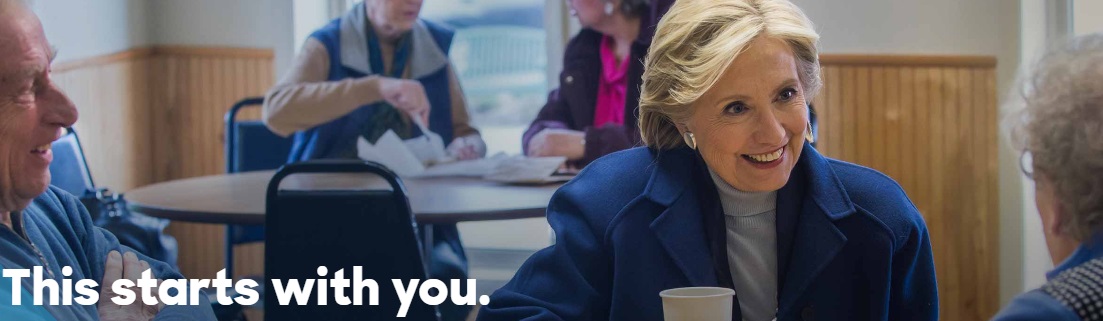
“Death, it comes to us all,” Hillary explained, resting her coffee cup on the table. “For all our advances in medicine and health care, life has a 100% mortality rate. It’s the only thing that really binds the haves and have-nots, you know? The deck may be stacked for the rich, and the system may be rigged so the rich get richer, but no one escapes the end.”
Hillary leaned in, her eyes still wide and unblinking. “We are all equal in death.”
She paused to let it sink in, the smile was still painted across her face.
“After I finish this coffee, I’m getting into my van. I’m going to travel from one end of this country to the other, bringing true equality to the nation. There will be plenty of people out there who want to stop me, small minded people who don’t understand what we’re accomplishing. But one day, history will look back on this trail of death we are forging and appreciate the revolution.”
Hillary took another sip of her coffee. “You’re wondering why I’m telling you all this.”
She leaned in closer, her voice lowering to a throaty, raspy whisper.
“It starts with you.”
Winning on issues
At Communities Digital News this week, I opined that Democrats and their left-tilting interest group allies are probably hard at work on issues that straddle the line between news and pop culture to identify voters early on who might be receptive to campaign messages next year. The article talks about wages, religious freedom, and police-involved shootings as the primary opportunities.
If it hadn’t been for the Rolling Stone debacle, the broad umbrella (no pun intended) of women’s issues might make the list – and it might still, once the concern over shoddy journalism evaporates.
The point is, grassroots campaigns need hooks that bring in voters who wouldn’t otherwise show up. Whichever side does a better job finding and using them will have an easier time of it next year.
Super PACs and RFRA
Over at Communities Digital News, I look at how super PACs and other outside groups can spend a little bit smarter for 2016 than they have in past election cycles by using state policy issue campaigns to identify voters and crystallize messages. This business in Indiana is a good example. People are talking about the Hoosier state’s Religious Freedom Restoration Act, one way or another, and that means it’s an organizing opportunity.
For the sake of illustration, let’s oversimply the sides in this. Broadly, we can divide the sides into three camps:
- The Anti-RFRA Left: We’ve heard plenty from these folks.
- The Pro-RFRA Right: People who, whether or not they dig gay marriage, think its ok to let people make their own choices.
- Those who are uncomfortable with RFRA: This is the audience in the middle – the ones made uneasy by the comparisons to pre-1960s segregation laws.
All three of these groups are important to identify. Group 2 offers activists, campaign volunteers, potential donors, and highly probable voters. But messages to Group 3 are important. If this group is uncomfortable with RFRA now, they will be similarly uncomfortable when Democrat allies smear the eventual Republican nominee as anti-gay in 18 months. Republicans and conservative outside groups need to start talking to this group now.
Critical Conversations about Possible Democratic Nominees
Last night Lisa Ruth and I talked about Hillary Clinton’s 2016 chances on Communities Digital News’s Critical Conversations podcast – if you missed it live, you can check it out here.
One thing that doesn’t bode well for Clinton is the fresh Reuters poll that shows a 15-point decline for her among Democrats. If Clinton is challenged, she’s awfully vulnerable; the question is whether there are Democrats who are in a position and have a desire to take advantage.
Ranking the Democrats who would be President
My post this week at Communities Digital News talks about the top five contenders for the 2016 Democratic nomination in the wake of Hillary Clinton’s State Department email issues. Here’s how I would rank them in order of their chances of winning the nomination:
- Clinton
- Vice President Joe Biden
- Sen. Elizabeth Warren
- Martin O’Malley
- Al Gore
O’Malley has been polling behind Jim Webb and Bernie Sanders, but I think he is still more likely to win the nomination. O’Malley has a very narrow path to the nomination, but as a two-term governor he has shown that he can win elections and run a government. Webb is a one-term Senator who wouldn’t have even been that if not for YouTube; Sanders is a socialist who is clearly running to push ideas. If the top five are struck by lightning, the Democratic National Committee would be more likely to draft John Kerry than let either Webb or Sanders carry the banner for a cycle.
Al Gore is dead last because he probably won’t run, though he might dance with the notion of jumping in. If he did, his age and years of media experience would probably lead him to focus on an advertising-heavy campaign, like the one Rudy Giuliani tried to run in 2008. (Fun note: If it did shake out like that, his chances could rest with Florida… again.)
One factor that clouds the potential field is that Democrats might have a tough time in 2016 no matter who the nominee is. Biden, who will be 74 on Inauguration Day 2017, probably can’t wait until 2020 – Warren, who will be 67, might be able to. Her calculated risk may be that Clinton is the inevitable nominee but a probable loser in the general election. Acting like a good soldier now may win her Clinton’s favor and help for a 2020 challenge against an incumbent Republican President.
Hillary had a bad week but made a good decision
My latest column at Communities Digital News looks the least-newsworthy piece of Hillary Clinton news that came out this week: the rumor that she will launch her campaign for President in April. (Heck, even the blue dress portrait of Bill Clinton got more attention.)
The buzz around the latest scandal – Clinton’s official use of non-official emails – reminds me of 2005, when I worked at the Leadership Institute. As a 501(c)(3) organization, LI was careful not to engage in partisan activity or anything which could be perceived as such. One of our promotional posters included images of Ronald Reagan and Margaret Thatcher under the word “Yes” juxtaposed against images of Fidel Castro and Hillary Clinton under the word “No.” With Clinton up for re-election in 2006, we started trying to figure out alternatives to replace her on the poster. (That had been done previously when Clinton first ran for Senate, but that was before my time.)
I’m fuzzy on the details but I think we settled on Michael Moore. The point is that we couldn’t speak ill of her once she was an official candidate lest we risk LI’s tax-exempt status. That’s a major reason I think Clinton would be wise to jump in early.
It’s not just winning, but HOW you win
Some would tell you that the larger, more diverse electorate that shows up in a Presidential year means Republicans are marching toward disappointment in 2016. Not so. In my new piece at Communities Digital News, I discuss how data-driven campaigning delivered most of the really close races of 2014 to the GOP – and how that sets them up for future success.
Sure, 2014 was a wave election – but that shouldn’t detract from smart Republican campaigns that put themselves in position to take advantage. There’s a difference between riding a wave and surfing.
 Jim Eltringham