The Tea Party’s first casualty of 2012

A moderate Democrat Senator, who had been backed into some tough votes, was made vulnerable by his public allegiance to President Obama.  The only possible path to victory would be a tea party Republican candidate lacking in media savvy and unable to connect with voters.  Unfortunately for Jim Webb, he isn’t Harry Reid.  Despite a wide-open Republican field stuck between lesser-known candidates and former YouTube sensations, Webb is not running for re-election in 2012.

Many political observers thought a groundswell of conservative activism would upend incumbents in 2012 – speculation included Orrin Hatch, Dick Lugar, and even the normally safe Olympia Snowe falling in primaries.  Webb’s surprise exit beats them all.

Even without an opponent at this point, Webb had to see the writing on the wall that his re-election would be tough.   The redemption-seeking retread candidacy of George Allen is ripe for a tea party upset, and other candidates are lining up as well.  But with excited conservative activists and the absence of national Democrat momentum, Webb was destined to join Creigh Deeds in the second place circle in November 2012, even against a fringe tea partier.

Put another way, Sharron Angle, who narrowly lost to Reid, probably would have beaten Webb in Virginia.  John Buck in Colorado likely would have beaten Webb in Virginia.  Webb doesn’t have the long record of public service that Reid boasts, nor the leadership, nor the ability to raise nearly $25 million to holdhis seat.  Democratic campaign committees and independent groups were unlikely to chip in – races in Missouri, Pennsylvania, Ohio, Florida, West Virginia, Wisconsin, and New Mexico, plus pickup opportunities in Nevada and Massachusetts, will all rank ahead of Virginia for national Democrats.

Aside from the realities of the electoral map, investing in a Virginia race with Jim Webb as your candidate has a strategic messaging issue.  After all, Democrats were able to beat back some challengers in 2010 by convincing independents that specific Republicans – such as Angle – were a bit loony.  Michael Bennet, Chris Coons, Reid, and others were able to paint themselves as sane alternatives to “crazy tea partiers.”

There is simply no conceivable way the tea party could out-crazy Jim Webb.


Mobile app usage and the 2012 campaign

A study shows that about one in four mobile apps are used exactly once when downloaded.  Aside from downloader disappointment after the first use, it likely also signifies that free apps are easy to forget.

This study is well-timed for any 2012 campaigns that are paying attention.  Several Republican primary challengers will probably join the President in having branded campaign apps, and success or failure of those apps will be measured by raw download figures.  That won’t help anyone get elected, though.

As campaigns begin their planning stages, they would be smart to think about which supporters would download an app and use it multiple times.  This is a group who, in the past, I’ve called the “App Class” – high-level volunteers and grassroots activists, rather than most voters.  Any significant mental and financial resources that go into app building should be allocated trying to figure out how to make these folks more effective.  And instead of determining success based on how many times an app is downloaded, campaigns should look at the metrics that result in votes – in other words, how many phone calls were made through the app, or how many doors were knocked on using voter lists accessed through the app.

Winning the Salmon

Immediately after the State of the Union address, NPR asked listeners to describe the President’s speech in three words, then made word clouds out of the responses.

The dominant word from the speech?  Salmon.

Even self-identified Democrats told NPR the fish was the biggest hook of the night – here’s their word cloud:

At first blush, it seems like President Obama lost his message. The President’s recommendations on economic, education, and energy policy took a backseat to a joke that, as my brother said, sounded like it was ripped off from a Kenny Bania routine.

In reality… That was gold, Jerry.  Gold!

The President’s job approval rating is creeping up, but Republicans are rebounding in the polls as well.  In other words, his return to good standing with the public probably has more to do with the fact that, since the election, there haven’t been television ads running non-stop blasting his economic and health policies.

That will, of course, change in the coming months, once the real legislative battles start, and once the Republican primary season starts in earnest negative messages about President Obama will blanket the news coverage.

For all the talk about Obama’s centrist political re-orientation, he has to be personally likable if he wants to win in 2012.  His charisma was a key factor in his ability to best John McCain in 2008, and the lack of charisma among the early Republican front runners will make this an advantage for him again next year.

Obama may not be able to get a majority of Americans to agree with him, but he can get them to like him.  A State of the Union speech most memorable for the yuks can only help that.  Viewers (and voters) can disagree about income tax policy or health care overhauls; a good sense of humor can cut across partisan lines.

Cross posted at Pundit League. Read it again!

Don’t be afraid to talk trash

In my regular Tuesday post over at Pundit League yesterday, I likened the New England Patriots’ inability to tune out trash talk from Rex Ryan and the Jawin’ Jets to a candidate or political figure who gets distracted by menial attacks.

There’s a flip side to that coin, though, and the Washington Times’s Tony Blankley hit on it today: Republicans can aggressively pursue their agenda, even if their foothold in Washington is limited to the House majority.  While some on the right fear a repeat of the 1995 government shutdown which turned public favor toward President Clinton, Blankley doesn’t expect history to repeat if the latest GOP majority refuses to fund the Obama agenda:

We lost that battle for three reasons: 1) because the shutdown was falsely but effectively framed in the public mind as motivated by the personal pique of the speaker and the desire of the GOP to “cut Medicare in order to give tax cuts to the rich,” 2) the issue of deficit spending and public debt was of much less concern to the public than it is now and 3) we were not able to deliver our interpretation of the issues directly to even our own supporters.

Back in 1995, there was no Fox News; there was no broadly used Internet; and conservative talk radio was not nearly as powerful as it is today. I had to try to get our message to the public through the filter of the mainstream media (New York Times, Washington Post, CBS, NBC, ABC, etc.) at a time when it was in fact mainstream. They were in no mood to fairly represent the facts, and we got shellacked.

Blankley advises the GOP to lose their fear of PR wars because the battlefield has changed so much in 15 years.  But he’s really advocating the same strategy the Jets used in the week leading up to the Patriots: be aggressive in messaging, and let the chips fall where they may.


Obama’s compromising word choice

Those who, in the wake of the 2010 elections, foresaw a Clintonesque Obama administration that tried to “triangulate” policy positions, the President’s op-ed in the Wall Street Journal serves notice that… well, they may have been right.

First off, it’s in the Wall Street Journal, where the opinion page is widely recognized for leaning rightward.   Second, it describes an effort to strip federal bureaucracies of some layers of red tape:

Sometimes, those rules have gotten out of balance, placing unreasonable burdens on business—burdens that have stifled innovation and have had a chilling effect on growth and jobs… This order requires that federal agencies ensure that regulations protect our safety, health and environment while promoting economic growth. And it orders a government-wide review of the rules already on the books to remove outdated regulations that stifle job creation and make our economy less competitive. It’s a review that will help bring order to regulations that have become a patchwork of overlapping rules, the result of tinkering by administrations and legislators of both parties and the influence of special interests in Washington over decades.

It’s one thing to be pro-business, but the allusion to crony capitalism could be right out of a conversation with a hard core tea partier or Ron Paul.  It gives the impression of an understanding of open markets that many Republicans don’t quite get.  Much like Bill Clinton’s pronouncement that the “era of big government is over,” it absorbs conservative messaging – in fact, it echoes an executive order President Reagan made to trim regulatory costs 30 years ago.

The real policy that comes from this proclamation won’t necessarily be as business friendly or economically stimulating as the President is boasting.  But this is a message to the crucial middle ground of the American electorate – who don’t equate their center-right political views with a party identification and are pre-disposed to like Obama.  Appealing to these voters (especially when the other side still lacks a viable contrast) is the stuff reelections are made of.

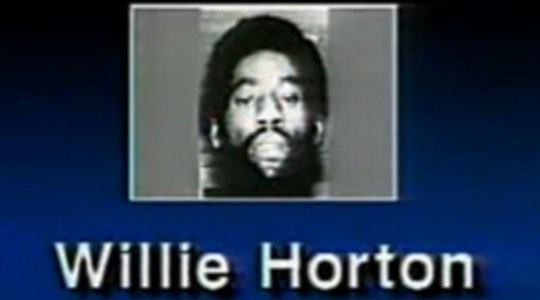
Revisiting Willie Horton

The Boston Herald reported that a Massachusetts cop-killer could prove to be “Mitt Romney’s Willie Horton.”  According to Politics Daily, a sex offender in Minnesota just may end up as “Tim Pawlenty’s Willie Horton.”  Last year, Michelle Malkin chronicled a pair of violent criminals vying for the title of “Mike Huckabee’s Willie Horton.”

The stories themselves are sickening, but will likely have little impact on the 2012 primaries.  Still, the coverage highlights something interesting in the way Willie Horton’s name is invoked.  In each case, a criminal who was pardoned by a governor committed a second offense – mimicking Willie Horton, who incredibly got a weekend off from a Massachusetts prison while Michael Dukakis was governor and used his time off to commit more violent crimes.

For these Republican candidates, referencing Horton alludes to incompetence in governing.

But when Sharron Angle used extremely questionable imagery in an ad attacking Harry Reid, Horton was brought up again.  In 2006, a hilarious ad against hard-partying former Congressman Harold Ford incredibly led to the H-word being bandied about by a few racial arsonists.

In these cases, Horton is synonymous with political dirty tricks – and worse yet, dirty tricks which prey upon voters’ racism.  This, of course, goes back to the famous 1988 attack add on Dukakis:

This might simply be the observation of someone who didn’t grow up in the South, but pictures of Horton are not very scary.  The ad’s shock value lies in the subtitles, which graphically detail Horton’s crimes.  Horton’s race is irrelevant if the commercial’s impact relies on the Horton’s crimes, and the breakdown in law enforcement governance that allowed them to happen.

So either Willie Horton symbolizes race baiting, or Willie Horton symbolizes incompetence.  It cannot be both.

Now, if you want a really racist commercial… well, there’s always room for Jello.


Bringing the politics to you

Minnesota Governor/2012 Presidential hopeful Tim Pawlenty is holding a  town hall meeting tomorrow.  Last night, California Senate candidate Chuck DeVore held a fundraiser with Andrew Breitbart.

You can go to either of these events without being in Minnesota or California – both will be online.  (Though, if you want to attend the DeVore event, you’re going to have to also find a way to channel 1.21 gigawatts into the flux capacitor, which may cost more than the $50 minimum donation.)

In Pawlenty’s case, the two-term governor is attempting to build a national base in advance of his 2012 run for the White House.  For people nosing around and still feeling out the contenders, it’s a low barrier of entry.   With the first primaries still more than 20 months away, Pawlenty wisely doesn’t want to burn out his activists; at the same time he wants to start building a list of engaged supporters.  Some of his likely primary opponents (like Mitt Romney, Mike Huckabee, and maybe Sarah Palin) already have exposure and campaign infrastructure from 2008.  The town hall could help Pawlenty catch up and – maybe even more important – allows him to build the perception of his candidacy being more firmly rooted in ideas than personality.

DeVore is trying to broaden his base, too – and continue extending his brand as one of the leaders among Republicans in the use of online tactics.  Thus far in the primary, DeVore has been the Martin Short of the Three Amigos running for the Republican nomination.  (If you’re wondering, Steve Martin was the best Amigo, followed closely by Chevy Chase.  Barbara Boxer is already El Guapo.)  The virtual pizza party may not put him on the Republican ticket to face Boxer in 2010, but it’s a good idea – one that could help other Republicans in 2010 or even DeVore himself in a future race.  After all, winning campaigns aren’t the only ones with good ideas.

The Obama base

USA Today wonders about Barack Obama’s base being “disengaged” come 2012.  That may make the presidential election closer than it would have been otherwise, but it won’t tip the scales in favor of a Republican challenger.

George W. Bush had a similar problem in 2003.  Conservatives were grumbling about education reforms and the prescription drug benefit; there was even a healthy dose of disagreement on the Iraq war.  For many, it meant sitting on their hands – and one conservative writer even told me he voted for John Kerry because he felt anyone would be better than Bush.

Bush did, however, have a brilliant campaign apparatus in place and enough excited activists to overlook some specific policy disagreements.  Initially, it seems Obama can boast the same.

If Dick Cheney is to be turned into a prophet, it will not be due to former loyalists losing faith; more likely, it will be because independent voters don’t buy what those loyalists are selling, Obama may join the ranks of the unemployed.  A GOP version of John Kerry – or, to avoid crossing party lines, a re-enactment of Bob Dole’s uninspired 1996 campaign – will still run into a buzz saw.