Why ACORN cracked

ACORN is closing up shop and may have to file for bankruptcy.  There’s no mystery as to why: donors have refused to write checks to the organization since the now-infamous “pimp videos” featuring James O’Keefe and Hannah Giles.  The ensuing controversy that made ACORN radioactive had as much to do with the organization’s response as it did with the actual content of the videos.

A Wired article on Andrew Breitbart – whose Big Government was a platform for the videos – details the strategy behind the tiered release of the videos:

Breitbart initially released only the video from Acorn’s Baltimore bureau, which the group dismissed as an isolated incident. The next day, he posted a video of O’Keefe getting similar results in Washington, DC. Oops. Acorn stepped on the rake again, claiming the videos were doctored. Then Breitbart posted more — from New York City, San Diego, and Philadelphia. Congress started pulling Acorn’s funding, and The New York Times flagellated itself for its “slow reflexes” in covering the story.

A less savvy operative might have released all the videos at once to illustrate the scope of the problem.  They would have received some coverage, but the media would largely have dismissed the story.  After all, how many government and non-profit offices would you really have to walk into if you wanted to catch someone saying stupid on camera?

By releasing the videos in slow drips, O’Keefe and Breitbart established a pattern.  With each new video, the story became a bit bigger, and more media outlets paid attention.  This strategy also allowed ACORN to be dismissive of the first few releases, making them look all the more foolish when the “isolated incident” proved to be anything but.

On its own, video of O’Keefe and Giles would have told a compelling story about ACORN.  Handled smartly – as it was – this information became a tangible result.
Democrats eating their own

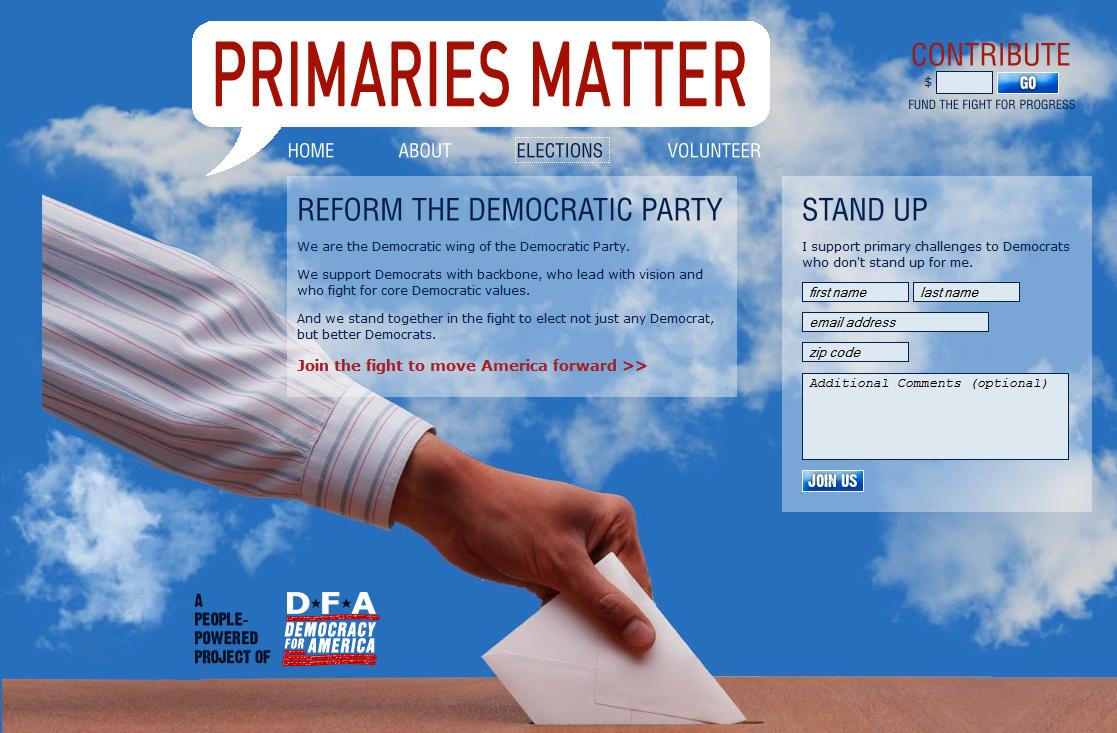
Democracy for America, the outgrowth of Howard Dean’s 2004 presidential campaign, is taking aim at moderate Democrats.   PrimariesMatter.com speaks to grassroots activists looking to oust ideologically impure incumbents in favor of more “progressive” challengers.

Weighed down by an unpopular health care bill and runaway government spending as the ubiquitous solution to every problem, voters will be looking for change in November 2010.  For Democrats, thinning the weaker candidates from the herd (especially any carrying that big target called a “voting record”) may be the only way to offer credible options for those voters.

Unfortunately for the Democratic party, the more liberal candidates will likely support policies (like the health care overhaul and increased government programs) which have proved so unpopular.

Do you want your GTV?

Google’s agreement with Sony and Intel to create a new platform for web surfing through television – in context with other recent announcements – continues Google’s efforts to find a way into your living room.

Television remains the top entertainment appliance in the household, but how content reaches that television is changing.  Not only have DVD’s and TiVO made the term “appointment television” obsolete, but the embrace of online video by content providers has greatly threatened cable’s position as the provider of high-quality content.  With web-enabled televisions becoming more prevalent, traditional cable is less important than ever.

Many cable providers are also high-speed internet providers, which is lucky for them.  But Google has been the starting point of the internet for years.  After becoming the top search engine, they created useful tools such as a customized homepage, sharable calendars, and a news aggregator; everything was built with the intention that when you sat down at your computer, Google would be the place you would want to start.  That, of course, makes it easier to collect information on you to better target their ads.

Now that the internet will be accessed more directly through television, Google wants to be your starting point there, too.  Again, all the better to target you for advertising, which is how they get their food money.

This will present some challenges for Google as various pieces of their business come together.   Remember Google’s recent announcement of plans to expand fiber optic broadband access.  That would put Google in charge of your access point to the internet (TV, computer, or Android-enabled smartphone), the pipeline that brings the internet to you (fiber optic network), and the content that you see on the internet (through search results, news aggregators, YouTube videos, Google Books, etc.).  All along the way, Google will be able to build a profile of you – what you look for, what you click on, what you watch, where you shop – and of course show you ads to make that food money.

It’s easy to see why people poke fun at Google by likening it to SkyNet, the ubiquitous and sentient machine network from the Terminator movies.  Good thing that Google isn’t evil… right?

The Road Behind

Bill Gates penned The Road Ahead as a vision of where online communications would head in the next 10-15 years.  And he wrote it in 1995 – in fact, when it was released as an audiobook you could actually get it on cassette.

Some of Gates’s predictions, which sounded far-fetched a decade and a half ago, have come to fruition.  Shopping online, for instance, is now accepted as a secure and dependable way to do business.  Services like Yelp make it easy to check out what others think of restaurants.  Movies and video entertainment are available on-demand, and the TV screen is becoming indistinguishable from the computer screen.

This came to mind today not only because I recently re-read the book, but also because Wired reports that one of Gates’s predictions is coming closer to fruition: a personal device Gates calls the “wallet PC.”

Gates’s concept of the “wallet PC” is a truly personal computer, but goes beyond most smartphones – essentially, a credit card, phone, netbook, driver’s license, and GPS all rolled into one.  Services like PayPal and Square, combined with increasingly sophisticated phones and, perhaps most importantly, faster wireless connections, make shopping in the real world look more and more like shopping online – literally exchanging money by pointing and clicking.

One piece of irony of The Road Ahead is that Microsoft was not the driver for the realization of many of Gates’s predictions – and in fact, many Microsoft competitors made advancements that he foresaw.  Apple’s iPhone paved the way for “wallet PCs”; Gates’s often-stated idea that information would become the currency of the 21st century is today embodied by Google’s mission.  That these developments were made by others doesn’t make Gates any less visionary.

CoCoBama

The official logo of Conan O’Brien’s upcoming Legally Prohibited from Being Funny On Television tour is based on the now-familiar illustration of a stoic O’Brien standing against the American flag, gray but for the bold orange pompadour rising from his head like a mighty wave rising from the ocean.  It may be the icon of Team CoCo, but it didn’t come from Team CoCo: the graphic was created by Mike Mitchell, an enthusiastic artist who had nothing to do with O’Brien other than being an avid fan with an idea and some spare time.

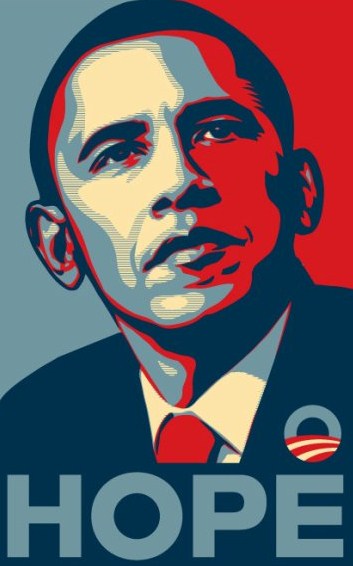
Largely on the back of the massive outpouring of support he enjoyed in the final weeks of his Tonight Show run, O’Brien stands to make a lot of money wherever he lands this fall.  O’Brien will be rewarded for embracing that organic excitement.  It’s similar to the smart moves made by the 2008 Obama Campaign, which enjoyed the creation of a similar iconic image created by Shepherd Fairey – an enthusiastic artist who had nothing to do with the campaign, but had an idea and some spare time.

A technical term for this is “advocate-generated content.”  Even that mouthful is easier said than done.  You can’t force people to identify with a cause, let alone feel so strongly about it that they are willing to make art.  Both Team CoCo and Obama 2008 benefited from a simple, direct, and resonant message.  The fancy artwork was just a symptom.

Carly’s Boxer Blimp

The Carly Fiorina campaign has released a follow-up to their much-lampooned “Demon Sheep” web video.  In this one, Barbara Boxer turns into a giant blimp because she’s full of hot air.  (Getcha popcorn ready, because it’s almost eight minutes long.)

Despite the ribbing from Fiorina’s primary opponents, ad maker Fred Davis claimed victory for the viral hit, pointing to its high number of YouTube views.  Davis might have a point.  The funny part of the Demon Sheep video – the campily costumed and Keds-clad sheep – came at the end, after the video had railed on fellow Republican candidate Tom Campbell’s fiscal street cred.  The Boxer Blimp wouldn’t attract nearly as much attention if it hadn’t been for its fluffy forefather.

Still, the video is as unfocused as it is comical and over the top.  The message shifts from the Senator being arrogant to incompetent to out of touch, and discusses taxes, environmental policy, financial restraint, national security, and Boxer’s personality with clumsy or non-existent segues.  The imagery is often uneven; at one point, the announcer accuses Boxer of being progressively “less and less effective” during her Senate tenure just as her image is smashing through the Capitol dome.

It does, however, tell a good story about Carly Fiorina – but unlike the Demon Sheep, the story comes after the CGI blimp attack.

But regardless of what anyone thinks of the style of the ads or how many viewers they attract, the one measure of effectiveness is at the polls.  That’s an area where Fiorina still lags behind.

(By the way, if you look closely, I’m pretty sure the shots of San Francisco include Alamo Square – more notably known as “Full House Hill” for its inclusion in the opening credits of the legendary and classic sitcom.)

“Who wants Google in Minnesota? Me, Al Franken.”

Sen. Al Franken is pushing for Google to come to Duluth, Minnesota and wire the whole place for internet.  It’s just one of many examples of cities begging Google to come and save them from choppy YouTube videos.

As the FCC debates broadband expansion plans that are beginning to sound like entitlement programs, Google is showing that acting in their own self-interest can have a public benefit:

Google makes its money connecting people with data and showing them ads along the way. Anything that increases the number of people on the internet and the amount of data they seek is good for the company. On most ISPs, YouTube videos can stutter or stop due to low connection speeds, even from “high-speed” providers. One way or another, Google seeks to quicken the net by connecting cities to high-speed fiber optic lines that transmit data with modulated light (updated) rather than the wire-based electrons employed by most ISPs (fiber-optic Verizon Fios [sic] excepted).

That said, these municipalities should remain vigilant.  No matter how free the broadband is, there are legitimate concerns about Google’s privacy record.

Where you at?

Facebook plans to add a feature that would let you keep tabs on your friends’ locations (and vice versa).  Like many of Facebook’s tweaks in recent years, this isn’t original – many of the next wave of social networking tools are location-based.

Details are still forthcoming, but the evolution of location data in social networking will be particularly interesting.  As Facebook has learned – and as Google found out when it unveiled its Buzz tool – just because we like to share stuff about our lives doesn’t mean we want to surrender our privacy.  In fact, we want to have the opportunity to separate a little from our digital selves now and again.  Location data chips away a little bit more of that wall.

The utility is pretty clear for businesses, politicians, social butterflies, and other folks who want to be found.  (And it’s also pretty clear for Facebook, which can now allow brick-and-mortar stores to serve ads to people near their physical location.)  To make it worth their while, Facebook and others would be smart to make location data available as a one-way street: to let me find out who’s close to me without letting them know where I am.

Googlevision

This week, Google announced a partnership with Dish Network to launch a TV search service.  It’s not the first time Google has found its way into the living room – they’ve been working with TiVo to figure out what shows you watch and serve you ads when you pause a live show and measure ad performance.

Google is wise to move into TV advertising.  It may sound like they’re taking a step back; that they’re an internet company going back to traditional media.  But the line between various entertainment channels gets blurrier every day.  Online video and television video are no longer all that different.  If Google wants to be the gatekeeper for all the world’s information (and you can be sure they do), they have to watch your remote control as closely as they do your laptop keyboard.

We should have been ready – Jim Carrey predicted all this 14 years ago…

Hulu learns content is still king

The decision by Viacom to pull its content from Hulu – while still keeping that content online – shows exactly why Hulu is the #2 site for online video.

As Tech Crunch reported, a key factor was the share of the ad revenue – Viacom makes more money by selling ads for video content on its own websites because it doesn’t have to split that money.  At the same time, Viacom can still make clips of its shows sharable and embeddable.

It brings to light a significant problem for Hulu: what value do they really add as a third party service?

Hulu was born because founding parents Fox and NBC were rightly worried about their content being ripped off and posted on YouTube – and because they realized that online video was an entertainment medium that they needed to embrace in some way.  The Simpsons, SNL, Heroes, Family Guy, and other shows from those networks made it on the site, along with content from their cable and feature film properties.  Other media companies, like ABC/Disney and Viacom, signed on as well.

The reason Hulu has always played second fiddle to YouTube is in a distinct difference in their business model.  While Hulu has always been about the content, YouTube has served as the infrastructure for the advent of web video.  In the days before YouTube, putting video online meant thinking about managing huge files and possible paying exorbitant hosting fees.  YouTube’s value to the content provider was allowing people who otherwise could not have done so to share video – whether that meant a cat falling off a bed or an independent short film.

Hulu’s value proposition to its content provider partners appears to be the ability to give them space on a high-traffic website.  But like YouTube and any other online video site, traffic comes because of content.  In reality, high traffic numbers are content providers’ value to Hulu, rather than the other way around.

This doesn’t mean the end of Hulu, of course – after all, the site was started by content providers.  But it may mean that, eventually, NBC/Universal and Fox find that they are the only ones left on the playground.