Is Maxine Waters about to be James O’Keefe’s next YouTube star?

Mr. ACORN pimp himself, James O’Keefe, announced via Twitter today that Rep. Maxine Waters would be the subject of his next series of videos.  Here’s the preview:

Two things are evident: O’Keefe still understands the power of online video, and he still understands the power of timing.

The ethics charges flying around various Democrats are starting to look like a trend – much like Republican scandals leading up to the 2006 election painted the picture of a power-happy party inviting a rude awakening at the hands of voters.  Getting Waters on camera in a sting operation like this could make the ethics violations very real to voter and underscore the broken promises of Democratic gains in 2006 and 2008.

But on top of that, you can’t say enough about O’Keefe’s media-savvy release strategy, either.

By releasing a teaser, O’Keefe capitalizes on this week’s news cycle about Waters and her ethics charges.  After controversy surrounding his presence in a Senate office earlier this year (and the storm surrounding his associate Andrew Breitbart’s role in the Shirley Sherrod affair), he can expect that this initial release will lead to a round of denouncement from left-leaning talking heads; for a while the story will be that James O’Keefe has a Waters video.  The Congresswoman’s office will likely be asked to comment; maybe she’ll even say something embarrassing and unwittingly drum up more coverage.

True, O’Keefe could have gotten just as much coverage this week by releasing a completed video.  But what about next week?  This strategy allows O’Keefe, after the initial frenzy, to drop a second video and get another round of coverage.  And, the vile and hatred he receives from the left this week may make the release of the full video that much more newsworthy.

If it sounds familiar, it should – it’s exactly how O’Keefe and Breitbart set up ACORN to take itself down.

Timing made the HOPA hoax a win

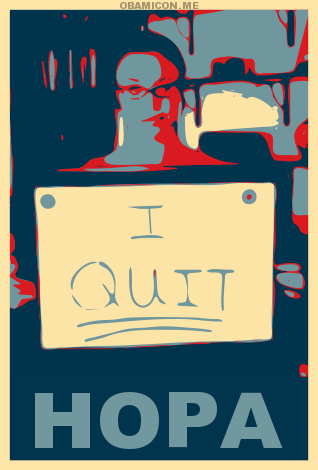
Yesterday, the story of a young go-getter who quit her job via a series of dry-erase board messages due her boss’s sexual harassment burned up the internets.  The girl was dubbed “HOPA” (after her boss’s mistaken acronym for “hot piece of ass”) or “Jenny DryErase” by supportive Facebook followers and commenters.

Today, the story was revealed to be false.  Yet it is still an excellent career move for an aspiring actress and an aspiring comedy website – and illustrates the value of timing in capturing the short attention span of folks online.

The original post, on comedy site The Chive, was set up to go viral for a couple reasons.  First, the act of quitting a job and metaphorically burning the place on your way out Jerry Maguire-style isn’t completely out of left field; even doing it through a variety of emailed photos isn’t even that out there.  It’s her signs and her emotive facial expressions that makes the user laugh.  Second, and more important, the girl’s story works equally well if it’s true or not.  So it wasn’t unbelievable, and investing in the story didn’t mean believing it was true – creating a low barrier of entry.  The stage is set.

But as with all comedy, timing is everything.  The Chive struck gold by releasing the pictures on the same day that an airline steward became an international folk hero for leaving his job down the escape chute, a beer in each hand.  profanity-laced goodbye to his own job, so quitting was in the news.  They couldn’t control the news cycle, but it worked to their favor.

What they did right on their own, however, was debunk the story of HOPA girl the day after attention peaked.  Announcing the hoax in a month, or even in a week, would have meant reaching people well after they had forgotten the Jenny DryErase post and moved onto the next Hitler/Downfall parody.   In other words, it would have been irrelevant, and there would be no lasting benefit.

The real HOPA girl, actress Elyse Porterfield, has her name everywhere; people who might be in a position to help her career know now that she can pull off a pretty good photo shoot. The Chive has the added web traffic and the street cred with that comes with manipulating web audiences into taking a hoax viral.  Advertisers like sites that can, occasionally, draw big numbers for a few days.

The tactic of a fake viral picture isn’t really translatable to campaigns, which have to be somewhat transparent in their messaging.  But it is important to understand how fast online communications work.  Windows of opportunity aren’t open wide and they aren’t open for long.

Al Franken’s comical take on net neutrality

If you thought Al Franken would give up the laughs just because he sued his way into the Senate, think again.  The SNL alum has some of his best writing since the Stuart Smalley movie up on CNN.com, which gave him a platform to discuss internet regulation:

“Net neutrality” sounds arcane, but it’s fundamental to free speech. The internet today is an open marketplace. If you have a product, you can sell it. If you have an opinion, you can blog about it. If you have an idea, you can share it with the world.

And no matter who you are — a corporation selling a new widget, a senator making a political argument or just a Minnesotan sharing a funny cat video — you have equal access to that marketplace.

An e-mail from your mom comes in just as fast as a bill notification from your bank. You’re reading this op-ed online; it’ll load just as fast as a blog post criticizing it. That’s what we mean by net neutrality.

So here’s the internet we have: a free and open landscape where the merit of ideas matters more than how much money you have.  So we want to oppose net neutrality legislation and regulations that would change that landscape, right?

Apparently, not in Al Franken’s world.  Franken likens the evolution of telecommunications companies to his work on network television, and the media consolidation that went on in that medium.

Back in the 1990s, Congress rescinded rules that prevented television networks from owning their own programming. Network executives swore in congressional hearings that they wouldn’t give their own programming preferred access to the airwaves. They vowed access to the airwaves would be determined only by the quality of the shows.

I was working at NBC back then, and I didn’t buy that line one bit. Sure enough, within a couple of years, NBC was the largest supplier of its own prime-time programming.

There are two rebuttals to this.  First, networks buy programming from other providers all the time.  In fact, one of the biggest hits NBC had this decade, Scrubs, was produced by Disney ABC.  The second point is… well, how is that all-Universal-produced prime time lineup working out for NBC right now?

Today, if you’re an independent producer, it’s nearly impossible to get a show on the air unless the network owns at least a piece of it.

True, but has getting a show “on the air” ever been less relevant for success?  An enterprising content producer wouldn’t get the same audience online that he or she might get on a broadcast or cable network, but they aren’t being shut out of the media landscape.  If that’s the yardstick for success, wouldn’t we have to say the internet as it is works just fine?

Franken starts to make an analogy between internet services providers and cable companies – which is, incidentally, the argument on net neutrality’s side that makes the most sense.   But that assumes the market stays static – that is, that everyone continues to have a wire coming into their house, hooked up to their desktop computer, delivering the internet for the whole family to gather around.

But that isn’t where internet consumption is going.

At the risk of using myself as an example let me use myself as an example: in the morning, I usually check work and personal email on my Blackberry before rolling out of bed.  I check my home computer to see if the Yankees won the night before.  At work, I check sites like Politico routinely, and if an issue I’m working on is about to come up for a Congressional vote I might dial up CSPAN and watch online.  After work, I might go over to Starbucks with the laptop to work on a post or answer emails, using their WiFi.  Count ’em up – that’s four internet providers in a single day.  If I was traveling, there might be more connections – airports, hotels, even planes.   I dare you to try to keep content away from me.

The internet is not a utility like cable, it’s a communications infrastructure.  The providers can’t afford to simply keep content from you, because you can figure it out and change easier than you can if, for example, Comcast refuses to put the NFL Network on a basic cable tier.

Regulating the internet like telephones, or cable, or even broadcast radio and television doesn’t work because those are different technologies and consumed differently.  But don’t blame Franken’s lack of insight on the fact that he made his bones in old-school broadcast network television.  After all, he’s been trying to appeal to net neutrality cheerleader Google to wire Duluth for broadband.  Maybe he’s just trying to scratch their back in hopes they will return the favor later on.
The “digital age” made me do it

The New York Times ran an interesting story this weekend under the headline, “Lines on Plagiarism Blur for Students in the Digital Age.”   The gist is that that the prevalence of content on the internet has actually devalued the concept of original work – and given a generation of schoolgoers the impression that ideas can be plucked out of the air and included in their term papers:

“Now we have a whole generation of students who’ve grown up with information that just seems to be hanging out there in cyberspace and doesn’t seem to have an author,” said Teresa Fishman, director of the Center for Academic Integrity at Clemson University. “It’s possible to believe this information is just out there for anyone to take.”

The article cites students who copy whole passages from Wikipedia or unabashedly swipe from articles without attribution or citation.

Blaming the internet for changing behavior is one thing, but it doesn’t change human nature.

The concept of cheating a plagiarizing has been around since one cavekid copied another cavekid’s cave wall drawings to get a better cave-grade.  (You can bet your saber-tooth tiger pelt that Thag would have based his drawing on cave-Wikipedia if such a thing had existed.)  To see an even clearer example, look at music piracy: recording mixes on cassettes and sharing songs with friends was a common practice, file sharing services just made it easier and digital.

Take the computers and internet connections away from every dorm room and class room, and some students will still cheat.  So, you can look at the advent of the so-called digital age in two ways.  Sure, it’s easier than ever for some students to take the easy way out and try to get by without putting in the work.

On the other hand, has it ever been easier to catch them doing it?

Musical chairs in the briefing room

After Helen Thomas’s retirement/historically ignorant meltdown, the White House Correspondent’s Association has figured it out.  The Associated Press will inherit Thomas’s chair in the White House briefing – front and center – and Fox News will move into the front row.

You won’t see the changes, since the camera is usually trained on the podium and whoever is speaking from there.  And of course, since the communication in the White House briefing room is pretty staged and rehearsed, there’s rarely ever any actual news made there.  The reporters digging up stories around town will continue to do the heavy lifting.

But hey… how ’bout that new seating chart, huh?

Baiting and switching the NAACP

Last week, the NAACP looked to deflate the influence of the tea party movement by calling it racist, a charge echoed and kept alive by lawmakers on Capitol Hill even if it was through denials. The easy counter was to condemn the NAACP’s own sordid record of race-baiting.  But Andrew Breitbart went one step further.

When Breitbart releasing a video of an Obama Administration official making what appeared to be racist comments at an NAACP event, the NAACP denounced Shirley Sherrod and she lost her job in the progressive administration in which she served.

Now comes the rest of the story, which shows Sherrod is actually making a larger point about racial harmony.  The USDA is trying to give Sherrod her job back and the NAACP repudiating their repudiation.  (If I were Sherrod, I’d forego the job in favor of the eventual lawsuit settlement.)

The NAACP blamed Fox News, but really this is a bait and switch executed by Breitbart.  By releasing the bad part of the video before the context, he coaxed the NAACP to do exactly what it did to the tea party movement – make a wild accusation without examining the whole context of the comments.  (Breitbart may lose some cache for doing the same thing, but his reputation will be restored with the next sensational video he releases.)

Lest one think this gives Breitbart too much credit, remember that he, James O’Keefe, and Hannah Giles  used a similar strategy with their series of videos exposing ACORN, releasing the videos one at a time to build momentum.

The desired result of Breitbart’s masterstroke are two-fold: first, the NAACP is exposed for jumping on any charge of racism without evaluation.  Second (and, with campaign season around the corner, possibly more importantly) media outlets may be more guarded when looking at videos that show comments which appear, out of context, to be racist.

Co-stanza!

To follow up on the trend of politicians seeking to avoid YouTube, some – like Florida State Rep Mike Weinstein – have gone the other direction with a video Mediaite’s Steven Jessop has (rightfully) called the “Cheesiest Campaign Video Ever”:

Cringe-worthy, isn’t it?  Jessop compares it to Bruce Springsteen’s Dancing in the Dark video.  It took me back to syndicated Saturday-morning kids shows on independent stations like WPIX in the early 1990s, where kids dressed like stunt doubles for Screech would bop around on stage in neon orange t-shirts and denim overalls.  And, it turns out, the company that produced the video makes educational programming for kids, so that’s probably what they were going for.

So it’s a bad campaign tactic, right?  Not so fast.  I thought so at first, too, but then I sat down to make fun of it, and the song stuck in my head.  Jessop pointed it out in his post, and by gum he’s right: the song is pretty catchy.  Like a commercial jingle, it’s annoying at first, then you hear it a few times and you’re humming it in the shower.

Weinstein is an incumbent, so though it may make him seem a little out of touch with younger voters it probably won’t hurt – though they’ll probably lose Kenny Loggins’ vote.

LeBron James owns the message

Politicians are clamming up, Politico says, because they’re worried about becoming the next YouTube sensation.  Candidates are refusing to talk to camera-wielding activist journalists.  With more communications channels than ever, politicians are opting not to use them:

“The irony is that in an political environment in which voters are demanding authenticity, candidates find themselves in a technological environment that exploits authenticity,” lamented Mark McKinnon, a longtime political strategist and top adviser to George W. Bush and John McCain. “So rather than show more of themselves as voters want, candidates are showing less of themselves for fear of revealing too much.”

This is probably better than speaking off the cuff and apologizing for gaffes, but it isn’t a winning strategy.   These would-be-elected-officials would do well to take their advice from a monarch: King LeBron James, the most popular man in sports, and the subject of a much-criticized special on ESPN in a couple hours.

When James’ decision on where to play next year is finally revealed tonight, a new chapter will start in his professional life – not only as the signature star of the NBA, but as a player expected to win a championship.  Joel Sherman of the New York Post likens James’ situation to that of Alex Rodriguez, who used to be the best player ever to not win a championship. He’ll have plenty of questions, and will be the closest thing the sports world has to a politician for a week.

That’s why the ESPN special is a fantastic idea.

James is announcing his signing in an hour long special, and according to ESPN radio this morning, the big news will come in the first 15 minutes.  That means there will be 45 minutes where James will discuss his decision in the controlled, traditional, and respectful environment of ESPN.  That discussion will fuel tomorrow’s bloggers and drive-time hosts, and will extend into weekend coverage.

And most of it will echo the things James wants out there.  He’s answering demand by engaging in media overload.  In doing so, the King will rule over the message.

Now, if only LeBron would take control of the Knicks in the same way…