Pop country at its worst

Over at Medium, I put up a piece pointing out how unfair it is to dump Oliver Anthony’s hit “Rich Men North of Richmond” in the same bucket as Jason Aldean’s “Try That In a Small Town.” For brevity’s sake, I didn’t get into just how much disdain I have for the latter. Setting aside the uncomfortably violent imagery in the video, “Try That In a Small Town” is a really bad song.

The lyrics read like the author drew inspiration from a 30-second loop of Fox News Channel b-roll during a two-minute report on street violence in New York City. There is very little rhyme and even less structure; it’s something of an accomplishment that Aldean manages to make these words into something resembling a song. All of his grievances get summed up in the first few lines, and even then it isn’t clear the narrator knows what he’s complaining about.

Sucker punch somebody on a sidewalk
Carjack an old lady at a red light
Pull a gun on the owner of a liquor store
Ya think it’s cool, well, act a fool if ya like

Cuss out a cop, spit in his face
Stomp on the flag and light it up
Yeah, ya think you’re tough…

“Try That in a Small Town”

That’s the first verse, where Aldean sounds blissfully unaware that more crime happens in places where there are more people. You can’t “sucker punch somebody on a sidewalk” if your town has no sidewalks. And do many Black Lives Matter protests get out of hand in Mayberry?

Sadly, this is the most coherent part of “Try That In a Small Town.” The remainder of the song includes a three-line second verse warning that Aldean’s inherited gun is off limits and a bridge that promises a band of “good old boys” will defend the idealized small-town way of life. Around those, an amorphous chorus is just lead and backup vocals repeating the track’s title as a warning. It’s a song about law and order with no structure. You could chuck a handful of magnetic poetry at a refrigerator and come up with something more coherent.

On top of all that, the video looks more processed than Velveeta. Jump cuts! Lens flares! Smoke machines! Plates smashed on a checkered floor! Aldean and his leather-clad band strum out the chords and riffs over shots of protests, urban violence, anarchy, and… a 1970s backyard touch football game at the 2:20 mark?

It isn’t clear how this fits, but it is clear that Mustache Dad is about to take that handoff to the house. (Little Timmy in the white shirt and what looks like striped pants looks like he’s out of position. I’m not sure how they do things in the city, but you can’t face the fence and make a tackle in a small town.)

The whole thing – the video and the song – is nonsensical. It comes off like a seven-fingered first draft of an AI-generated angry country song. Heck, it makes Luke Bryan’s music sound emotionally deep and thoughtful by comparison.

For the record, I wasn’t blown away by “Rich Men North of Richmond,” either. The wordplay in the line, “I wish politicians would look out for miners / Instead of minors on an island somewhere” was a bit too much. And then there was Anthony’s riff on “the obese milking welfare”: “If you’re 5-foot-3 and 300 pounds / Taxes ought not to pay for your bags of fudge rounds.” It’s a fair point, but there must be a story in there, right? (I wonder if some person in Anthony’s hometown, wider than he is short, heard that line and said, “Wait a minute…”)

Yet for all of its flaws, “Rich Men North of Richmond” is three things “Try That In a Small Town” isn’t: Catchy, authentic, and – most of all – coherent.

The former (and future?) pop culture President

Whenever I hear the word “arraignment,” I always think of the Notorious B.I.G.’s lyrics in “Hypnotize”: “At my arraignment / A note for the plaintiff / Your daughter’s tied up in a Brooklyn basement.” So I already had that in my mind when I saw the news coverage of Donald Trump’s motorcade. To get that song out of my head, I wrote over at Medium about how Donald Trump’s public defiance against his legal troubles echoes the likes of Biggie Smalls and other proud criminal protagonists.

Because Trump is so polarizing, it can be difficult to study and appreciate the way he presents himself. You don’t have to like his politics to understand that he connects with people much differently than most politicians. That’s something worth studying. In a democracy, the people who win are reflections of the electorate, which is all the more reason to look critically, carefully, and dispassionately at Trump’s ongoing significance on the American political landscape.

This is what democracy looks like…

The United States Capitol is supposed to act as the architectural embodiment of America’s highest ideals. Last week, it was the scene of an ugly mob that devolved into a deadly riot. Words like “sedition” and “insurrection” sound hyperbolic; yet by definition, they work in this case.

In the ensuing (and notably bipartisan) criticism of this disturbing demonstration, one theme that keeps popping up is the characterization of these protests as “anti-democratic.” This moniker isn’t so neat a fit.

It is true that the Capitol rioters’ immediate goal was to reverse the outcome of the election, yet it’s worth noting their motivations. They had apparently fooled themselves (with the validation of one very powerful voice who ought to know better) into believing that anecdotes about election irregularities constitute widespread fraud. Under that set of beliefs, storming the Capitol must have seemed like a righteous mission — not just to a fringe few who organized it, but also (as I wrote about on Medium) to the hundreds of others who joined the insurrection and to countless others who may have felt the same but weren’t there that day.

Mobs are not “undemocratic.” In fact the knock against democracy has always been the chance for majority rule to degenerate into mob rule, and for popular whims of the moment to become laws chiseled into stone. Flip through the Federalist Papers and you’ll see plenty of ink spilled discussing how the U.S. Constitution mitigates the effects of majority rule. Concepts like checks and balances, diffused power, and frequent elections all exist to help temper the effects of “the will of the people.”

That will could have used some tempering last week, and some powerful people who may have been in a position to do so clearly misread how upset their followers were and are. However you feel about last week’s events, there are more people out there who share in the frustration and anger that boiled up into the Capitol. We can and should prosecute the actual rioters, but that alone isn’t going to solve the problems that caused the riot to happen in the first place.

Rudolph is actually QUITE problematic. Here’s why.

Last week at Medium, I had a post about the kind-of-sort-of controversy around Rankin Bass’s Christmas classic, Rudolph the Red-Nosed Reindeer. Really, no one probably cares all that much about the non-issue, but it’s a fun way to look busy during December. Still, as silly as it is to call the 1960s children’s cartoon racist or bigoted, there were some things that are deeply bothersome about this special:

  1. At the end, Hermey the Elf schedules his first appointment for the week after Christmas. The week before Christmas, he was practicing on dolls, and the week after he’s authorized to poke around someone’s gums?
  2. Staying with Hermey, during the climactic scene he de-fangs the abominable snowman – or “The Bumble,” as Yukon Cornelius calls him – just before Rudolph, Clarice, and his family are about to be killed and consumed. The Bumble, as near we can tell, subsists on venison and other meats, probably requiring a protein-heavy diet to carry himself around. So what i he supposed to do without teeth?
  3. Rudolph’s nose is bright enough to cut through dense cloud cover that would have otherwise cancelled Santa’s yearly flight. This level of fog is implied to be unprecedented, yet Rudolph’s light cuts through it. All of the other reindeer laugh and call him names, but did no one think to contact a doctor? At the very least, as a public health measure they should have quarantined him for testing.
  4. Following from point number three, Donner’s attempt to cover Rudolph’s nose is not only poor parenting but wreckless endangerment of public safety.
  5. Also, in the picture where Hermey the Elf is playfully touching Rudolph’s nose – shouldn’t his finger be a singed and possibly tumor-ridden mess?
  6. And by the way, Santa knew about this so he’s complicit. Between this and letting people practice unlicensed dentistry, there’s a potentially massive class action liability here.
  7. Didn’t the Island of Misfit Toys seem a little odd? The winged lion, King Moonracer, insists on Rudolph, Hermey, and Yukon leaving the island pretty quickly, refusing their requests for asylum. On the other hand, he happily brings so-called “misfit” toys to the island. Note the toys on the island they aren’t simply unwanted toys that children have outgrown or grown bored with; the misfit toys he brings back are either obviously defective (such as the cowboy who rides an ostrich) or made to feel defective (such as the Charlie-in-the-Box who functions appropriately, but simply has a different name). It all suggests that King Moonracer is seeking out damaged toys (or toys who can be convinced they’re damaged). He clearly wants Santa to distribute these toys after they’ve been on the island for a while. This seems wrong. Moonracer is up to something.
  8. What’s Yukon Cornelius’s story, anyway? I get that he’s looking for silver and gold, but does anyone already have mineral mining rights on the land he’s dropping his pickaxe on? And if so, what’s his plan – try to buy them out by affecting the appearance of a bumbling prospector? This seems the most realistic business plan he’s following.
  9. Wow, Sam the Snowman seems to know a lot, doesn’t he?
  10. Most problematic of all: People spend way too much time thinking about this stuff. Present company included.

A politically incorrect moment with Apu

The Simpsons invited controversy last week by responding to criticisms about their Apu character and racial stereotyping. The accusations are both accurate and 30 years late. As The Simpsons has progressed, Apu’s character has, as well; He isn’t the common stereotype he was in his first appearance in February 1990.

My favorite Apu moment is the final question on his citizenship test:

That scene seems like something television couldn’t get away with today – not because of Apu, but because so many are so willing to put the same effort into historical literacy and nuance as the test taker.

Modern media doesn’t have a lot of room for nuance, which is one reason I argue The Simpsons’ producers will have trouble resolving their Apu problem.

Battling over batting average

Baseball’s back… sort of. Grapefruit League action started on Friday, one of several milestones counting down to Opening Day. Even if it doesn’t mean anything in the standings, it means something to the fans.

Speaking of the fans, baseball has new rules this year designed to speed up games, with more under consideration.

While most of these will help lower game times, they won’t necessarily help pace, i.e. how fast a game moves. In response to a reader question, River Avenue Blues tabbed strikeouts as a major factor in slowing down games:

MLB has set a new record strikeout rate every year since 2008. The league average strikeout rate was 21.6% last season. It was 16.4% back in 2005. Huge difference! Given the value of on-base percentage, these days we’re seeing more deep counts and long at-bats than ever before, and with each passing year, more and more of those long at-bats are ending without a ball being put in play. It can get dull, for sure.

In related news, ESPN recently mused that we’ll never see a .400 hitter again, citing a combination of evolving offensive philosophy and the variety and quality of pitchers a hitter faces. No worry, most general managers might say, since batting average doesn’t have quite the shine it did when Ted Williams put up a .406 in 1941.

Batting average, like pitching wins and RBIs, have largely become casualties of the analytically-focused Moneyball Revolution. Teams from markets of all sizes value players who turn in grinding at-bats and see a lot of pitches. (A great example of this is any nationally televised Yankees-Red Sox game.) Sometimes that means walks; sometimes it means strikeouts. Eventually, as the strategy goes, it means a pitcher makes a mistake and gives up a three-run homer.

It’s a strategy that, statistics say, helps a team win, even as batting averages dwindle. And the idea from the owner’s box was that winning sells tickets, and even if it doesn’t a few home runs will at least make things interesting.

Now look at this past offseason in baseball, which for many free agents is still going on. Owners understand that spending big on free agents is a crap shoot, even when the player turns out to be pretty good. Heck, teams that signed players to two of the biggest contracts in history, the Texas Rangers (Alex Rodriguez) and the Miami Marlins (Giancarlo Stanton) had to pay the Yankees to take those players as reigning MVPs. At the same time, watching how much interest teams like the Yankees, Astros, and Red Sox garnered from promoting young, home-grown players, owners might sense that fans will come out to the park for more than just a guaranteed winner. So no one is signing free agents because, frankly, they don’t need to.

Will this translate to other baseball decisions?

If a team builds around a contact-heavy lineup with a bit of power – think late-1990’s Yankees or early-2000s Seattle Mariners – that’s a) fun enough to watch that fans buy tickets and jerseys, and b) good enough to challenge for a postseason spot, might contact hitting make a comeback? Probably not, but possibly so. After all, who’d have thunk capable pitchers like Jake Arrieta and Alex Cobb would be unsigned at the start of spring training?

If teams start looking for an aggressive, hit-first philosophy it will happen because one team tries, it and enjoys success with it – in the standings, in the turnstiles, and in the television ratings. You might also find strikeouts going down and games getting quicker – even if they don’t get shorter.


RIP Reg E. Cathey, who used to teach math

Most of Reg E. Cathey’s obituaries have referenced his roles on House of Cards or The Wire. That work is both excellent and recent, so those mentions make sense.

But one of Cathey’s earliest roles was one of his most important. Cathey’s first regular gig was a spot on the cast of Square One Television.

Did you know that if you take any number, multiply it by nine, and start adding the digits, you eventually get nine? It’s true. Here’s Cathey explaining it:

(Come to think of it, Cathey died on February 9 and the CNN obituary says he started acting at the age of nine… but that’s probably all a coincidence.)

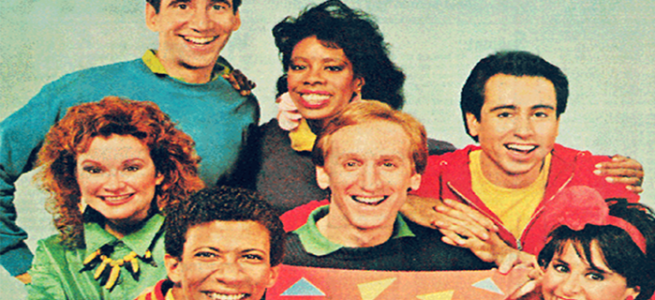
Square One was a cousin of Sesame Street, a Children’s’ Television Workshop-produced PBS kids’ show. Just as 3-2-1 Contact tried to get kids into science, Square One tried to stoke interest in math. Cathey and his cast-mates acted and sang in sketches to illustrate concepts like percentages, patterns, and probability.

Surely, no one from the cast was solving equations on a chalkboard in the back room or finishing up a masters’ thesis on Fermat’s Last Theorem between takes. Yet when the cameras’ red lights blinked on, they became math professors.

Effective education goes beyond the simple regurgitation of knowledge. The ability to impart that knowledge is a skill of its own. Cathey taught probability while taunting a pizza guy running from a mummy, and joined a Motown ensemble to explain percentages. There’s a subset of a sub-generation that learned those concepts from him and the rest of the Square One cast.

Reg E. Cathey built a distinguished career as a dramatic actor. It’s worth remembering that he was a pretty good math teacher, too.

Going for it

In any sport, the pivotal moments of a game can come long before the deciding play.

Super Bowl LII fit that description. The Philadelphia Eagles officially become NFL champions when New England Patriots quarterback Tom Brady’s final pass fell incomplete. But the gutsy play calling by Eagles coach Doug Pederson early in the game put them in the position to win.

With 38 seconds left in the first half, and leading by three points, the Eagles faced fourth-and-goal from just inside the New England Patriots’ two-yard-line. The conventional call – going for an easy field goal – probably would have meant a six-point lead heading into halftime. Not too shabby, right?

If you didn’t see it live, you’ve surely seen the highlight by now (assuming you care about football): Pederson went for the touchdown – and with a trick play, to boot.

It worked.

It wasn’t the play itself which won the game, of course. It gave the Eagles a 22-12 halftime lead, but a crazy second half but Pederson’s willingness to gamble demonstrated the aggressive strategy the Eagles would deploy all the way to the final whistle.

Contrast this with the AFC championship game a couple weeks ago. With just under a minute left before halftime, New England had scored to pull within four points. On the other sideline, the Jacksonville Jaguars had just watched their “commanding” 14-3 tighten to 14-10. There were 55 seconds left in the half, the Jags had two timeouts, and a kicker with enough range to make a 54-yard field goal later in the game.

But instead of trying to answer New England’s touchdown and reclaim some momentum, Jacksonville simply ran out the clock, waving a white flag on the first half rather than risking a turnover. They ran into the locker room satisfied with a halftime lead – any halftime lead – against the defending champions (who had, incidentally, become champions by erasing a 25-point deficit in last year’s Super Bowl).

The Jags kicked two long field goals in the second half; otherwise, their predictable, conservative play calling lead to four punts. Predictably, the Patriots stormed back. The final score, 24-20, suggests that another field goal at the end of the first half wouldn’t have helped the Jaguars’ cause.

Sure, that math works out, but the bigger point is the strategic error: When they got an early lead, Jacksonville stopped playing to win and started playing to “not lose.”

And they lost.

Bill Belichick and the New England Patriots can be accused of many things, but neither satisfaction nor timidity is among them. Belichick called for a few trick plays of his own in Super Bowl LII. They didn’t work, but would that prevent him from calling those same plays in Super Bowl LIII? Doubtful.  If he had it to do over again, would he have told his defense to let the New York Giants score a go-ahead touchdown in the final minutes of Super Bowl XLVI to conserve more time for his offense? Probably. Belichick’s willingness to push the envelope has been a major factor in his well-documented success.

Pederson and the Eagles succeeded where the Jaguars failed by coaching the same way Belichick does: staying smartly aggressive. No wins a championship by running up a big lead and hoping the other team can’t catch up. That lesson transcends football, too. Sears pioneered direct-to-consumer sales; now the company circles the drain as Amazon experiments with innovative ways to give customers what they want. Instead of presenting an original vision for America, Hillary Clinton’s 2016 campaign slogan – “Stronger Together” – played off of the loud, often offensive rhetoric of her opponent. On the other side of the coin, note how much Coca-Cola spends on advertising and branding to remind you that their soda is more than just soda.

Like Rocky squaring off against Apollo, Doug Pederson stepped into the ring against Bill Belichick determined to give his maximum effort, win or lose. When he got into the flow of the game, he stayed true to that philosophy, especially when it meant taking a risk.

The risk paid off – and now, Doug Peterson may not have to pay for his own cheese steaks ever again.


You can’t handle “your truth”!

Oprah Winfrey’s Golden Globes speech sure struck a chord, didn’t it? The erstwhile talk show host and current media mogul said enough to spur online discussion of a made-for-TV 2020 Presidential matchup.

There’s certainly plenty to say about what the whole concept says about current affairs, politics, and culture.

Ben Shapiro of The Daily Wire and the Wall Street Journal’s Byron Tau, among others, picked up on a phrase Winfrey used, “your truth.” The context (from the full transcript):

What I know for sure is that speaking your truth is the most powerful tool we all have. And I’m especially proud and inspired by all the women who have felt strong enough and empowered enough to speak up and share their personal stories.

This is one of those tricky phrases that means different things to different people, which makes discussion difficult. Critics of Winfrey’s phrasing note that the truth is the truth. People may have different perspectives or opinions, but objective facts are objective facts.

That’s certainly accurate, from a certain point of view. One person may look at a three-dimensional cube and, seeing only one side, claim it’s a square. Their perspective – or lack of it in this example – does not change the objective fact that this is a cube.

That’s not really what Winfrey’s talking about, though.

As the mentions in her speech, Winfrey’s life experience meant living through turbulent times when being black carried overwhelming social baggage. As a woman in show business in the 1980s, she likely had to deal with the same harassment issues that are only now being brought to light. Today, you may look at Oprah Winfrey and see the “truth” of a powerful, car-giving-away, bread-loving media empress who could build or ruin a career at whim. Her vantage point is different; when thinking about her “truth” Winfrey also remembers the local news anchor struggling her way up the ladder.

“Truth” is a strong and probably miscast word for perspective, but intentionally so. Its strength validates experiences. In the immediate context, it validates women who suffer harassments in all walks of life, and see those experiences echoed in the current mess in the motion picture industry. It isn’t just your story, Winfrey seems to say; for you, it is the absolute truth.

There’s a parallel to draw from President Donald Trump’s campaign rhetoric, which so famously used language that most politicians did not, and Winfrey uplifting her audience through subtlely coded language. In each case, it fosters a connection with the audience that just about every speaker tries for, but which few can establish.

The next election sure ought to be fun, huh?

Two Forgotten Christmas Classics Turn 30

A Garfield Christmas Special / christmastvhistory.com

According to IMDB, A Garfield Christmas Special and A Claymation Christmas Celebration both premiered on December 21, 1987, on CBS. They both turned 30 this week.

You can be forgiven for forgetting: Neither seems to have aired on a major network this year… or in the past several years, for that matter. But both used to be seasonal staples for CBS.

Christmas specials tend to fall into one of two broad categories: Either a grumpy killjoy learns the “true meaning of Christmas” (the myriad re-tellings of Charles Dickens’s “A Christmas Carol” fall into this bucket) or a hero must “save Christmas” by making sure Santa Claus can make his rounds. (One might argue the existence of a third category about finding love for the holidays. I highly recommend the We Just Saw a Movie podcast, which has explored this odd genre in great detail over the past two Yuletides.)

A Garfield Christmas

A Garfield Christmas Special falls into the first category, inviting us to the Arbuckle family farm for a “good old-fashioned Christmas.” There are no human children characters, but thirty-something brothers Jon and Doc-Boy Arbuckle prefigure criticisms of today’s millennials by immediately reverting to childlike behaviors. (Also, we learn that Mr. Arbuckle paid for nearly a quarter century of piano lessons for Doc-boy. That’s… odd.) Garfield, for his part, plays the closest thing the episode has to a Scrooge; while not openly hostile toward the holiday, he welcomes Christmas with a shrug and a trademark, “big fat hairy deal.” He has a heart-to-heart with Grandma Arbuckle (a stereotypical 80’s “sassy old lady” in the mold of Sophia from the Golden Girls) about her late husband, then both gives and receives thoughtful gifts to inspire a change of heart.

As a media franchise, Garfield doesn’t get a lot of credit for its subtle, Letterman-esque sarcasm. There’s passive-aggressive friction between Grandma Arbuckle and her daughter-in-law. There’s Mr. Arbuckle, wondering aloud why he has to entertain his grown offspring with children’s stories, while his wife enables their sons. The family gawks at the Christmas tree that probably looks like every Christmas tree they have put up for decades. Doc-boy spends Christmas morning wearing a bunny rabbit onesie; Jon receives a horrible oversized sweater but seems fairly appreciative nonetheless.

The Arbuckle Family Christmas is at various time silly, ridiculous, tedious, immature… and ultimately perfect because it belongs to them. Garfield himself summarizes the message: “It’s not the giving, it’s not the getting, it’s the loving.”

A Claymation Christmas Celebration

Remember when the GEICO cavemen got their own sitcom? Decades before that debacle, the stop-motion animated California Raisins went from selling dried fruit to multi-media stardom.

The signing raisins were the grand finale of A Claymation Christmas Celebration. Claymation is the rare children’s Christmas program which doesn’t fit into the categories mentioned above; it has more in common with variety specials by the likes of Michael Bublé. Six short, unconnected, musical vignettes fit around the banter between Rex and Herb, a couple of dinosaurs trying to find the definition of the word “wassail.” (They eventually learn from a  band of leprechauns or elves who appear to be driving with open containers.)

Each song is a unique take on a classic. The Magi Melchior, Caspar, and Balthazar sing the traditional verses of “We Three Kings,” while their camels provide jazzy, upbeat improvisational choruses. Walruses ice dance to “Angels We Have Heard on High” while inadvertently tormenting a waddle of penguins. The Carol of the Bells is played by an orchestra of anthropomorphic bells who whack themselves with mallets (including one who has apparently taken a few too many hits). And the California Raisins improvise after missing a bus by crafting their own magic sleigh to the tune of “Rudolph the Red-nosed Reindeer.”

There’s no story to be had here, but each vignette is funny in its own way.  And the music is fun. (There is also something to be said for true, stop-motion claymation. Imagine the painstaking process of sculpting the characters and bringing them to life.)

Why We Don’t See Them Anymore

In the late 1980s and into the 1990s, Garfield and Claymation were holiday television staples. They aren’t anymore. That’s probably fine.

Cynically, one might blame it all on merchandising. Suction cup Garfields don’t adorn every third car anymore, and dancing clay figures aren’t selling dried grapes. Why devote prime airtime to specials that advertise yesterday’s product when Olaf’s Frozen Adventure could start building excitement for the upcoming-but-still-far-away Frozen 2?

On the other hand, yesterday’s Christmases are yesterday’s Christmases. Today’s Christmases are the wholly owned domain of today’s kids.

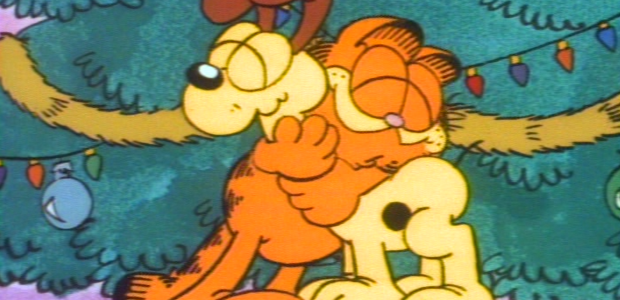
Garfield hugging Odie might inspire misty-eyed memories for me, but I can buy Garfield on DVD or watch him on YouTube if I need a nostalgia fix.

Other people (like me) grew up watching this stuff, but my kids don’t know Garfield. They know Olaf the snowman. We watched his special this year, and we all liked it. It was an imaginative story which doesn’t fit into either the “grump finds Christmas Spirit” nor the “save Santa/save Christmas” categories, and that’s a bit refreshing. The music was catchy, and the messages about Christmas traditions and being with loving family were there.

The characters might be different, but the best Christmas stories run a little deeper than that. Maybe, 29 years from now, my kids will look at the calendar and think, “Wow, that Frozen special is 30? That reminds me of when I was a kid…”