Foursquare of July

Like Mindy Finn of Engage and others, I’ve been trying to figure out Foursquare – not necessarily because I like it, but because it’s my job to know how it works, and how it can be applied.

Vincent Harris of TechRepublican has some good ideas about it, and businesses like Whole Foods have gotten on the bandwagon by asking users to check in.  Some offer discounts for check ins or mayorships.

Yesterday, I was chatting with a small business owner and soon-to-be restaurateur  about ways he could use it for his business.  He wasn’t sold on its utility.  When I checked in at Nationals Park to watch the Washington One-Man Show, a Facebook friend made fun of me for playing “that stalker game.”

It seems like many just aren’t quite sure what to make of Foursquare yet, which is reminiscent of another social media/network craze from a few years ago: Twitter.  When Twitter first hit, it instructed users to tell everyone what they were doing – making it sound like a glorified Facebook status update.  When people started understanding the ability to communicate in public conversations with 140 characters – and the concept of microblogging – Twitter became more than its founders probably imagined it would.

As Foursquare becomes more prevalent, more businesses, organizations, and campaigns will start to take advantage of the ability for people to check in electronically from their phone, and the utility will become more obvious.  Until then, here’s a very telling metric that indicates this isn’t a passing fad: Foursquare’s current value is $95 million, and they’re planning to expand.
Trying to burn Phoenix

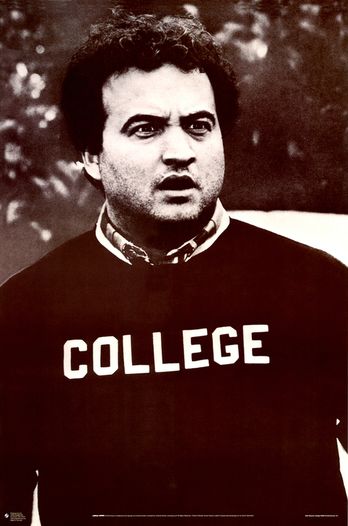
Two guys who got rich when people lost their homes are telling anyone who will listen about the possible insolvency of for-profit education.  Steve Eisman and Manuel Asensio point to the fact that colleges like the University of Phoenix rely heavily on student loans, thus inflating their revenues and stock prices.

It seems like a straight business argument – that a market financed by personal debt would go the same route as housing and auto sales did in the last few years.  But flipping through Eisman’s presentation on the issue tells otherwise.  Eisman complains of placement stats  and advertising practices with anecdotal evidence of nurses working as hospital janitors and billboards lining homeless shelters.  His speech reads like a hit piece on for-profit education; Asensio’s organization piled on by asking the Department of Education to investigate the industry’s business practices.

Some of the points are fair, and it deserves the question: why has enrollment in for-profit education jumped so markedly that it necessitates these altruistic crusades from people who profit on falling stocks?   It might have something to do with the fact that a college degree from a traditional school isn’t always all it’s cracked up to be.

This puts the questions about Elena Kagan’s Ivy-league background – and the prospect of an all-Ivy high court – into perspective.  It’s not (as some critics suggest) that she and the rest of the court went to schools that are “elite”; rather that they all went to one of two or three schools.  Whether the schools are Harvard, Yale, and Brown or UMass, UConn, and URI.  We know that the idea of the elite school is a crock – the problem is the lack of diversity of thought.

Hunting Macaca

Politico’s headline “Democrats seek ‘Macaca moments” aptly describes the DNC’s new Accountability Project, which invites citizens to record and upload videos of Republican politicians saying dumb things.

Because it’s actually a good idea, this has resulted in some hand-wringing on the right amid fears that Democrats are better at grassroots internetting than Republicans.  But that ignores why this is a good idea: the Accountability Project is a national aggregator and message device.  It seeks to crowdsource the Democrats’ messaging to take to most loony Republicans they can find and hold them up as the standard.  It is a pretty clear attempt to re-gain the reins of the national policy debate, which have slipped through the Democrats’ fingers in the past few months.

All that said, by driving messages that show the Republicans are out of touch, Democrats will save their skin and keep control in November.  (They may have done so anyway, but a few macaca moments will help curb GOP momentum.)

So how to combat this?  It’s pretty easy.

Republicans have cameras too, and Democrats are just as prone to saying and doing stupid stuff in front of those cameras.  What if some enterprising conservative with a flip cam catches them in a gaffe, then uploads the video?  It would seem the obvious way to hold the Accountability Project accountable.

Compliment FAIL

FAIL Blog is upset.  A Meg Whitman campaign web video about Jerry Brown’s decades of political failure uses an image of their website.  The Cheezburger Network, the company that runs the FAIL Blog and other similar successful but vapid sites, has asked for an apology and for the video to be removed.

Here’s the video:

The FAIL Blog image, like the YouTube image, is a stylistic inclusion to frame the points.  But what FAIL Blog fails to understand is just how much of a compliment their inclusion is.  The video doesn’t use the image of FAIL Blog as an endorsement, but as an illustration of the depth of Brown’s incompetence.  The video’s point is that Brown is so inept, he belongs on FAIL Blog.

Usually, being synonymous with failure is a bad thing.  Ask the folks behind the Hindenburg, the Edsel,New Coke, Pepsi Clear, the DC Metro, and Jimmy Carter.  FAIL Blog should probably be embracing this.  Privately, they may very well be, if they’re smart.  But it makes for a bigger story if they complain that Whitman has somehow wronged them.  After all, we probably wouldn’t be talking about them if they didn’t pipe up.

Washington, TMZ

The Washington Post’s David Weigel found himself the object of DC gossip columnists for venting on a journalists-only message board – and, before that, for – gasp – dancing at a wedding.

Weigel was a target for this because of his coverage of Congressman Bob Etheridge’s reaction to a couple political paparazzi.  (And incidentally, Weigel was right – Etheridge does look like he’s hugging the camera guy.)  The reaction that he went easy on Etheridge led to his explosion on the list, which snowballed into an even bigger deal, and led to his resignation.  Both his situation and Etheridge’s are part of a bigger trend in DC media.

The last few years have seen the launch of several DC gossip blogs and columns.  Instead of tracking the latest developments on pending legislation (as, say, an MLB gossip blog might cover trade rumors) they cover such matters of national import as the dressing habits and sometime stupidity of summer interns.  It’s not altogether bad, as it’s often entertaining;  But it’s a noticeable trend.

It would be easy to blame this trend on media saturation, but that would be an oversimplification.  This is an environment built on purpose by politicians and their communications professionals.  From state dinners to the White House Correspondents’ dinner, events which were once matters of course are increasingly staged as red carpet galas.  (This year, Politico likened the White House Correspondents’ dinner to the Oscars.)  Celebrities are routinely invited to testify before Congress as experts.

At the same time, much like Hollywood, Washington has created supporting industries around its main business, governing.  Just as movie makers need agents, consultants, special effects companies, costume designers, and other supporting industries, politicians need… well, agents, consultants, special effects companies, and costume designers.  With a community built around a central function, there’s bound to be an esprit de corps that binds people together even more than partisan leanings.

The casualties in this are, of course, old school folks like Etheridge and Weigel.  However, it’s important to note that their failures to adapt are for somewhat different reasons.  Etheridge isn’t used to have to answer questions directly; while Weigel is likely accustomed to the direct, personal questioning that is often a casualty of gossip blog culture.

Viacom, YouTube, and what it means for innovation

YouTube’s victory in Viacom’s piracy lawsuit will be, in the long term, a good thing for online innovation.

Almost a decade ago, Napster was dismantled because its users shared songs.  The technology it was based on was neutral – and could have been used to share legal sound files just as easily as illegal files.  But the technology became the target of content creators – musicians – concerned about people using the technology for piracy.

Blaming Napster because people used it to do something illegal is like blaming a hotel because someone turned a room into a meth lab.  The same analogy can be used for YouTube’s situation: they built the rails for video sharing.  People could use that to share a bootleg copy of Shrek 8, thus cheating Mike Myers out of his cut of the domestic gross or DVD sales.  They could also use it to share a video of a cat falling off the bed, or to create a video blog, or to jump start a comedy career, or to reveal a Congressman roughing up a college kid, or a Senator uttering something that sounds like a racial slur and changing the course of the 2008 Presidential election.

To be clear, YouTube should be held accountable for helping police piracy when concerns are brought to their attention, just as a hotel owner should cooperate with warrant-bearing law enforcement officials investigating meth distribution that seems to be coming from their hotel.  The people dealing meth should be punished.  If the hotel stonewalls and knowingly protects said meth dealers, they should be punished.  But otherwise, the hotel owner is just someone providing a product for private use, and can’t be held liable for its mis-use.

There are, of course, legitimate questions about how important Google feels it is to do right by the people it makes money off of – and the dicey question of how much knowledge a site can have of the activity before it makes a move.  But the result of the Google/Viacom case has less to do with a clash of the corporate titans than with shielding future start ups from liability (and excessive damages) for honest efforts to build online social networks.  If start up sites are held liable for their members’ illegal activities, it could crush innovation and entrepreneurship.  Under the Napster rules, some poor schmuck who isn’t as big as Google could lose his shirt for building a website in his basement because of the actions of the users.  The YouTube rules are simply more fair.

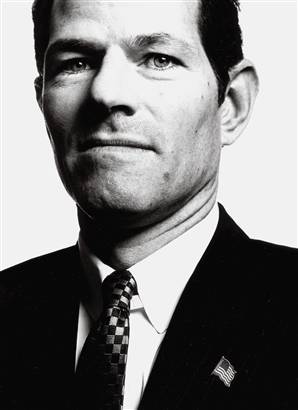
Tonight on CNN: “Ratings Grab” with Eliot Spitzer

Spitzer
Photo from mhpbooks.com

The Most Trusted Name in News is putting it’s prime time show in the hands of a guy who broke laws at night that he enforced by day.

Phil Donahue accused MSNBC of trying to “out-fox Fox” when it fired him in 2003.  He meant it as a slight to MSNBC’s political leanings, but it goes a little deeper than that. Fox’s format is based on a complement of breaking news during the day (often car chases and such) and heavy opinion and analysis during primetime.  (It should be noted that Donahue was 175 at the time MSNBC canceled him, though.)

There’s the formula for news success in primetime.  Fox got to the top of the ratings with O’Reilly and Hannity and Colmes (before Colmes bounced); MSNBC – which was all but dead in the early 2000s – rebounded with Olbermann and Maddow on the other side of the aisle.

Neither network’s success is purely ideological – each of those four programs features strong, unique personalities.  News channel viewers aren’t looking for news at all; they’re looking for people they either love or love to hate. Enter the Love Gov – who, despite the fact that he’ll be sitting opposite a Pulitzer Prize winner, will be the headliner on what is ostensibly a news show.

But will another personality show succeed?

If everyone in a shopping mall is selling shoes, and you open up a new shoe store, folks are going to need a compelling reason to leave their existing shoe store and come to yours – especially since they already have so many options.  And selling the same types of shoes as every other store doesn’t give you an advantage.  So the new show will have to have more than just a controversial name to bring in viewers.

Of course, if Spitzer interviews Marion Barry every now and then, CNN might have ratings gold on their hands.

It’s still better than WGN

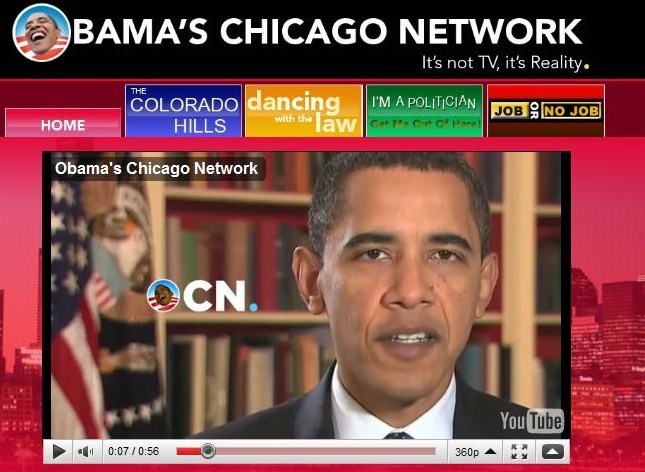
Looking to keep stories about the White House’s dabbling in primary elections alive, the RNC launched the “Obama Chicago Network” in an email to supporters this afternoon.

The site boasts four “shows” that deal with various negative stories surrounding the Sestak/Romanoff could-have-been-bribery affairs, plus Rod Blagojevich thrown in for fun:

Even if it is somewhat dated in the pop culture references (some of the shows they are spoofing are past their prime or canceled), it’s pretty funny, makes good use of news clips, and has a poll to collect people’s contact information.  With Blagojevich in the news, it does a good job of tying the administration As a lead generator, the site is good, but it’s missing something that could make it a really useful tool for Republican messaging: a section where users could “pitch” their own shows.  Not only is audience participation a good thing, but it might make for some must-see TV.