The terrorism Jump to Conclusions mat

For the last year, the story has been the same – voters are upset with and distrustful of government, meaning we should be on guard for violent outbursts from the right.  It’s going to happen at one of these tea parties, we’ve been told.  Glenn Beck and his ilk are spurring violence, and not-so-secretly happy about the idea of angry mobs spurring armed revolution.  Democrats must live in fear, because Republicans are willing to stop at nothing to stop them!

So here’s a thought: just this weekend, New York faced a bomb threat.  The suspect is in custody, but there’s no indication on motive yet.  In fact, in stories buried under a sensational headline about South Park’s recent controversy, Rep. Peter King actually makes exactly that point:

Though King said the “hostile remarks” raised after the South Park incident were worth investigating, other potential targets – such as nearby financial institutions – needed to be looked at as well.

Financial institutions?  Well, let’s think about that.  Plenty of lawmakers have been taking shots at Wall Street, lumping the entire financial services industry in with the fraudulent and dishonest players.  The President himself has made a bit of a political comeback thanks to rhetoric based on widespread popular distrust of these financial institutions.

So if you have a “Jump to Conclusions” mat about the recent failed terror attack in New York, doesn’t one of all those “conclusions written on it… that you could… jump to!…” have to be that the Times Square bomber could have been operating based on what he has been hearing from Washington?  It’s perfectly logical if you buy the argument that harsh rhetoric from media mouthpieces incites acts of violence.

But like the jump to conclusions mat itself, it is a terrible, terrible idea.

Crist crossing party lines

It’s hard to portray yourself as an outsider when you sit in the governor’s mansion in one of the biggest states in the union.  But Gov. Charlie Crist did his best yesterday, positioning his decision to run as an independent as an answer to a broken system. And it just might work.

Though polls currently show Marco Rubio with a slight edge, they also show that 35-40% will likely win the race.  (Unlike Sen. Joe Lieberman’s 2006 run after losing the Connecticut Democrat primary, the opposition party is not laying down.)   Even though some Republican donors are sure to ask for their money back, Crist is a sitting governor through the beginning of next year and Florida is a state with plenty of commercial interests.  That math isn’t hard to do.

If Crist wins, the math gets even more fun.  Assuming he stays independent, he could become very difficult to topple as long as he maintains support in one third of the electorate.  That would make him an anomaly in American politics: a safe incumbent with 35% support.

More PR lessons involving iPhones

This morning, TechCrunch innocently poked fun at a press release from an iPhone retailer announcing that iPhones make men more attractive according to a survey of 1500 women.  Neither the retailer nor their PR agency knew anything about the somewhat embarrassing release, which led to an email exchange with blogger Robin Wauters.   Wauters, predicatbly,  has made the whole thing public.  (As Wauters reveals, the retailer and the PR agency eventually determined that the release was sent by another consultant, which through some mix-up in communication thought it was cleared to send the release.)

That second post detailing the back-and-forth calls parallels the story of former U.S. Senator William Scott of Virginia, who was named “The Dumbest Congressman of Them All” by New Times Magazine in 1974.  New Times only lasted for a few years, and was best known for investigating conspiracies and left-leaning social commentary.  Polling data from the era is sketchy at best, but it’s a safe bet that if Sen. Scott had constituents that subscribed to New Times, they weren’t people who were going to vote for him.  Still, Sen. Scott held a press conference to denounce the magazine article – a move which only served to give the story legs and make sure more of his constituents knew someone had called him an idiot.

Sometimes, if you shut your mouth, the bad news just goes away.

TechCrunch is a great, widely read blog; but if the retailer and their PR consultants had said nothing, would this morning’s tongue-in-cheek post have resulted in fewer iPhone sales?  It’s doubtful.  Much more likely to hurt sales is the perception that the retailer is disorganized and has the fingerprints of professional public relations operatives all over their brand.

When negative information gets out there, the objective is to put out the fire.  Sometimes, if you throw a blanket over it, the blanket bursts into flames.

3 Ways the Democrats Won on 4/15

And that isn’t counting a penny of tax money, either.

Yesterday was a big news day. Tea partiers marched here in DC and elsewhere to define their core principle: that the federal government is too big, that high taxes siphon money out of the economy, and that government programs tend to make matters worse, not better. Overall, yesterday’s messaging seemed positive for limited government activists.

But the opposition was smart, too.  Nationally, Democrats drove three well-timed news stories – two by President Obama, one by Sen. Harry Reid – that added up to a communications masterstroke.

1.  President Obama announced we’re goin’ to Mars (eventually).

This was a good story to grab headlines on the other side of the tax day protests.  Instead of trying to directly engage, President Obama simply highlighted a use of taxpayer money that many folks from both sides of the aisle agree with: scientific research.  The space program specifically creates tons of jobs not only in research but in manufacturing the components of Major Tom’s tin can.

You can’t answer a call for lower taxes with the stance that taxes are just fine.  However, showing a positive use of tax dollars can undermine that message.  It wasn’t a happy coincidence – the Florida trip has been on the President’s schedule for weeks, if not months.

There’s another, more subtle attempt at differentiation here, too.  The announcement of an advanced science program will now be played on the same newscast with footage of grassroots protesters – citizen activists who, in their haste to participate, misspell signs and don’t have a staff of speechwriters to help them articulate their views.  Without actually saying it, Obama gets to present his side as better-educated and smarter than the knee-jerk, anti-tax tea partiers.

2.  President Obama signed an executive order permitting hospital visitation rights to same sex couples.

This is another point of differentiation – and a chance to bait his opponents.  Most of the focus of tea party activism has been on fiscal policy, and many Americans tend to agree with the most conservative segment of the electorate that the government spends too much and spends it wastefully.  For social issues, there is less common ground, and yesterday’s announcement has the potential to begin peeling off moderate voter support from the Republicans.

Making this announcement on a busy news day means that there won’t be much media discussion – unless someone at a tax day rally goes off message, and gets captured in a YouTube video proselytizing about moral codes.  Then it feeds the idea that tea parties are run by intolerant bigots.  It’s a win-win for Obama – either his announcement slips almost completely under the radar, or it’s a chance to take shots at the other side.

3.  Sen. Reid announced that financial reform package will hit the U.S. Senate floor next week.

The Democratic talking points for November are already written: Republicans are the party of Wall Street.  They will attempt to make this distinction with a bad financial services reform package scheduled to hit the floor next week.

Like the other two examples, Reid’s announcement serves to distinguish the Democrats from limited government activists by calling for a larger government for an ostensibly good cause – safeguarding consumers and investors.

There’s also a great strategy in this timing that has nothing to do with tea parties but everything to do with tax day.  The folks who would be most likely to oppose this legislation would be financial professionals, who understand that it isn’t all it’s cracked up to be.  If they had the time to do it, they might rally their customers and colleagues, making the case that the bill would actually hurt efforts to keep the players in the financial system honest, and mobilize a strong push against the bill.  They haven’t had time, of course, because over the last two weeks, financial professionals have been working around the clock at their day jobs – because yesterday was April 15.  So when the bill hits the floor next week, they won’t be ready to stir up opposition.

Gearing up already?

Passion is important in politics because it helps win over the uncommitted moderate voters; excited activists are the ones making phone calls, dragging people to the polls, and giving one side the image of a winner.  In 2008, then-candidate Obama’s campaign enjoyed demonstrable shows of emotion from his supporters.  In 2010 that excitement is trending toward the right – so far.

But it isn’t to early (or too late) for the President and his allies to begin letting some air out of that balloon.  The further he can create the perception of a gulf between conservative activists and the values of moderate voters, the more Republican chances in 2010 and 2012 will deflate.
W: Redemption through revolution

The George W. Bush Presidential Institute will host a conference on online dissidents next week.  For a President who left office after two terms with enemies on both the right and left, this is a possible preview of how Dubya plans to brand his time in office.

President Bush’s eight years were defined by September 11; Bush responded to those attacks by advancing the idea of expanding liberty throughout the world. But with the Iraq War grinding along with no end in sight on January 19, 2009, critics on both sides of the aisle viewed Bush as one of the least competent two-term Presidents in history.

Faced with this, Bush made a smart post-Presidential decision and stayed out of the public eye (save for his humanitarian efforts in Haiti and a pretty good ceremonial first pitch on the Texas Rangers’ opening day).  During his radio silence, the Iran election protests and the China/Google flap demonstrated that freedom-loving people around the world were fighting freedom-hating regimes.

Suddenly, the conversation on world affairs was ripe for W to dip a toe back into the water.  Tech President pointed out that this is a good fit for Bush:

While “George W. Bush” might not be the first person that pops into your head when you think about cyber dissidence, there’s some sense to it. For one thing, you can see this approach mesh well with the sort of hand-on democracy promotion he leaned towards at times during his terms.

Along with a good cause, Bush’s post-Presidential messaging has another smart element: activities like this cyber dissident conference are forward-thinking rather than retrospective.  It doesn’t tell the story of Bush’s foreign policy, it adds to it in order to create the recurring theme of extending freedom.

Bush himself might say, “Even if you don’t agree with me,you know what I believe and where I stand.”  Last time he used that line, it worked out ok for him.

3 Up: Nancy Pelosi, the Yankees, and GOP messages

Joel Sherman – who, despite growing up a Cincinnati Reds fan, does a better job than anyone of giving a voice to New York baseball – called out Milwaukee Brewers owner Mark Attanasio in his daily blog for Our Nation’s Newspaper of Record.

Attanasio, who is trying to lock up franchise cornerstone Prince Fielder to a long-term contract,  complained that the Yankees spent a lot of money to pay their players. Sherman rightly observes that Attanasio uses the Yankees as a convenient straw man, much like a politician devoid of a message:

Look, I get it, we live in talk-radio world now. If you are failing your constituency then don’t take any personal responsibility just demonize an easy bogeyman. The Democrats do it to the Republicans, the Republicans do it to the Democrats, and in baseball, when you have no other answers blame the Yankees.  …[P]ulling the Yankees into the Fielder discussion is either the act of a lazy mind or the act of an owner who wants to rile up his fan base so nobody notices his own failings.

At TechRepublican, Wesley Donahue makes a similar case against the “Fire Nancy Pelosi” messaging of many Republicans:

Last week I went to a “Listen and Learn” event in Charleston with S.C. Republican Party chairwoman Karen Floyd. What I heard was exactly what I’m hearing through emails and blog comments to all my clients. People want more than “No.” They want alternative plans.

Both baseball teams and politicians rely on a base of people whose support isn’t entirely rational.  In politics, Candidates like Ronald Reagan and Barack Obama with pleasant personalities are able to gloss over policy differences.  Sports fans will change their behavior to avoid jinxing their team.*

But in neither case is affection blind.  The most diehard sports fans can endure losing seasons, if there’s some reason to hope their favorite team can either build a winner or at least be competitive (Redskins fans understand this, especially this week).  But fans bases – and voters – lose interest when teams are stuck in the mud and going nowhere.

Nancy Pelosi and the Yankees are both easy targets.  That doesn’t make them good long-term targets, though.

*Fun story: during the baseball playoffs last year, I texted disparaging, negative comments about the Yankees to both of my brothers during the games; each time I did, the Yankees came back to win.  I even sent a text when one of my brothers was sitting in the same room, watching Game 3 of the World Series with me.  My phone should have been named World Series MVP.

Sadly, the tactic proved ineffective for the New York Giants.

Flubs of Steele

Michael Steele shouldn’t have blamed his recent fundraising flaps on racism.  Luckily, he didn’t, despite the headlines crawling around today

Watch the clip: Race was actually brought into the discussion as part of a viewer question, which Steele answered honestly – and, to be fair, correctly.

Maybe Steele should have been a little clearer on the fact that he was speaking broadly about the fact that, although we have come pretty far in this country, black people still get the crap end of the stick more than they should.  He did bring it up as a bipartisan issue.

But his out-of-context quote has been framed to sound like an excuse and repeated over and over.  Any person who wrote a headline – or worse, a story – that implied that Steele was hiding behind race for the recent RNC scandal is either a political hack or a bad journalist.  (And ABC’s own site, which claimed Steele “played the race card today,” is no better.)

Again, watch the clip.

Last week the New York Times went over the top, implying that anyone who opposes government-run health care might as well be hanging with Ed Norton and Edward Furlong and giving out curb smileys to anyone who rooted for the Lakers over the Celtics in the 1980s.  In comparison, Steele’s mild observation is a much more reasoned and well-thought-out social commentary on race relations.

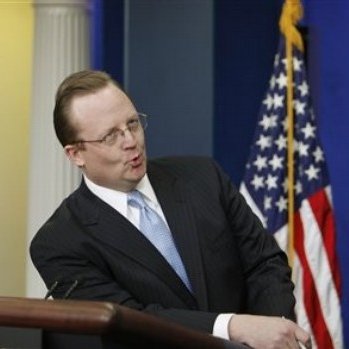
Thankfully, the White House’s Robert Gibbs set everything straight during the daily press briefing, calling the concept that black people and white people are treated different “fairly silly.”

Because there could be no better expert on race relations than this guy:

Now America loves health care reform

In a reversal not seen since Springfield decided they loved the Burlesque House, poll numbers on the health care bill have just about flipped since its passage, with a small edge favoring the bill.

Those numbers will likely go up in the next few months.  Americans are overwhelmingly satisfied with their own health care, and most of the provisions of the health care legislation will roll out slowly over the next decade.   President Obama’s oh-so-Presidential taunts about health care overhaul – calling on Republicans to “look around” in “two months, six months” – are backed up by the fact that very little will happen in that time.

More evidence that “repeal the deal” would be a loser as a political slogan this November.  But what if the slogan was “finish the job”?

Buried in the bill (and this story on CNN) are limitations on Flex Spending Accounts – personal savings accounts people can use to save money for their own health care.  Along with silly items like taxes on tanning beds and regulations on the McDonald’s dollar menu, there are plenty of gaps in the program administered by our new health overlords.  Why not attack those in the name of making people healthier?

Framing real health reform this way is a winner – after all, as the polls show, America loves to back the winning horse.

Why ACORN cracked

ACORN is closing up shop and may have to file for bankruptcy.  There’s no mystery as to why: donors have refused to write checks to the organization since the now-infamous “pimp videos” featuring James O’Keefe and Hannah Giles.  The ensuing controversy that made ACORN radioactive had as much to do with the organization’s response as it did with the actual content of the videos.

A Wired article on Andrew Breitbart – whose Big Government was a platform for the videos – details the strategy behind the tiered release of the videos:

Breitbart initially released only the video from Acorn’s Baltimore bureau, which the group dismissed as an isolated incident. The next day, he posted a video of O’Keefe getting similar results in Washington, DC. Oops. Acorn stepped on the rake again, claiming the videos were doctored. Then Breitbart posted more — from New York City, San Diego, and Philadelphia. Congress started pulling Acorn’s funding, and The New York Times flagellated itself for its “slow reflexes” in covering the story.

A less savvy operative might have released all the videos at once to illustrate the scope of the problem.  They would have received some coverage, but the media would largely have dismissed the story.  After all, how many government and non-profit offices would you really have to walk into if you wanted to catch someone saying stupid on camera?

By releasing the videos in slow drips, O’Keefe and Breitbart established a pattern.  With each new video, the story became a bit bigger, and more media outlets paid attention.  This strategy also allowed ACORN to be dismissive of the first few releases, making them look all the more foolish when the “isolated incident” proved to be anything but.

On its own, video of O’Keefe and Giles would have told a compelling story about ACORN.  Handled smartly – as it was – this information became a tangible result.