CPAC is bigger than ever – and largely irrelevant

Picture it: Arlington, Va., 2002.   It’s my first CPAC, and it’s pretty much the same as most of the CPAC’s before it, based on what I could gather.  There’s a slate of speakers and panel discussions, but I spend most of my time in exhibit hall, working the table for my then-employer, the Leadership Institute.  Most of the attendees are college students, and a fair amount from my territory in the Northeast, so I see plenty of people I know and do business with.  My colleagues at LI, who generally work with non-college students, grouse that CPAC is a waste of their time.

On Friday, I crashed CPAC.  There were slates of speakers and panels, but also breakout sessions, receptions in hotel suites for people pushing products, and a lot more adults in massive conference center which housed the conference.  (I know college students are technically adults, but you know what I mean.)  The speeches, once the fodder for CSPAN’s early morning programming, are now covered live and the political press has been paying astute attention.

The conference which was once a trade association for the conservative movement has grown into… well, pretty much the same thing with more people and more media coverage.

It’s become more notorious in recent years for who isn’t there than for who is, and liberal blogger-activists show up with their pocket cameras trying to be the next Twitter star.  Republican consultants – including both establishment Republican consultants and the Republican consultants who bash establishment Republican consultants – lurk in the wings trying to drum up business.  (That was my role on Friday.)  Rarely is anything of substance said.

This may sound like a criticism of CPAC, but it sure isn’t.  Political activists of any stripe care about something that very few other people really care about.  That’s why online communities like Facebook and Twitter were so readily adopted by politicos.  There’s a real value in seeing and meeting people face-to-face who are mostly like minded and exchanging ideas.  There’s a value in hearing rah-rah speeches about your cause that reaffirm your commitment, especially since most not-political folks will probably think you ought to be committed.

There weren’t major policy discussions.  There was a fair amount of introspection on campaign tactics, but nothing groundbreaking that hasn’t been said before.  Some people in the audiences or walking around exhibit hall probably said stupid or silly things, but the people up on stage kept it pretty vanilla.  It’s a great and fun networking opportunity if you are in center-right politics, but precious little more than that.

Let’s not bill CPAC as a ComiCon for the conservative movement, which is what most media outlets seem to want.  The attention paid to the event doesn’t merit its importance.  Those who make their food money covering politics ought to know that.

Black Friday/Cyber Monday: Media Holidays

As much as Thanksgiving kicks off the Christmas/Winter Holiday season of family, friends, and good cheer, Black Friday and its partner Cyber Monday have become the official kickoff of the unofficial shopping season that turns all that good cheer into stress, anxiety, and insomnia.

But it’s all bunk, or at least it is now.  You’ve heard of “Hallmark holidays” – invented celebrations that exist only because greeting card companies want to sell more cards and trinkets.  Right now, Cyber Monday and Black Friday are “Media Holidays”: They exist only because constant media attention feeds the perception that these non-events are actually events.

The evolution makes sense: for years, Black Friday was the most optimum day to do Christmas shopping.  The day after Thanksgiving is either an official day off or a vacation day for many workers, and after a day of turkey and relatives, people wanted out of their houses.  Depending on where you get your information from, the moniker comes from either retail sales finally going into the black for the year or Philadelphia shoppers behaving like, well, Philadelphians.

The advent of online shopping meant online shopping during Advent, and thus came Cyber Monday – that first day back at work when office workers would get back to their desks and shop online.  Part of it was procrastination for those still suffering a hangover from the leftovers (or maybe a leftover hangover), but part of it was because in the early days of Amazon, the best internet connection many people had was the one at their work desk.  Often, the T1 they plugged their business computer into was exponentially faster than the dial-up NetZero that their family used for limited connectivity at home.

The reality is that advances in residential broadband, smartphones, and mobile networks have made the concept of Cyber Monday ridiculous, especially given that many retailers’ “Black Friday” sales extended from the Monday before Thanksgiving through the weekend and almost all were available online during that same time frame.  And there’s really no reason to go outside at all if most of the sales are available online – you can do just as much shopping in your pajamas watching Christmas movies on Black Friday as you can bundled and waiting in the black of night for some kid making just over minimum wage to unlock the doors at Target.

What keeps these non-holidays going is the media element. Much like many places of business that aren’t selling things, Thanksgiving weekend is slow for many media outlets.  Black Friday deals and images of shoppers camping out make for ready-made content on every news program, from the local news up to the national networks.  Social news helps too: tweets and status updates that come with the voluntarily miserable experience of shopping at some insane hour with family and friends are fun to read.

Black Friday (and Cyber Monday) provide an interesting yearly phenomenon that fills time on the news – so interesting that both days continue to outlive their original purpose.

At least AP saved some money by not showing up

The Associated Press and Reuters joined Mitt Romney in not attending this week’s Republican quasi-Presidential debate.  A story written by the AP covering the AP’s decision quoted an AP official:

The opening stages of an event as important as the presidential selection process should be as accessible as possible to all forms of journalism,” said Michael Oreskes, the AP’s senior managing editor. “These candidates want to lead the country. The country has a right to see them from various angles, not only where the TV cameras are positioned.

Remember, Journalism school students, there’s no reason you can’t quote yourself in a story you write about yourself.  That’s completely fine.

The AP isn’t clear exactly how the rights of the voting public are trampled by Fox News in restricting still photos during the televised event, but not by the AP in refusing to cover the event at all.

The only potential problem is that there will be no embarrassing pictures capturing candidates with their faces scrunched up or with mouths gaping ajar while they pronounce words like “sure” or “capital.” The restriction on pictures would be horrible for the AP if they sold pictures.

Oh, wait, that’s right: they sell pictures.

It is also tough to stomach the spin used by both AP and Reuters in holding up their readers and news consumers like human shields as the aggrieved parties.  In reality it was the news organizations who were slighted by the picture ban.  This isn’t a First Amendment problem; it is similar in that such cases the “public right to know” is used as shorthand for “the news company’s right to publish.”

But luckily for the voters, the AP is pretty much irrelevant as a news gathering organization anyway.  By using their platform for political speech, they become even less so.

Small is huge nowadays

Two seemingly unrelated pieces of patriotism struck me as oddly similar this week.  The first was, obviously, the raid that killed Osama bin Laden.  The second was the not-quite-safe-for-work homage to George Washington from cartoonist Brad Neely.

Neely’s work is kind of out there, but for those who share his sense of humor it’s spot on.  (A sample line: “And we danced, like those people in the hyper-tight light of fried chicken commercials!”  Seriously, what does that even mean?)  Even with limited exposure in venues like Cartoon Network’s Adult Swim, Neely’s two or three minute videos are especially suited to a YouTube audience.

Obviously, the Navy SEALS who took down bin Laden crafted a much more significant piece of work on Sunday.  Their achievement, though, was a reflection of a changing military environment just as Neely’s videos reflect a changing media environment.

The major military conflicts to stop terrorism after September 11 targeted nations – specifically, Afghanistan and Iraq.  The plan was to smoke out terrorists by pressuring state sponsors of terrorism.  We found that the strength of our armored columns had limited effectiveness confronting the independent contractors who made up Al Qaeda’s network.  We could contain the snake, but we couldn’t do the one thing we set out to do.

It’s significant, then, that the bin Laden kill mission was set up by intelligence and espionage, and executed by a couple dozen elite servicemen.  There was no invasion of Pakistan, simply a precise action focused on a single piece of property within the country.  One can’t help but suspect that had our leaders not announced the mission’s success, the rest of the world might never have known bin Laden was dead.

A small, elite unit was all it took to snuff out the world’s leading terrorist.  George Washington (who crossed the Delaware for a surprise attack) would be proud.

3 Rules for Message-Driven Media

Unsurprisingly, my prediction that Atlas Shrugged would suck proved to be true.

Scathing review notwithstanding, the filmmakers deserve plaudits for the ambitious attempt.  The movie might have been a swing-and-miss, but you have to hand it to John Aglialaro, who ponied up the cash to get the picture made, and the team who put the thing together quickly.

The truth is that Atlas Shrugged falls into the trap so many attempts at “conservative entertainment” fall into.  It is reminiscent of 2004-2005, when several documentarians from the center-right grabbed a camera to answer left-wing movies like Supersize Me and Farenheit 9/11. Just about anyone who put something mildly amusing on videotape was labeled “the conservative Michael Moore.”  In the years since, others have followed in various media.  Fox News Channel’s “1/2 Hour News Hour” was supposed to be the conservative answer to the Daily Show.  Websites spoofing the news as a conservative answer to the Onion spring up every now and then.

Being “the conservative version of [INSERT ANYTHING HERE]” is pretty much an epitaph, defining a project by its political views rather than its quality.  And unfortunately, that’s what happened to Atlas Shrugged.

This is, however, a teachable moment for those on the center-right who want to entertain people with a good message.


1.  Be entertaining first.

A major problem with Atlas Shrugged (the movie) was that its commitment to libertarian philosophy led to an unhealthy reliance on the book.  Plot points and even dialog were almost directly lifted from Ayn Rand’s text.  The result was muddled, outdated, and difficult to follow with characters and characterizations that were difficult for audiences to identify with.   With a plot that’s hard to follow and characters who are difficult to warm up to, philosophy becomes the most recognizable element of the film.


2.  Give the people someone to identify with. 

Speaking of characters, another common mistake of politically tainted entertainment is the lack of attention paid to character development.

Not to continue picking on Atlas Shrugged, but business moguls do not fall into the “warm fuzz” category.  That problem isn’t as pronounced in the book, which gives fuller portraits of the characters and allows the readers a peek into their thoughts.  In the movie, the titans of industry are simply business executives who happen to be in the story.  With the financial problems of 2007-2009 still close in the rear view mirror, that does not make for especially sympathetic characters. (Sure, there are many reasons it’s easier to create compelling characters in a book – dialog doesn’t have to be quite as sharp, and the body language of the actors isn’t as important.  But if you take on the task of producing visual media, accounting for that goes with the territory.)

More to the point, though, is the fact that the most memorable stories work on emotion, and having identifiable characters allows the audience to share in that emotion.  Star Wars is still celebrated because a generation of kids grew up pretending to be Luke Skywalker (and occasionally fighting with their brothers over who got to be Luke Skywalker even though, you know, you’d think the oldest would get first pick).  Everyone thinks of themselves, at times, as the orphan living under the stairs, so we all share in Harry Potter’s elevation from forgotten one to chosen one.  We all wish we could spend the day bowling and drinking like Jeffrey Lebowski (or like Luke Skywalker in Episode VIII: Man, It Sure Is Boring Without the Empire).


3.  Have respect for your audience.

The show goes on because of the folks in the seats.  Politically-motivated entertainers who use the stage as a pulpit to advance messages that are important to them may do so at the expense of what’s important to the audience.

That isn’t a problem for those tuning into overtly political entertainment, where strong views are expected – for instance, dialing up Rush Limbaugh or Keith Olbermann.  The people tuning into those types of shows are doing so because they want to hear the entertainer’s views.  But the audiences in most movie theaters (regardless of the individual audience members’ personal philosophies) are going for something completely different.  Ditto for the family that sits down to watch a sitcom together.  (Do people even actually do that anymore?)

In that respect, there’s a sort of arrogance and rudeness in coming to the stage to push a message; it prioritizes the entertainer’s goals over the audience’s.  Unless you’re Don Rickles, nothing turns off a crowd faster than disrespect.  A little subtlety goes a long way.

Olbermann, Maddow, and the new faces of MSNBC

Keith Olbermann’s final “good night, and good luck” on Friday makes for an interesting media interest story.

Olbermann was a key voice of the left during the 2006 and 2008 election cycles, so he surely could have been fired for being “too liberal.”  With the Comcast/NBC merger complete, several corners of the internet were abuzz with gossip that the new parent company had something to do with the iconoclastic Olbermann being showed the door.  Or, he could just be a jerk who has a history of being fired for not getting along with coworkers.  That’s probably the most likely answer.

For years, Keith Olbermann was the face of the new MSNBC’s left-oriented opinion programming; his aggressive style countered the conservative and populist voices of Fox News with something a bit punchier than CNN’s vanilla lineup.

MSNBC hasn’t shied away from that.  They’re keeping the “Lean Forward” campaign, and their evening lineup still boasts Ed Schultz, Lawrence O’Donnell, and Rachel Maddow.  Maddow will be the lineup’s new cleanup hitter – and for MSNBC, that seems to be the best motivation for the move.

This is unscientific, but do a Google image search for Olbermann and another for Maddow.  Sure, as a liberal lightning rod, there are plenty of pictures of Olbermann designed to make him look dumb.  But as you scroll through, a pattern becomes obvious: few of his pictures, even official ones, include him smiling.  Much like the “special comments” he delivered on his program, Olbermann frequently looks stern, as if the next words out of his mouth might just be the most important in the history of the universe. (See picture above.)

Maddow, on the other hand, is smiling in most of her search results.  When delivering opinions on her show, Maddow is smug and smart-alecky, but clearly enjoys poking fun at her targets.  It’s not necessarily good-natured humor, but it’s humor.  Much like the gruff Bill O’Reilly, one can picture a calmer, non-political side of Maddow, as if she understands that the topics on her show are important, but not likely to mean the end of the world any time soon.

Public relations 101 for anyone who wants to be on TV is to smile… and keep smiling… and smile some more.  It helps the speaker relate to the viewer.  Even when discussing difficult or contentious topics, smiles go further than furrowed brows.  Maddow seems to know this, and thus is a more effective host – and, by extension, messenger of liberal ideas.

That means that the real winners in Olbermann’s dismissal are the far left activists for whom the erstwhile Countdown host was a beacon in the night of the Bush administration.  While he created a place for overt leftist thought on cable news outside the guise of objectivity, Maddow is now the better caretaker of that tradition.

Whatever the real motivations were, the result of the decision is that Maddow, and not Olbermann, is the signature voice of MSNBC as they move (or lean) forward.  That’s pretty good news for MSNBC, but it’s even better news for left-leaning activists.

Flubs of Steele

Michael Steele shouldn’t have blamed his recent fundraising flaps on racism.  Luckily, he didn’t, despite the headlines crawling around today

Watch the clip: Race was actually brought into the discussion as part of a viewer question, which Steele answered honestly – and, to be fair, correctly.

Maybe Steele should have been a little clearer on the fact that he was speaking broadly about the fact that, although we have come pretty far in this country, black people still get the crap end of the stick more than they should.  He did bring it up as a bipartisan issue.

But his out-of-context quote has been framed to sound like an excuse and repeated over and over.  Any person who wrote a headline – or worse, a story – that implied that Steele was hiding behind race for the recent RNC scandal is either a political hack or a bad journalist.  (And ABC’s own site, which claimed Steele “played the race card today,” is no better.)

Again, watch the clip.

Last week the New York Times went over the top, implying that anyone who opposes government-run health care might as well be hanging with Ed Norton and Edward Furlong and giving out curb smileys to anyone who rooted for the Lakers over the Celtics in the 1980s.  In comparison, Steele’s mild observation is a much more reasoned and well-thought-out social commentary on race relations.

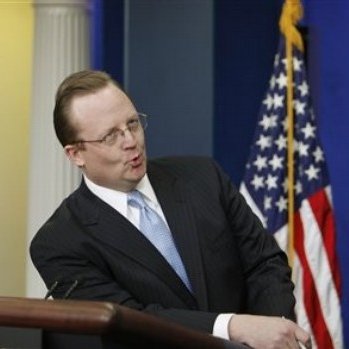
Thankfully, the White House’s Robert Gibbs set everything straight during the daily press briefing, calling the concept that black people and white people are treated different “fairly silly.”

Because there could be no better expert on race relations than this guy:

Palin vs. Family Guy: IT’S A TRAP!

It’s old news, but the Sarah Palin v. Family Guy flap shows the danger of dabbling in pop culture references without doing some homework.

The former Governor of Alaska made headlines by smacking Family Guy for a Down Syndrome-afflicted character who claimed her mother was “the former governor of Alaska.”  And all of a sudden, it’s the early 1990s again, when Dan Quayle (a Republican who was named as a Vice Presidential candidate despite doubts about his readiness for prime time) took a swipe at the TV show Murphy Brown when the title character had a child out of wedlock.

Family Guy is a poor target for Palin’s ire, featuring frequent jokes about a wheelchair-bound main character and occasional cameos from a Greased-up Deaf Guy.  Why start hammering Seth MacFarlane and Company for making fun of the handicapped now?

Compounding the issue for Palin is the fact that the actress who claimed to be Palin’s daughter was voiced by an actor with Down syndrome.  Suddenly, the actress is in the position of authority on how to handle the issue and Palin is an outsider to the Down syndrome community.  If MacFarlane was looking to bait Palin into looking foolish, he could not have planned it better.

This also makes for another early 1990s parallel: one of the Fox Network’s first hits, In Living Color, featured a handicapped superhero played by Damon Wayans.  Wayans escaped criticism because he had, as a child, suffered from a club foot.

REAL journalism on the right

The Daily Beast’s list of the top 25 conservative journalists makes one thing obvious: the Daily Beast either has little concept of what journalism actually is or felt the need to create a list with 25 names rather than, say, a dozen.  The list ranks the likes of Rush Limbaugh, Glenn Beck, and Sean Hannity highly – and while they are influential commentators and entertainers, they are not journalists.

The list has several good picks such as Andrew Breitbart, Matt Drudge, and Michael Barone.  Like Limbaugh and Friends, they have opinions; but unlike the typical radio show host they illustrate their views with information.

Good opinion journalism was best summed up in a seminar given by a reporter who should have been on the list, Tim Carney: “Nothing convinces people like facts they didn’t know before.”

Case in point: in a recent blog post, Carney explored the reaction of Sen. Chuck Schumer to the Supreme Court’s Citizens United vs. FEC decision.  Schumer bemoaned that the decision “open[ed] the floodgates” for “special interest money” from large companies.  With a little bit of research, Carney discovered that Schumer was the top recipient of funds from three of the top five industries in terms of campaign giving.  He also found about a dozen former Schumer staffers working as lobbyists.  In other words, when Schumer defends campaign finance regulations, he’s defending a system that he has found very lucrative.

A talk radio host may get laughs by calling Sen. Schumer “Chuck the Schmuck” or joking about the New York political machine functions so comfortably in – and there’s certainly a place for that.  But real journalists like Tim Carney are the ones who find the factual nuggets of truth necessary for commentary and satire.

And because that job is so important, it’s equally important to get the job description right.

NPR’s (unnecessary) mea culpa

NPR has sort of apologized in a post by their ombudsman for the controversy drummed up by this cartoon:

The cartoon drew the venom of conservative commenters for both its use of the loaded term “tea-bagger” and the fact that it was summarily dismisssive of the tea party movement.  And though the cartoon has an undeniable ideological bent, the real problem here is not with NPR.  There are two issues at play.

First, conservatives in the Tea Party movement have not found a way to own the term “teabagging.”  There are ways to do so, but they require an attitude adjustment (or, some might say, an attitude problem) that many establishment conservative movement organizations are unlikely to accept.

Second – and more importantly – is an important aspect of all conservative cries of media bias.  Consider this reply from an NPR staffer:

“Would it be nice if there were other Web-original cartoons from other perspectives to run with Fiore?” said [NPR News Executive Editor Dick] Meyer. “Sure. We think there are and we’ve been looking for a while in fact. And I think criticism that we don’t have a conservative cartoon is certainly legitimate and reasonable.”

The problem isn’t really that Mark Fiore made a cartoon that skewers the right, it’s that the right isn’t in a position to skewer back.