Be vewy quiet; the FCC is hunting wabbit ears

Over the weekend, Outside the Beltway had an excellent critique of a New York Times op-ed from Helen Rubenstein, who was suddenly upset that she couldn’t siphon internet from her neighbors.  Rubenstein is a Brooklyn college professor (thankfully of writing and not ethics), and apparently feels that she should get a service for free that other suckers pay hundreds each year for; OTB rightly calls her out for her self-centered attitude.

Buried in her complaint letter to no one in particular, though, is a hint that his is more than simply an op-ed from a spoiled academic who demands everything for free:

In an ideal world, the Internet would be universally available to anyone able to receive it. Promisingly, the Federal Communications Commission in September announced that it would open up unused analog airwaves for high-speed public wireless use, which could lead to gratis hotspots spreading across cities and through many rural areas.

In 2011, there may be similar announcements to the one Rubenstein references.  The Obama FCC makes no secret that they like the idea of pushing broadcasters off the airwaves to make sure there’s more room for the internet.  Their vision of the future would keep traditional TV stations on cable, but would limit their ability to broadcast over the air.  (If you don’t use rabbit ears, you might not notice; if you do use rabbit ears, it would be time to call Comcast.)  Wireless internet providers and cable companies would win; traditional over-the-air broadcasters would lose.

The sales pitch to the consumers will likely be similar in tone to Rubenstein’s op-ed: Wouldn’t you love for the internet to be everywhere, like TV is now?

Notably, the FCC’s goal of replacing over-the-air TV signals with internet signals isn’t due to a lack of available bandwidth, but because the segments used by television is the prime segment of the broadcast spectrum (or, as a former FCC official once described it to me, the broadcasting equivalent of “beachfront property”).

This is a Washington, D.C. policy battle where a five-member panel will determine winners and losers.  Voters can expect both sides trying to drag them in – and whether or not she was recruited by the proponents of re-allocation to pen her op-ed last week, Professor Rubenstein has kicked off the fun.

(Disclosure: I previously worked at a public affairs firm that represented the National Association of Broadcasters – who, as you might expect, were and are very concerned about this issue.  I don’t work for that firm anymore and NAB is not a current client. Sure, I sympathize with them… but they haven’t paid me to do so.)

While you were sleeping…

There hasn’t been any political news in about a week, since most of the pundits on the left and right have been shamelessly and wrongly hammering each other over an atrocity in Arizona that had nothing to do with politics.

Meanwhile, there are some actual political issues going on.  Did you know the Obama Administration is set to authorize the Commerce Department to regulate an online identification system?  It’s not the National ID Card that has been proposed in the past – the current plan sounds like an opt-in system, like an enhanced version of Facebook Connect or Twitter’s @Anywhere.  Anonymous blog posting and other fun parts of the internet would theoretically remain unchanged.

Not to sound conspiratorial, but things like this almost never wind up being implemented in the same way they were drawn up.  Scrutiny and review would be absolutely necessary.

So, if you’re done with the mindless drivel and demagoguery as politicians climb all over themselves to find a way to make last Saturday’s shooting all about them, there’s work to be done.


The era of the Citizen-[INSERT PROFESSION HERE]

First, came the citizen-journalists – the bloggers in their pajamas whose reporting overturned Walter Cronkite’s old chair and dumped out Dan Rather.

Then came the citizen-politicos – the self-organizing crusaders who organized largely online but made a difference in the real world, giving alternating advantages to the left in 2006 and 2008 and the right in 2010.

And now come… the citizen scientists.  An English gas worker has discovered four new planets by analyzing public data at his home computer.  No telescope, no university observatory, no office – just a proficiency for math and the love of the game.  It’s legit, too, as the University of California has given the discovery a seal of approval.

This may explain why people have been slow to support environmental regulations with drastic economic impacts.  The previous argument – “Trust us!  We’re SCIENTISTS!” – can’t carry weight.


Why 2010 is the Year of Facebook

Time Magazine ignited some controversy this month by naming Mark Zuckerberg their Person of the Year.  Zuckerberg deserved the award, said Time, for “connecting more than half a billion people and mapping the social relations among them, for creating a new system of exchanging information and for changing how we live our lives.”

Indeed, Zuckerberg did all that – but he arguably did so in 2003, when he invented Facebook in his Harvard dorm room.  So why is he the person of the year seven years after actually making this contribution to humanity?  Or did Time discover Facebook only weeks after their grandmother, as “Julian Assange” suggested?

There are actually two questions here, so there are naturally two answers.  Question 1 is why Time gave Zuckerberg the award this year; and Question 2 is why 2010 is The Year of Facebook.

Culturally speaking, the last half of 2010 is a perfect storm of Facebook hype.  The Social Network was a big hit and created some preliminary Oscar buzz.  The next time you watch live TV, watch how many commercials end with URLs for a Facebook page.  And Zuckerberg scored headlines with his pledge to donate half his fortune to charity and $100 million to Brick City, NJ.  The success of social gaming in 2010 is linked directly to those games using Facebook as a platform for popularity – even non-gamers have seen their friends’ Farmville, Cityville, or Mafia Wars updates pop up in their own news feeds.

In short, Facebook is everywhere in a way it hasn’t been in years past.  But why is 2010 REALLY the Year of Facebook?  It turns out, there are some numbers to back it up.

Facebook’s traffic numbers surpassed Google’s in 2010.  That indicates a huge difference in how people are consuming information – instead of searching the internet and relying on Google’s algorithms to tell them what’s important, they are relying more and more on friends (a point I made yesterday in a post on Pundit League).  Trusting friends is something people are most likely predisposed to do; Facebook makes it easier to do that.

More important, Facebook continues to report increases in ad revenue.  It’s one thing for a website to have a good and popular idea; it’s quite another for a website to make money.  That Facebook has proved it could do the latter is no small feat and guarantees solvency for the foreseeable future.

So 2010 was more than just the year when America collectively noticed Facebook; it was the year when Facebook set down stakes as a permanent entity that gave legitimacy to its foothold in the public consciousness and culture.

And for that, Mark Zuckerberg really is the Person of This Year

More of the year in YouTube

In a post on Pundit League yesterday, I followed up on last week’s best political videos of 2010 with another list.  You could call them the worst political videos of 2010, but that doesn’t really do justice to how bad they were.  These videos missed their marks so badly that you couldn’t help but send them to friends or post them to Facebook – entries included Dale Peterson’s angry, minute-long rant about why he should be Alabama’s next Ag Commissioner, a Florida state representative’s Kenny Loggins ripoff, and (of course) Demon Sheep.

After I finished the post, I noticed a running theme in the five worst political videos of 2010 that wasn’t present in the five best: each of the “bottom five” were official campaign videos (and, significantly, only one of those candidates won).  In contrast, only two of the “top five” were released by campaigns.  That isn’t surprising; judgement is often clouded in the stress of an election campaign, and some candidates simply stumble.  Those on the outside looking in sometimes have a clearer head and are able to drive points home more directly.

Another common thread was length.  The “bottom five” averaged 2:18 each, while the top five made their points in an average of 1:03 – less than half the time. That figure is not insignificant: 40% of online viewers abandon videos within a minute.


Landmark day for the internet

The FCC will pass net neutrality regulations today.  The movement for “net neutrality” has been gaining steam in recent years, and the government wants to ensure that no entity will be able to censor what internet users can access:

When asked if that made it a crime for Assange, Biden said Assange could be proven to have violated the law when it turned out he encouraged or helped Bradley Manning, U.S. intelligence analysts believed it was behind the leaking of the document of the United States Embassy.

I’m sorry, my mistake: that’s Vice President Joe Biden describing how the US Government is going to drop the hammer on Julian Assange for the stuff he put up on the internet.  That’s apparently completely unrelated.


A brief history of online video and elections, 2004-2010

This week, YouTube announced their top videos of 2010.  In a post over at Pundit League, I followed up with my Top Five Political Videos of 2010.

My top five is far less scientific than YouTube’s, and for good reason: while YouTube’s list is a Casey Kasem-style countdown of the videos that had earned the most views, my list ranks videos based on significance.  In other words, I’m wasn’t trying to measure videos based on their impact on the campaign, but rather use the videos as a barometer of what went on in 2010.

In fact, online video offers a glimpse into the big story of every election cycle since 2004:

2004: This Land – Pre-YouTube, JibJab’sWoody Guthrie send-up featured President Bush and John Kerry neatly summarizing campaign themes.  Bush claimed Kerry looked like Frankenstein, Kerry said Bush was a right-wing nutjob.  That the close election turned as it did was evidence that Bush’s accusations rang truer with the electorate.

2006: Macaca – George Allen could very well have been the Republican candidate for President in 2008 if he hadn’t slipped up and unwittingly used a word that may or may not be an ethnic slur.  As it was, Allen became the symbol of a Republican establishment so cloistered and out of touch they could point to the one guy at a rally who was holding a video camera and say something offensive.

2008: Yes We Can – Between this independent video and Shepherd Fairey’s “Hope” illustration, the 2008 Obama was smart enough to seize on creative elements produced outside the campaign structure.  From early in the primary season, the Yes We Can video established the Obama candidacy as more than a simple election effort, but as a once-in a generation opportunity to change politics as usual.  More than any online network or social media outreach, the core theme of a new and different kind of politics growing up added excitement and motivation to Obama’s support.

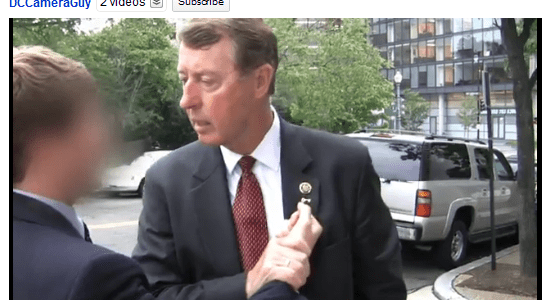
2010: A Generational Choice / Rep. Bob Etheridge covers the Who – Marco Rubio captured the themes of tea party movement in his impassioned web commercial for his successful Senate bid.  And Bob Etheridge’s hilarious confrontation of an investigative student underscored the Democrats’ arrogance, comfort with power, and lack of connection with voters.

Notably, all videos on this list save Senator-elect Rubio’s “A Generational Choice” were produced outside of the “official” campaigns, coming from interested and passionate citizens; in fact, two captured politicians in  moments when they let their guard down.  Yet intentionally or not, each video captured an important element of the election cycle.  Elections aren’t (usually) won or lost based on a two-minute internet video; but video can act as a signpost and give some indication of how a campaign is going.

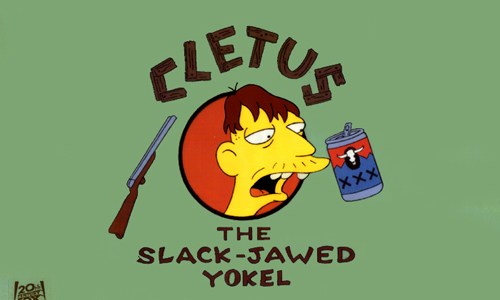
Sorry, Cletus, “open government” is closed to you

Amid the celebration of the President’s as-yet-unproven open government initiative this week came the concept of a tool for government to “elicit expert citizen participation.” From TechPresident:

Rather than throwing the doors open to public participation, the wisdom here is that crowdsourcing platforms can be targeted and nuanced enough to extract very high quality input from a select group of people.

If the “ExpertNet” program actually happens (it’s still in the early development stages), it would strike a bit of a blow against the concept of open government.  Though it could expand participation for certain citizens, the message to most people seems to be to keep your mouths shut and let the smart people take care of the country.

But, like any communication from the voters  that finds its way to a government agency, much depends on the person opening the mail.  So even if all citizens are allowed to participate, the pencil-pusher will separate the grain from the chaff.  At the risk of sounding cynical, bureaucrats (whether left or right) will consider the opinions they agree with to be more “expert.”

As for the other side… why would anyone need to hear from those slack-jawed yokels?

Shut up, I have freedom of speech

Don’t want to do business with WikiLeaks?  You might find your website getting hacked, like MasterCard or Paypal.  (And you might also get hacked if you represent women who are making accusations of rape, depending on whom they accused.)  Participants in what has been dubbed “Operation Payback” seem just organized enough to take some time off from complaining about not being able to get unlimited movies and music for free online to wreak a little bit of havoc.

The hackers’ concerns are echoed by DataCell, a company that helps WikiLeaks process payments.  DataCell is getting ready to sue Visa and MasterCard to force them to work with WikiLeaks, according to CEO Andreas Fink:

We strongly believe a world class company such as Visa should not get involved by politics and just simply do their business where they are good at. Transferring money. They have no problem transferring money for other businesses such as gambling sites, pornography services and the like so why a donation to a Website which is holding up for human rights should be morally any worse than that is outside of my understanding.

Visa is hurting Wikileaks and DataCell ehf in high figures. Putting all payments on hold for 7 days or more is one thing but rejecting all further attempts to donate is making the donations impossible. This does clearly create massive financial losses to Wikileaks which seems to be the only purpose of this suspension. This is not about the brand of Visa, this is about politics and Visa should not be involved in this.

To summarize what Fink appears to be driving in his sputtered sentence fragments: Visa should not be involved in politics, therefore Fink will use a political entity (the judicial system) to force them to do business with a political organization (WikiLeaks).  Fink and Operation Payback are each quick to defend WikiLeaks’s right to publish unpopular speech, but intolerant of other groups’ choices to simply take their business elsewhere.

The whole mess is a dress rehearsal for the coming clash on American internet regulations like net neutrality. If a site (like WikiLeaks) depends on other companies (like ISPs, hosting companies, and donation platforms) for their survival, will those companies be forced by law to support WikiLeaks and their mission?

This Week’s Lesson: Don’t be a Jerk

After exposing catty gossip and American state secrets, WikiLeaks has been taken down – but not by government action.  Amazon refuses to host the site on its servers, and the quest for a new home is proving difficult.

Some proponents of internet regulation are pointing to this as an excellent reason to support net neutrality.   Like any media outlet, Wikileaks is entitled to freedom of the press; the problem here is that Amazon owns the press – and Amazon is exercising its freedom to tell Wikileaks founder Julian Assange to take a long walk off a short pier.  (Admittedly, with some coaxing from Joe Lieberman, but it’s still Amazon’s call.)

Amazon didn’t want to put up with an organization revealing state secrets for the sole reason of embarrassing America.  In short, Assange was a jerk and they no longer wanted to deal with him.

In a parallel move, the House of Representatives chastised tax cheat and self-proclaimed “honest guy” Charles Rangel.  Rangel tried to wrangle up support from his email list, sending a blast message calling on supporters to call their members of Congress and urge them to speak out against a censure vote.  (Side note: Wouldn’t most of the supporters on Rangel’s email list have Rangel as their Congressman?  This email blast couldn’t have been that effective.)

Rangel called it a “political” vote, claiming throughout the process that his 11 ethics violations did not merit the rebuke of his peers.  Yet, incredibly, rebuke him they did – overwhelmingly and in the first truly bipartisan vote Congress has seen in some time.

As Washington Times reporter Kerry Pickett found out, Rangel doesn’t view himself as someone who has to answer questions.  Maybe that’s why Rangel, like Julian Assange, ran out of friends so fast: