The era of the Citizen-[INSERT PROFESSION HERE]

First, came the citizen-journalists – the bloggers in their pajamas whose reporting overturned Walter Cronkite’s old chair and dumped out Dan Rather.

Then came the citizen-politicos – the self-organizing crusaders who organized largely online but made a difference in the real world, giving alternating advantages to the left in 2006 and 2008 and the right in 2010.

And now come… the citizen scientists.  An English gas worker has discovered four new planets by analyzing public data at his home computer.  No telescope, no university observatory, no office – just a proficiency for math and the love of the game.  It’s legit, too, as the University of California has given the discovery a seal of approval.

This may explain why people have been slow to support environmental regulations with drastic economic impacts.  The previous argument – “Trust us!  We’re SCIENTISTS!” – can’t carry weight.


Revisiting Willie Horton

The Boston Herald reported that a Massachusetts cop-killer could prove to be “Mitt Romney’s Willie Horton.”  According to Politics Daily, a sex offender in Minnesota just may end up as “Tim Pawlenty’s Willie Horton.”  Last year, Michelle Malkin chronicled a pair of violent criminals vying for the title of “Mike Huckabee’s Willie Horton.”

The stories themselves are sickening, but will likely have little impact on the 2012 primaries.  Still, the coverage highlights something interesting in the way Willie Horton’s name is invoked.  In each case, a criminal who was pardoned by a governor committed a second offense – mimicking Willie Horton, who incredibly got a weekend off from a Massachusetts prison while Michael Dukakis was governor and used his time off to commit more violent crimes.

For these Republican candidates, referencing Horton alludes to incompetence in governing.

But when Sharron Angle used extremely questionable imagery in an ad attacking Harry Reid, Horton was brought up again.  In 2006, a hilarious ad against hard-partying former Congressman Harold Ford incredibly led to the H-word being bandied about by a few racial arsonists.

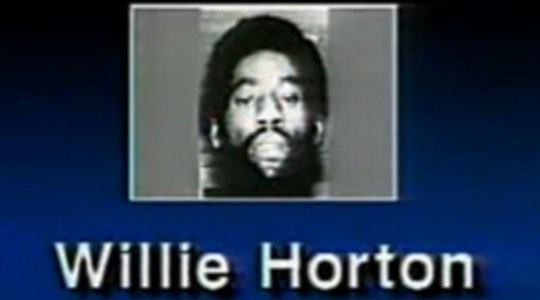
In these cases, Horton is synonymous with political dirty tricks – and worse yet, dirty tricks which prey upon voters’ racism.  This, of course, goes back to the famous 1988 attack add on Dukakis:

This might simply be the observation of someone who didn’t grow up in the South, but pictures of Horton are not very scary.  The ad’s shock value lies in the subtitles, which graphically detail Horton’s crimes.  Horton’s race is irrelevant if the commercial’s impact relies on the Horton’s crimes, and the breakdown in law enforcement governance that allowed them to happen.

So either Willie Horton symbolizes race baiting, or Willie Horton symbolizes incompetence.  It cannot be both.

Now, if you want a really racist commercial… well, there’s always room for Jello.


Finally, Larry David can rest easy

Far be it from me to cast aspersions on a man in a cape, but I think Larry David’s New York Times column “supporting” the extension of the current tax rates might have been facetious.  (For David, of course, a higher tax rate would have minimal impact thanks to the residual checks that keep rolling in every time a rerun of Seinfeld is replayed.)

Well, now David and other folks who feel like they are earning too much can give back thanks to GiveItBackForJobs.org.  The site helps you calculate how much the government is allowing you to keep thanks to the extended tax rates, and lets you donate that money to a charity:

Americans who have the means should refuse to surrender to Senate Republicans. We should act, together, to give back our Bush tax cuts, by making donations to organizations that promote fairness, economic growth, and a vibrant middle class. GiveItBackforJobs enables joint action, by all visitors to this site, to redirect our Bush tax cuts to the wise and just programs that our government would promote if it had not been hijacked. As more and more Americans do so, GiveItBackforJobs will begin to replicate good government policy, outside the government and free from the grip of Senate Republicans.

You tell ’em!

Digging around the site, one thing stuck out to me (and also to the Wall Street Journal’s James Taranto): the organizers are all Ivy Leaguers, either professors or graduate students.  Clearly, these are smart people who understand that the economy will only grow if the people who are getting these tax cuts do something with the money they receive.

As a humble, state-educated supporter of their efforts, I submit the following suggestions for how the super-rich fat cats can help give back their tax cuts to create jobs and/or advance the social good:

1.  If they own a business, hire more people for crying out loud!

2.  Spend money on goods and services.  This will create more jobs for the people who produce them.

3.  Whatever you do, don’t give your money to some willy-nilly, inefficient group with poor oversight and accountability that wastes billions upon billions of dollars each year.

$#!% Ed Rendell says

Outgoing Pennsylvania Governor Ed Rendell was displeased by the cancellation of the Sunday night Eagles-Vikings game:

“My biggest beef is that this is part of what’s happened in this country,” Rendell said.

“We’ve become a nation of wusses. The Chinese are kicking our butt in everything,” he added. “If this was in China do you think the Chinese would have called off the game? People would have been marching down to the stadium, they would have walked and they would have been doing calculus on the way down.”

Because, as we all know, Asians are good at math, right?  While the Governor talks off the cuff somewhat frequently – especially now that he probably isn’t facing re-election, it’s somewhat incredulous that no one is complaining about that calculus remark, isn’t it? It’s a good thing he didn’t go with any of these rejected lines:

  • “If this was in Ireland, people would have been stumbling down to the stadium, taking occasional breaks to urinate in the snow, and singing ‘Fields of Athenry’ the whole way down.”
  • “If this was in Germany, people would be goose-stepping down to the stadium, taking over the Polish section of Philadelphia on the way down.”
  • “If this was in China, people would have been marching down to the stadium, doing calculus, because the murderous Communist regime would beat them to death if they didn’t.”

Still, the Chinese stereotyping wasn’t the dumbest thing about Rendell said.  For that, you have to consider that, in the Governor’s mind, cancelling a football game symbolizes a nation lacking in backbone.

See, if I were looking for an example of a lack of discipline, I might pick having a state government that’s $8.4 billion in debt, or a state debt tally that grew 39% during its current governor’s eight-year term.  In fairness, the governor that approved all that spending isn’t necessarily a wus; maybe he’s just bad at math.

Too bad he isn’t Chinese.

Obama’s play action

The big story at the infrequently traveled intersection of sports and politics this week is the President’s congratulatory phone call to Philadelphia Eagles owner Jeffrey Lurie about installing renewable energy equipment at Lincoln Financial Field.  During their discussion, they also mentioned quarterback Michael Vick, which seems to be drawing more attention.

There’s no word yet on whether the President will be calling the other team just north of DC on I-95, the Baltimore Ravens.  While the gave Vick a second chance, the Ravens have taken in wide receiver Donte’ Stallworth, who served a month for DUI manslaughter.  They have also stuck by linebacker Ray Lewis, who beat the rap on murder charges by rolling on his accomplices and went on to have an excellent career and win a Superbowl.  (By the way, did you know that a group of ravens is actually called a murder?)  On the other hand, Obama might be slow getting there – after all, the Eagles really gave Vick his second chance about a year and a half ago.

So why make this call now?

A possible explanation is to give his enemies something to talk about, and allow them to use a slow news cycle to work themselves into a lather about something that is, essentially, a non-issue.  Coming after a productive lame duck session, this could permit the administration to take a high road while its opponents chatter about Vick and dogfighting.  It would be the messaging equivalent of a draw or a play action pass – tricking the opposition into being out of position.

Of course, this isn’t a football game, but electoral politics – and voters don’t largely pay attention.  Riding a winning streak as the President is, why expose your administration to negative messages by wading into issues that people actually care about?

Joanne Bamberger of AOL’s Politics Daily points out that Pennsylvania’s electoral votes will be in serious play in 2012, and suggests Obama is building good will now.  That certainly makes sense, but 2012 is still a long way away, and making nice with fickle Eagles fans now won’t necessarily pay dividends in 22 months.  Heck, if Vick throws four interceptions in a playoff game, or isn’t playing with the Eagles next year, those comments may do nothing in 22 months. Much more important to Obama, as Bamberger alludes, is Lurie’s checkbook – which, when not being used to pay rehabilitating NFL players, makes large donations to Democrat presidential candidates.  And keep in mind that Lurie, and not the administration, made the details of the conversation public.

It is most likely that the President did not intend for the conversation to be public – not that it was secret, but just that it wasn’t intended as a public statement.  And, in that private conversation – which was, remember, also about renewable energy – the President took some time to blow even more smoke up the rear end of a potential donor.

It must have worked – otherwise, Lurie wouldn’t be so proud about spilling the beans.
More of the year in YouTube

In a post on Pundit League yesterday, I followed up on last week’s best political videos of 2010 with another list.  You could call them the worst political videos of 2010, but that doesn’t really do justice to how bad they were.  These videos missed their marks so badly that you couldn’t help but send them to friends or post them to Facebook – entries included Dale Peterson’s angry, minute-long rant about why he should be Alabama’s next Ag Commissioner, a Florida state representative’s Kenny Loggins ripoff, and (of course) Demon Sheep.

After I finished the post, I noticed a running theme in the five worst political videos of 2010 that wasn’t present in the five best: each of the “bottom five” were official campaign videos (and, significantly, only one of those candidates won).  In contrast, only two of the “top five” were released by campaigns.  That isn’t surprising; judgement is often clouded in the stress of an election campaign, and some candidates simply stumble.  Those on the outside looking in sometimes have a clearer head and are able to drive points home more directly.

Another common thread was length.  The “bottom five” averaged 2:18 each, while the top five made their points in an average of 1:03 – less than half the time. That figure is not insignificant: 40% of online viewers abandon videos within a minute.


Landmark day for the internet

The FCC will pass net neutrality regulations today.  The movement for “net neutrality” has been gaining steam in recent years, and the government wants to ensure that no entity will be able to censor what internet users can access:

When asked if that made it a crime for Assange, Biden said Assange could be proven to have violated the law when it turned out he encouraged or helped Bradley Manning, U.S. intelligence analysts believed it was behind the leaking of the document of the United States Embassy.

I’m sorry, my mistake: that’s Vice President Joe Biden describing how the US Government is going to drop the hammer on Julian Assange for the stuff he put up on the internet.  That’s apparently completely unrelated.


A brief history of online video and elections, 2004-2010

This week, YouTube announced their top videos of 2010.  In a post over at Pundit League, I followed up with my Top Five Political Videos of 2010.

My top five is far less scientific than YouTube’s, and for good reason: while YouTube’s list is a Casey Kasem-style countdown of the videos that had earned the most views, my list ranks videos based on significance.  In other words, I’m wasn’t trying to measure videos based on their impact on the campaign, but rather use the videos as a barometer of what went on in 2010.

In fact, online video offers a glimpse into the big story of every election cycle since 2004:

2004: This Land – Pre-YouTube, JibJab’sWoody Guthrie send-up featured President Bush and John Kerry neatly summarizing campaign themes.  Bush claimed Kerry looked like Frankenstein, Kerry said Bush was a right-wing nutjob.  That the close election turned as it did was evidence that Bush’s accusations rang truer with the electorate.

2006: Macaca – George Allen could very well have been the Republican candidate for President in 2008 if he hadn’t slipped up and unwittingly used a word that may or may not be an ethnic slur.  As it was, Allen became the symbol of a Republican establishment so cloistered and out of touch they could point to the one guy at a rally who was holding a video camera and say something offensive.

2008: Yes We Can – Between this independent video and Shepherd Fairey’s “Hope” illustration, the 2008 Obama was smart enough to seize on creative elements produced outside the campaign structure.  From early in the primary season, the Yes We Can video established the Obama candidacy as more than a simple election effort, but as a once-in a generation opportunity to change politics as usual.  More than any online network or social media outreach, the core theme of a new and different kind of politics growing up added excitement and motivation to Obama’s support.

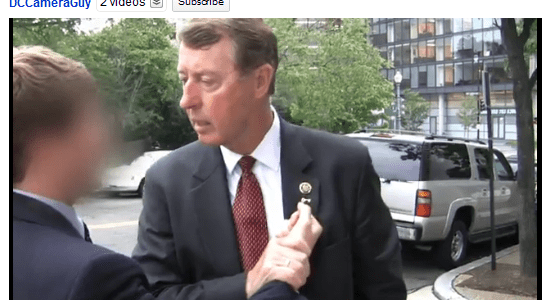
2010: A Generational Choice / Rep. Bob Etheridge covers the Who – Marco Rubio captured the themes of tea party movement in his impassioned web commercial for his successful Senate bid.  And Bob Etheridge’s hilarious confrontation of an investigative student underscored the Democrats’ arrogance, comfort with power, and lack of connection with voters.

Notably, all videos on this list save Senator-elect Rubio’s “A Generational Choice” were produced outside of the “official” campaigns, coming from interested and passionate citizens; in fact, two captured politicians in  moments when they let their guard down.  Yet intentionally or not, each video captured an important element of the election cycle.  Elections aren’t (usually) won or lost based on a two-minute internet video; but video can act as a signpost and give some indication of how a campaign is going.

This may be why there are so many homeless people in DC

A fascinating Washington Post story this morning chronicles the activism of Eric Sheptock, a self-described homeless homeless advocate.  Staying in shelters and using public computers, Sheptock has developed an online presence to give a voice to the plight of the homeless.

And if that hasn’t helped him land a job or a permanent place to stay, it’s because Sheptock wants it that way:

Sheptock, 41, wouldn’t take a 9-to-5 job that compromised his advocacy efforts or the long hours he spends tending to his digital empire, he says. He wouldn’t move out of the downtown D.C. shelter where he has slept for the past two years if it would make him a less effective voice for change.

“Too many homeless people have come to look up to me, and I can’t just walk away from them,” he says in a recent blog post titled “Tough Choices.” “My conscience won’t allow it.”

Having 5,000 friends on Facebook is more important to Sheptock than having $5,000 in the bank. And he lives with the consequences of that every day.

Though he doesn’t seem bothered by being unemployed and homeless, the consequences aren’t limited to Sheptock.  The article describes Sheptock sitting in a shelter’s computer lab, keeping up with his advocacy efforts while other homeless people look for jobs or take online typing courses.  The reality of limited resources means that every minute that Sheptock sits at the computer doing his advocacy work takes a minute away from someone taking the first small steps to escape the cycle of homelessness and poverty.

No matter how important Sheptock’s work is, the first question becomes about what that computer lab – or any other resources – are used for.  And that’s when the real shame of the article becomes apparent: Sheptock seems trapped by an advocacy culture that accepts homelessness as a permanent way of life.

Despite a violent childhood that resulted in what doctors assumed would be lifelong social and mental disabilities, Sheptock is clearly one bright cat.  He understands networking, he understands communication, and he understands the need to speak out for the voiceless.  With the right direction, Sheptock could lead an successful organization (measuring success as number of people helped rather than money, which is the yardstick Sheptock would most likely use).

Along the way, he could wind up with a steady job doing what he loves and a stable home.  Hopefully, Sheptock will get the help he needs to get there.

Sorry, Cletus, “open government” is closed to you

Amid the celebration of the President’s as-yet-unproven open government initiative this week came the concept of a tool for government to “elicit expert citizen participation.” From TechPresident:

Rather than throwing the doors open to public participation, the wisdom here is that crowdsourcing platforms can be targeted and nuanced enough to extract very high quality input from a select group of people.

If the “ExpertNet” program actually happens (it’s still in the early development stages), it would strike a bit of a blow against the concept of open government.  Though it could expand participation for certain citizens, the message to most people seems to be to keep your mouths shut and let the smart people take care of the country.

But, like any communication from the voters  that finds its way to a government agency, much depends on the person opening the mail.  So even if all citizens are allowed to participate, the pencil-pusher will separate the grain from the chaff.  At the risk of sounding cynical, bureaucrats (whether left or right) will consider the opinions they agree with to be more “expert.”

As for the other side… why would anyone need to hear from those slack-jawed yokels?