3 Ways the Democrats Won on 4/15

And that isn’t counting a penny of tax money, either.

Yesterday was a big news day. Tea partiers marched here in DC and elsewhere to define their core principle: that the federal government is too big, that high taxes siphon money out of the economy, and that government programs tend to make matters worse, not better. Overall, yesterday’s messaging seemed positive for limited government activists.

But the opposition was smart, too.  Nationally, Democrats drove three well-timed news stories – two by President Obama, one by Sen. Harry Reid – that added up to a communications masterstroke.

1.  President Obama announced we’re goin’ to Mars (eventually).

This was a good story to grab headlines on the other side of the tax day protests.  Instead of trying to directly engage, President Obama simply highlighted a use of taxpayer money that many folks from both sides of the aisle agree with: scientific research.  The space program specifically creates tons of jobs not only in research but in manufacturing the components of Major Tom’s tin can.

You can’t answer a call for lower taxes with the stance that taxes are just fine.  However, showing a positive use of tax dollars can undermine that message.  It wasn’t a happy coincidence – the Florida trip has been on the President’s schedule for weeks, if not months.

There’s another, more subtle attempt at differentiation here, too.  The announcement of an advanced science program will now be played on the same newscast with footage of grassroots protesters – citizen activists who, in their haste to participate, misspell signs and don’t have a staff of speechwriters to help them articulate their views.  Without actually saying it, Obama gets to present his side as better-educated and smarter than the knee-jerk, anti-tax tea partiers.

2.  President Obama signed an executive order permitting hospital visitation rights to same sex couples.

This is another point of differentiation – and a chance to bait his opponents.  Most of the focus of tea party activism has been on fiscal policy, and many Americans tend to agree with the most conservative segment of the electorate that the government spends too much and spends it wastefully.  For social issues, there is less common ground, and yesterday’s announcement has the potential to begin peeling off moderate voter support from the Republicans.

Making this announcement on a busy news day means that there won’t be much media discussion – unless someone at a tax day rally goes off message, and gets captured in a YouTube video proselytizing about moral codes.  Then it feeds the idea that tea parties are run by intolerant bigots.  It’s a win-win for Obama – either his announcement slips almost completely under the radar, or it’s a chance to take shots at the other side.

3.  Sen. Reid announced that financial reform package will hit the U.S. Senate floor next week.

The Democratic talking points for November are already written: Republicans are the party of Wall Street.  They will attempt to make this distinction with a bad financial services reform package scheduled to hit the floor next week.

Like the other two examples, Reid’s announcement serves to distinguish the Democrats from limited government activists by calling for a larger government for an ostensibly good cause – safeguarding consumers and investors.

There’s also a great strategy in this timing that has nothing to do with tea parties but everything to do with tax day.  The folks who would be most likely to oppose this legislation would be financial professionals, who understand that it isn’t all it’s cracked up to be.  If they had the time to do it, they might rally their customers and colleagues, making the case that the bill would actually hurt efforts to keep the players in the financial system honest, and mobilize a strong push against the bill.  They haven’t had time, of course, because over the last two weeks, financial professionals have been working around the clock at their day jobs – because yesterday was April 15.  So when the bill hits the floor next week, they won’t be ready to stir up opposition.

Gearing up already?

Passion is important in politics because it helps win over the uncommitted moderate voters; excited activists are the ones making phone calls, dragging people to the polls, and giving one side the image of a winner.  In 2008, then-candidate Obama’s campaign enjoyed demonstrable shows of emotion from his supporters.  In 2010 that excitement is trending toward the right – so far.

But it isn’t to early (or too late) for the President and his allies to begin letting some air out of that balloon.  The further he can create the perception of a gulf between conservative activists and the values of moderate voters, the more Republican chances in 2010 and 2012 will deflate.
Twit-story: The Library of Congress vs. Google Replay

The Library of Congress will collect and store the full volume of Twitter for “scholarly and research purposes.” Twitter is psyched because it’s another demonstration of legitimacy:

It is our pleasure to donate access to the entire archive of public Tweets to the Library of Congress for preservation and research. It’s very exciting that tweets are becoming part of history. It should be noted that there are some specifics regarding this arrangement. Only after a six-month delay can the Tweets will be used for internal library use, for non-commercial research, public display by the library itself, and preservation.

As evidenced by events like the Iranian election protests, Twitter users can act as documentarians of history as it happens.  The Library of Congress’s recognition of this is another sign that Twitter has grown up a bit; the timing couldn’t be better, coming just a couple days after they announced their advertising model.

For the vast majority of Twitter’s data, this announcement is really a non-story – after all, there’s nothing stopping anyone from visiting Twitter and accessing all public tweets.  What about accounts that have been deleted, though?  And what about the accounts that get deleted after the Library of Congress makes an official historical record of them?

Buried in Twitter’s blog post is a much “friendlier” strategy for making Tweets a part of history: Google’s Replay service, which allows users to revisit moments in history and watch events unfold through Twitter and other online media.

As with most announcements, the difference lies in the semantics.  Google Replay would pinpoint specific times and issues – in other words, it would gravitate toward tweets which were sent with the idea that they were for public consumption.  The idea of Twitter turning over a hard drive full of information to a government office may be no different in practice or outcome, but it sounds a lot creepier.  Suddenly, you may find yourself perusing your own Twitter feed to see if you have anything to worry about.  A better announcement might have been a joint release by Twitter, Google, and the Library of Congress discussing a way to incorporate publicly broadcast real-time updates into research.  It might have looked like a tool on the Library’s website, powered by Google.

The nature of Twitter makes this a minor issue, but it isn’t the only place that history is recorded in real time.   Facebook and Google Buzz have both incorporated elements to mimic Twitter’s free-flowing stream-of-consciousness format.  That means they’re just as potentially attractive to the Library of Congress as part of the “historical record” – even though their data is decidedly more sensitive.

3 Reasons why Conan made the right move

The internets lit up as soon as the announcement hit (which, oddly enough, happened on Dave Letterman’s birthday): Conan O’Brien is headed to TBS as soon as his contractually obligated silence is up.  The basic cable station won out over Fox, which was the place O’Brien was widely rumored to head since it was first announced that NBC was bumping him out of the 11:30 time slot. That led to some head scratching, though it makes a lot of sense for three big reasons:

1.  Turner properties offer valuable opportunities for cross-promotion. O’Brien was always positioned as the host with the younger audience, and Turner is well positioned to reach that audience. Not only does TBS airs three hours of Family Guy on Monday nights (leading right into the time slot O’Brien will occupy), but Turner’s cable properties have been at the forefront of providing television-quality online video – first with the now-defunct website SuperDeluxe and now on both TBS.com and AdultSwim.com.

The real underrated asset in this deal isn’t online though – it’s the cross-promotional opportunity with Cartoon Network, whose Adult Swim shares some of the same audience as O’Brien.  While it would appear that sets up a tough intra-company competition, that isn’t exactly the case because of the second reason TBS and O’Brien are a great fit.

2.  TBS offers time slot flexibility no other network will. This isn’t just about getting a half-hour jump on Jay Leno and Dave Letterman; Fox could offer the 11:00 p.m. time slot, too.   But after the 11:00 showing of O’Brien’s show, and the 12:00 airing of George Lopez’s program, TBS will have the 1:00 p.m. time slot to fill.

What’s going on at 1:00 a.m.?  Jimmy Fallon’s Late Night show and Craig Ferguson’s Late Late Show have moved from comedy bits into guests.  Comedy Central is replaying their 11:00-midnight programming (The Daily Show and the Colbert Report).  Adult Swim is getting into its final hour, which features shorter cartoons that aren’t as popular as Family Guy and Robot Chicken – and, let’s be honest, really target the stoner market (have you ever tried to make sense of 12 oz. Mouse?).  And remember those hypothetical college kids who media analysts claimed stayed out too late to catch O’Brien’s Tonight Show?  The 1:00 a.m. slot is a lot closer to last call.

On TBS, O’Brien could wind up with two chances to rope in an audience – so even if more people watch Leno between 11:30 and midnight, O’Brien has a better chance to snag viewers from 11:00-11:30 p.m. and 1:00-2:00 a.m., rack up big viewership numbers, and claim victory on sheer volume even while Leno wins the 11:30 time slot.

3.  TBS straddles the line between cable and network television. This is important because, for as edgy as O’Brien is credited as being, he’s quite traditional in many ways.  With a pedigree in Saturday Night Live, the Tonight Show, the Simpsons, and even Late Night, O’Brien’s signature projects have counted their runs in decades rather than seasons.

TBS is pretty much a network television station in two important ways.  First, its mix of original and syndicated programming mimic most Fox affiliates.  The big difference is that TBS is still searching for signature, cornerstone shows to build a prime time schedule around as Fox found with Married with Children in the late 1980s and the Simpsons in the early 1990s.  (Notably, Fox built a solid prime time audience but could never keep them around for late night; TBS seems to be building in the opposite direction.)  Second, TBS is nearly ubiquitous – among the most basic of basic cable stations.

At the same time, cable (even basic cable) offers some level of freedom that escapes over-the-air network television.  Being on cable at 11:00 may offer the same creative outlet as being on at 12:30 on network television, when O’Brien shined to begin with.

TBS offers these benefits with a final caveat: because it’s cable, measures of success will be different.  It will be easier to become the top-rated original program in TBS’s history than to hold that same position with Fox. After all, the difference between victory or defeat is often a matter of expectations met or missed.

Free News!

Rupert Murdoch – the Australian who prints Our Nation’s Newspaper of Record – is sticking to his guns: advertising alone won’t support journalism, so if you want news from his properties, you’ll have to pay.  (Eventually.)

Murdoch has a problem with news aggregators like Google, which monetize other people’s content.  Critics say Murdoch’s time has passed, and that putting up paywalls would hurt readership.  While this is true, readership really isn’t the problem for news media, it’s revenue.

Like any foray into the online world, eyes on the page mean little unless those eyes do something.  Campaigns and causes find that out all the time.  It’s relatively easy to drive traffic to a site or amass 10,000 Facebook fans, but unless those site visitors and fans sign up, give money, and/or take action, they’re nothing more than numbers on a spreadsheet.

Similarly, if  Murdoch’s papers don’t have users that somehow create revenue, it really doesn’t matter how much news they read.  It isn’t a matter of greed; it’s a matter of keeping the lights on.  And if Murdoch chooses to monetize his content completely, then Google and Microsoft have no right to take his content and serve ads around it.

To be sure, committing to a business model that sells content means that content will have to stand out a bit.  If Murdoch’s content stands out to the point where people are willing to pay, then he should charge.  And if not, the problem will correct itself.

Flubs of Steele

Michael Steele shouldn’t have blamed his recent fundraising flaps on racism.  Luckily, he didn’t, despite the headlines crawling around today

Watch the clip: Race was actually brought into the discussion as part of a viewer question, which Steele answered honestly – and, to be fair, correctly.

Maybe Steele should have been a little clearer on the fact that he was speaking broadly about the fact that, although we have come pretty far in this country, black people still get the crap end of the stick more than they should.  He did bring it up as a bipartisan issue.

But his out-of-context quote has been framed to sound like an excuse and repeated over and over.  Any person who wrote a headline – or worse, a story – that implied that Steele was hiding behind race for the recent RNC scandal is either a political hack or a bad journalist.  (And ABC’s own site, which claimed Steele “played the race card today,” is no better.)

Again, watch the clip.

Last week the New York Times went over the top, implying that anyone who opposes government-run health care might as well be hanging with Ed Norton and Edward Furlong and giving out curb smileys to anyone who rooted for the Lakers over the Celtics in the 1980s.  In comparison, Steele’s mild observation is a much more reasoned and well-thought-out social commentary on race relations.

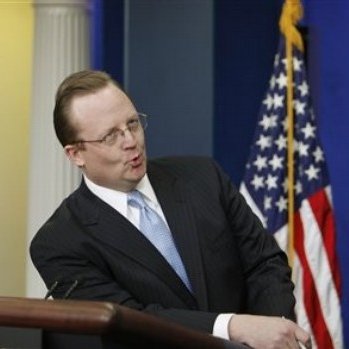
Thankfully, the White House’s Robert Gibbs set everything straight during the daily press briefing, calling the concept that black people and white people are treated different “fairly silly.”

Because there could be no better expert on race relations than this guy:

Apple, the iPad, and the Palin effect

The fact that Apple’s iPad will be released at the conclusion of Holy Week is entirely appropriate, given how some in the tech press are treating this arrival. (“Behold!  Your new God!”)

But as much fun as it would be to deflate the hype, the iPad will most likely be a runaway success – not only because it’s probably neat to play with, but because Apple is the Sarah Palin of the tech industry.

Hear me out.

Apple has had detractors for years – from complaints about the difficulty in transferring legally purchased but DRM-restricted songs among multiple devices to criticisms about the walled garden  that is the iPhone/iPod touch app store.

Yet, their track record for translating innovation to consumer success is built on a cultural coolness factor that transcends technical specifications.  And Apple capitalizes on this through the app store – inviting third parties to have some sort of vested interest in the product’s success.

The Wall Street Journal announced their iPad subscription model last week.  Amazon’s Kindle reader dominates the electronic book market today; but a free iPad application is an apparent nod to Apple’s emergence in that market.  Apple is so culturally entrenched they didn’t even have to pay for product placement when Modern Family devoted a show to the iPad release.

Apple has created a cycle – its products have been successful, so new product lines will attract third party support from companies looking to cash in – which will in turn make those new products successful.

The other new product debut from an established brand came on Fox News, where “Real American Stories” television special launched with Sarah Palin as the host.  The show’s debut comes a week after the announcement that she will host a documentary on Alaska for The Learning Channel.

Like Apple, Palin has cultivated a strong core following and reputation that invokes attention – from supporters and opponents alike.  Fox News and The Learning Channel both know this translates controversy, media buzz, and ultimately ratings.   And as is the case with Apple, third party groups (like TV networks) to have a stake in the attention that Palin receives.  In many ways, she doesn’t even have to be creative about how she’s presented – just as Apple largely relies on app developers to define how the iPad is used.  Those third parties benefit, and therefore have a vested interest in her continued visibility.

Lather, rinse, repeat.

So if you find yourself watching the coverage of the iPad and wondering whether or not it will earn enough industry support to eventually take off, ask yourself how long you’ll have to go before seeing something about Sarah Palin on TV.

Fake Twitter Accounts: A Big F***ing Deal

Leave it to Joe Biden.  After a year of contentious debate followed by 36 hours of talking heads trying to make sense of what the health care overhaul means, the Veep’s tidy summary was at once true, painfully obvious, hilarious, and in character with the caricature of Biden as an elder Dan Quayle redux… Which meant that the internet would have a field day with it.

Within hours, the Twitter feed @BigFnDealer was mocking Biden and chronicling the reactions.  This comes just a few months after  Carly Fiorina’s “Demon Sheep” web video spawned @DemonSheep. And @BOTeleprompter has been mocking Biden’s boss just about as long as the President has been in office.  Sarah Palin and Michael Steel have been targeted.

Fake Twitter have been giving alter egos to characters both fictional (@DarthVader) and real (@Michael_Bay) since Twitter launched.  They have generally been a hobby, but as the political examples show, they can also be a way to advance a message in a comic, snarky way.  Because they are generally anonymous, they are tough to engage unless the account owner does something stupid (like trying to claim the actual identity of the person being mocked).

As @BigFnDealer shows, getting in on the ground floor is a necessity – the internet moves fast.  And of course, satire only works as a powerful message advancement tool if it’s good; lame jokes tend to backfire.

But when it works, what better way to needle your opponent than to put words in his or her mouth?

Now America loves health care reform

In a reversal not seen since Springfield decided they loved the Burlesque House, poll numbers on the health care bill have just about flipped since its passage, with a small edge favoring the bill.

Those numbers will likely go up in the next few months.  Americans are overwhelmingly satisfied with their own health care, and most of the provisions of the health care legislation will roll out slowly over the next decade.   President Obama’s oh-so-Presidential taunts about health care overhaul – calling on Republicans to “look around” in “two months, six months” – are backed up by the fact that very little will happen in that time.

More evidence that “repeal the deal” would be a loser as a political slogan this November.  But what if the slogan was “finish the job”?

Buried in the bill (and this story on CNN) are limitations on Flex Spending Accounts – personal savings accounts people can use to save money for their own health care.  Along with silly items like taxes on tanning beds and regulations on the McDonald’s dollar menu, there are plenty of gaps in the program administered by our new health overlords.  Why not attack those in the name of making people healthier?

Framing real health reform this way is a winner – after all, as the polls show, America loves to back the winning horse.

Why ACORN cracked

ACORN is closing up shop and may have to file for bankruptcy.  There’s no mystery as to why: donors have refused to write checks to the organization since the now-infamous “pimp videos” featuring James O’Keefe and Hannah Giles.  The ensuing controversy that made ACORN radioactive had as much to do with the organization’s response as it did with the actual content of the videos.

A Wired article on Andrew Breitbart – whose Big Government was a platform for the videos – details the strategy behind the tiered release of the videos:

Breitbart initially released only the video from Acorn’s Baltimore bureau, which the group dismissed as an isolated incident. The next day, he posted a video of O’Keefe getting similar results in Washington, DC. Oops. Acorn stepped on the rake again, claiming the videos were doctored. Then Breitbart posted more — from New York City, San Diego, and Philadelphia. Congress started pulling Acorn’s funding, and The New York Times flagellated itself for its “slow reflexes” in covering the story.

A less savvy operative might have released all the videos at once to illustrate the scope of the problem.  They would have received some coverage, but the media would largely have dismissed the story.  After all, how many government and non-profit offices would you really have to walk into if you wanted to catch someone saying stupid on camera?

By releasing the videos in slow drips, O’Keefe and Breitbart established a pattern.  With each new video, the story became a bit bigger, and more media outlets paid attention.  This strategy also allowed ACORN to be dismissive of the first few releases, making them look all the more foolish when the “isolated incident” proved to be anything but.

On its own, video of O’Keefe and Giles would have told a compelling story about ACORN.  Handled smartly – as it was – this information became a tangible result.

Hey! iTunes! Leave our tracks alone!

If you’re buying Pink Floyd tracks online, you’ll have to buy the whole album, thanks to a ruling handed down this week in the band’s legal dispute against EMI.

The music media landscape is changing, and while bands like OK Go have proved masterful at taking advantage, there’s something to be said about Pink Floyd’s insistence that their music is sold the way it was made. (Ironically enough, OK Go had to fight EMI to execute their vision of social promotion.)

This is an artistic decision, not a business decision.  Albums like Dark Side of the Moon and Sgt. Pepper’s Lonely Hearts Club Band are built differently than today’s albums, which are often a collection of singles.  Those albums are like movies – while isolated parts might be enjoyable, they only really make sense when taken as a whole.  Today’s music might be more akin to a episodes of a TV show – enjoyable and self-contained in smaller pieces.

The decision won’t help Pink Floyd sell music.  But that’s not the point.