Foursquare of July

Like Mindy Finn of Engage and others, I’ve been trying to figure out Foursquare – not necessarily because I like it, but because it’s my job to know how it works, and how it can be applied.

Vincent Harris of TechRepublican has some good ideas about it, and businesses like Whole Foods have gotten on the bandwagon by asking users to check in.  Some offer discounts for check ins or mayorships.

Yesterday, I was chatting with a small business owner and soon-to-be restaurateur  about ways he could use it for his business.  He wasn’t sold on its utility.  When I checked in at Nationals Park to watch the Washington One-Man Show, a Facebook friend made fun of me for playing “that stalker game.”

It seems like many just aren’t quite sure what to make of Foursquare yet, which is reminiscent of another social media/network craze from a few years ago: Twitter.  When Twitter first hit, it instructed users to tell everyone what they were doing – making it sound like a glorified Facebook status update.  When people started understanding the ability to communicate in public conversations with 140 characters – and the concept of microblogging – Twitter became more than its founders probably imagined it would.

As Foursquare becomes more prevalent, more businesses, organizations, and campaigns will start to take advantage of the ability for people to check in electronically from their phone, and the utility will become more obvious.  Until then, here’s a very telling metric that indicates this isn’t a passing fad: Foursquare’s current value is $95 million, and they’re planning to expand.
Compliment FAIL

FAIL Blog is upset.  A Meg Whitman campaign web video about Jerry Brown’s decades of political failure uses an image of their website.  The Cheezburger Network, the company that runs the FAIL Blog and other similar successful but vapid sites, has asked for an apology and for the video to be removed.

Here’s the video:

The FAIL Blog image, like the YouTube image, is a stylistic inclusion to frame the points.  But what FAIL Blog fails to understand is just how much of a compliment their inclusion is.  The video doesn’t use the image of FAIL Blog as an endorsement, but as an illustration of the depth of Brown’s incompetence.  The video’s point is that Brown is so inept, he belongs on FAIL Blog.

Usually, being synonymous with failure is a bad thing.  Ask the folks behind the Hindenburg, the Edsel,New Coke, Pepsi Clear, the DC Metro, and Jimmy Carter.  FAIL Blog should probably be embracing this.  Privately, they may very well be, if they’re smart.  But it makes for a bigger story if they complain that Whitman has somehow wronged them.  After all, we probably wouldn’t be talking about them if they didn’t pipe up.

Washington, TMZ

The Washington Post’s David Weigel found himself the object of DC gossip columnists for venting on a journalists-only message board – and, before that, for – gasp – dancing at a wedding.

Weigel was a target for this because of his coverage of Congressman Bob Etheridge’s reaction to a couple political paparazzi.  (And incidentally, Weigel was right – Etheridge does look like he’s hugging the camera guy.)  The reaction that he went easy on Etheridge led to his explosion on the list, which snowballed into an even bigger deal, and led to his resignation.  Both his situation and Etheridge’s are part of a bigger trend in DC media.

The last few years have seen the launch of several DC gossip blogs and columns.  Instead of tracking the latest developments on pending legislation (as, say, an MLB gossip blog might cover trade rumors) they cover such matters of national import as the dressing habits and sometime stupidity of summer interns.  It’s not altogether bad, as it’s often entertaining;  But it’s a noticeable trend.

It would be easy to blame this trend on media saturation, but that would be an oversimplification.  This is an environment built on purpose by politicians and their communications professionals.  From state dinners to the White House Correspondents’ dinner, events which were once matters of course are increasingly staged as red carpet galas.  (This year, Politico likened the White House Correspondents’ dinner to the Oscars.)  Celebrities are routinely invited to testify before Congress as experts.

At the same time, much like Hollywood, Washington has created supporting industries around its main business, governing.  Just as movie makers need agents, consultants, special effects companies, costume designers, and other supporting industries, politicians need… well, agents, consultants, special effects companies, and costume designers.  With a community built around a central function, there’s bound to be an esprit de corps that binds people together even more than partisan leanings.

The casualties in this are, of course, old school folks like Etheridge and Weigel.  However, it’s important to note that their failures to adapt are for somewhat different reasons.  Etheridge isn’t used to have to answer questions directly; while Weigel is likely accustomed to the direct, personal questioning that is often a casualty of gossip blog culture.

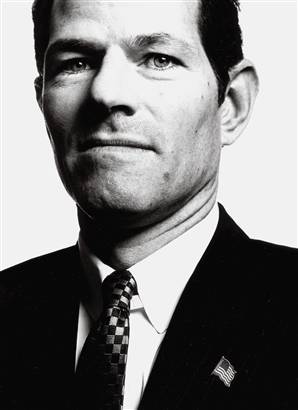
Tonight on CNN: “Ratings Grab” with Eliot Spitzer

Spitzer
Photo from mhpbooks.com

The Most Trusted Name in News is putting it’s prime time show in the hands of a guy who broke laws at night that he enforced by day.

Phil Donahue accused MSNBC of trying to “out-fox Fox” when it fired him in 2003.  He meant it as a slight to MSNBC’s political leanings, but it goes a little deeper than that. Fox’s format is based on a complement of breaking news during the day (often car chases and such) and heavy opinion and analysis during primetime.  (It should be noted that Donahue was 175 at the time MSNBC canceled him, though.)

There’s the formula for news success in primetime.  Fox got to the top of the ratings with O’Reilly and Hannity and Colmes (before Colmes bounced); MSNBC – which was all but dead in the early 2000s – rebounded with Olbermann and Maddow on the other side of the aisle.

Neither network’s success is purely ideological – each of those four programs features strong, unique personalities.  News channel viewers aren’t looking for news at all; they’re looking for people they either love or love to hate. Enter the Love Gov – who, despite the fact that he’ll be sitting opposite a Pulitzer Prize winner, will be the headliner on what is ostensibly a news show.

But will another personality show succeed?

If everyone in a shopping mall is selling shoes, and you open up a new shoe store, folks are going to need a compelling reason to leave their existing shoe store and come to yours – especially since they already have so many options.  And selling the same types of shoes as every other store doesn’t give you an advantage.  So the new show will have to have more than just a controversial name to bring in viewers.

Of course, if Spitzer interviews Marion Barry every now and then, CNN might have ratings gold on their hands.

McChrystal unclear

That General McChrystal’s rift with his commander-in-chief was aired in a Rolling Stone interview is a troubling sign for more reasons than simple insubordination.

NewsBusters notes the airing of previous greivances – although none of the situations are quite as bad as McChrystal’s.  But the Washington Post draws an interesting comparison that puts the real problem in context:

Much of McChrystal’s career was spent in the military’s secretive special operations community, which has little experience dealing with the press… The general’s relationship with the press contrasts significantly with that of Gen. David Petraeus, who spent a far larger segment of his career in Washington and is far more practiced in dealing with reporters and the civilian leadership.

Disagreements are not wrong, but clumsily airing those disagreements is.  Unless he’s angling for a dismissal and job as a military expert talking head (or a spot on the GOP ticket in 2012), McChrystal’s misstep seems to come from his lack of savvy in how his comments would look in print.

Combined with the previous criticism, the clear trend is that PR expertise is becoming a requirement fgor military leadership – along with an aptitude for killing people and breaking things, which is the core competency of the military.

Or at least, it’s supposed to be.

The smart move would have been to turn down the interview with Rolling Stone.  In this failing, McChrystal can’t be alone – surely there were several more information officers who thought the interview would be a good idea.  The concept of the “celebrity general” isn’t new – heck, we have one printed on our most-used currency, and several Presidents have followed.  But as with any project or campaign, the folks who speak to the press should be ready to do so – and not pushed out there because of an overly-politicized media environment that seems to demand that everyone have something to say.  It isn’t fair to the general, the troops, or the people watching the news.

It’s one thing to dress a spokesman up in a warrior’s fatigues for the cameras; it’s much more difficult to stuff a warrior into the civilian role of PR director.

3 more books that would make good movies

On today’s edition of his podcast, Matt Lewis and I talk about movies – and, like the guys from the Muppet Show who complain from the balcony, we do our share of kvetching because all the big summer blockbusters are either sequels (like Shrek 4 and Sex and the City 2) or remakes of iconic pieces of 1980s pop culture (like the A-Team and the Karate Kid).

Earlier this week, news broke that filming had actually started on another adaptation – a silver screen version of Ayn Rand’s Atlas Shrugged.  Aside from having a network of near-guaranteed customers through the tea party movement, Atlas Shrugged is a great story and Rand’s a good, vivid writer.  Outside of being 1100 pages, it’s a book made for the movies.

Matt and I ran out of time before we could get to some other books that ought to be in pictures:

Advise and Consent

We started talking about this briefly.  Yes, this would technically be a remake, but the 1962 adaptation of Allen Drury’s 1959 novel about the politics of personal destruction missed the mark so completely that it deserves a second look.  Set against the backdrop of a Cold War (which the Soviet Union is apparently winning), Drury’s original work involves a Secretary of State nominee with alleged ties to the Communist party.  Drury’s work is decidedly character-driven, and the central theme is how people sometimes get lost in the machinations of winning and losing in political battles.

Witness

This has nothing to do with Harrison Ford or the Amish.  Whittaker Chambers was an editor for Time Magazine who risked his credibility and livelihood to out Alger Hiss as a former Communist.  (The Congressional hearing actually served as the inspiration for Advise and Consent.)  But Chambers’ life leading up to that – acting as a member of the Communist party and establishing Soviet ties – is actually thrilling, as is his and his family’s middle-of-the-night desertion from the Communist Party.  Because of the histrionics of Rep. Joe McCarthy, the extent of Soviet operations in America is one of the under-told stories of the twentieth century.  Obviously, it didn’t work out so well for them (with the only major casualty being Apollo Creed), but it is fascinating that they tried.

Reagan’s Revolution

This one might be a made-for-HBO joint, because of a limited appeal, but political junkies would eat up Craig Shirley’s account of Reagan’s 1976 primary challenge to former President Gerald Ford.  The decision to challenge a sitting President from your own party is difficult enough, but the Reagan campaign had plenty of issues, such as early fundraising challenges and lack of institutional support.  This could be educational – many Americans don’t understand how the Presidential primary process works – but, like any hotly contested primary, it makes for a great story.

Of course, based on Hollywood’s interest in making anything original or non-3D, I expect to see trailers for Airwolf, Go-Bots, and a remake of the remake of Dukes of Hazzard before Witness comes to a theater near you.

But we can hope, right?  What favorite books would you like to see made into a movie?

No one likes citizen journalism

This week may be called anti-indie journalism week.  Consider these three stories:

Each story, in its own way, is based on a lack of understanding of the modern media landscape.  But door number three is the most egregious.

Risen’s comments about bloggers could be appropriate – the downside of a media universe with more outlets is that there are more outlets tat just spew crap, and it is up to the reader to be more discerning.  He doesn’t summarily dismiss the concept of blogs, though he does come off as an arrogant schmuck.  Similarly, the “student” who questioned Etheridge never identified himself as a reporter, which would have been the smart thing to do.

The FTC, on the other hand, is just way out in left field.  The document, which outlines options such as granting tax-exempt status or other allowing reporters to copyright “hot news.”  Really, though, these recommendations are simply reactions to the fact that print newspapers have fallen on hard times:

Although many of the issues confronting journalism cut across different news media platforms, such as broadcast television and radio, most of the discussion in this document will use the perspective of newspapers to exemplify the issues facing journalism as a whole. Studies have shown that newspapers typically provide the largest quantity of original news to consumers over any given period of time. We include within the term “newspapers” online news websites run either by an existing newspaper or by an online-only news organization.

That an online news aggregator like the Drudge Report would seem to count as a newspaper to the FTC isn’t the biggest problem.  The big problem is the concept of establishment journalism, which is the bedrock of the FTC report: professional and somehow specially qualified reporters paid to investigate and package stories for consumption by the reader.   That mindset is what leads a reporter for a prominent newspaper to lash out at internet critics or a Congressman to take umbrage with a question from a reporter without a press pass.

When the reporter or the politician does thinks that way, it’s just stupid.  When the FTC thinks that way, it could also become the law.

What’s spreading faster, oil or failure?

A local television station in Louisiana ran into some problems trying to interview some spill cleanup workers – and in doing so, highlighted one more way BP is not helping itself in its response to the spill:

Cleanup workers might not be media savvy, but they remain the best face that BP could put on their cleanup efforts (certainly better than a clearly foreign CEO).  Whether the glorified rent-a-cop in this video (and his backpack-clad sidekick) are following orders that contradict BP’s official statements on press availability or they are carrying out a legit safety function isn’t clear.  What is clear is that they are not communications experts.

At least BP can rest easy knowing that, no matter how sophisticated their PR strategy, they weren’t coming out of this oil spill clean.  The administration’s inability to escape criticism is particularly fascinating (and means I have to eat a plate of oil-soaked crow).

Most recently, the President compared the oil spill to 9/11.  Perhaps that’s his way of getting tougher on BP – as the polls are apparently asking for him to do.  The problem of course, is that the President is doing everything he can do – and that just isn’t that much.  After coming into office with promises that he could make government work for people again, the spill underscores that government simply isn’t qualified for the job.

Ultimately, that puts the US government and BP on two sides of the same coin.  Both wind up despised by the people – BP for wielding too much power; the government for impotence.