More of the year in YouTube

In a post on Pundit League yesterday, I followed up on last week’s best political videos of 2010 with another list.  You could call them the worst political videos of 2010, but that doesn’t really do justice to how bad they were.  These videos missed their marks so badly that you couldn’t help but send them to friends or post them to Facebook – entries included Dale Peterson’s angry, minute-long rant about why he should be Alabama’s next Ag Commissioner, a Florida state representative’s Kenny Loggins ripoff, and (of course) Demon Sheep.

After I finished the post, I noticed a running theme in the five worst political videos of 2010 that wasn’t present in the five best: each of the “bottom five” were official campaign videos (and, significantly, only one of those candidates won).  In contrast, only two of the “top five” were released by campaigns.  That isn’t surprising; judgement is often clouded in the stress of an election campaign, and some candidates simply stumble.  Those on the outside looking in sometimes have a clearer head and are able to drive points home more directly.

Another common thread was length.  The “bottom five” averaged 2:18 each, while the top five made their points in an average of 1:03 – less than half the time. That figure is not insignificant: 40% of online viewers abandon videos within a minute.


Landmark day for the internet

The FCC will pass net neutrality regulations today.  The movement for “net neutrality” has been gaining steam in recent years, and the government wants to ensure that no entity will be able to censor what internet users can access:

When asked if that made it a crime for Assange, Biden said Assange could be proven to have violated the law when it turned out he encouraged or helped Bradley Manning, U.S. intelligence analysts believed it was behind the leaking of the document of the United States Embassy.

I’m sorry, my mistake: that’s Vice President Joe Biden describing how the US Government is going to drop the hammer on Julian Assange for the stuff he put up on the internet.  That’s apparently completely unrelated.


A brief history of online video and elections, 2004-2010

This week, YouTube announced their top videos of 2010.  In a post over at Pundit League, I followed up with my Top Five Political Videos of 2010.

My top five is far less scientific than YouTube’s, and for good reason: while YouTube’s list is a Casey Kasem-style countdown of the videos that had earned the most views, my list ranks videos based on significance.  In other words, I’m wasn’t trying to measure videos based on their impact on the campaign, but rather use the videos as a barometer of what went on in 2010.

In fact, online video offers a glimpse into the big story of every election cycle since 2004:

2004: This Land – Pre-YouTube, JibJab’sWoody Guthrie send-up featured President Bush and John Kerry neatly summarizing campaign themes.  Bush claimed Kerry looked like Frankenstein, Kerry said Bush was a right-wing nutjob.  That the close election turned as it did was evidence that Bush’s accusations rang truer with the electorate.

2006: Macaca – George Allen could very well have been the Republican candidate for President in 2008 if he hadn’t slipped up and unwittingly used a word that may or may not be an ethnic slur.  As it was, Allen became the symbol of a Republican establishment so cloistered and out of touch they could point to the one guy at a rally who was holding a video camera and say something offensive.

2008: Yes We Can – Between this independent video and Shepherd Fairey’s “Hope” illustration, the 2008 Obama was smart enough to seize on creative elements produced outside the campaign structure.  From early in the primary season, the Yes We Can video established the Obama candidacy as more than a simple election effort, but as a once-in a generation opportunity to change politics as usual.  More than any online network or social media outreach, the core theme of a new and different kind of politics growing up added excitement and motivation to Obama’s support.

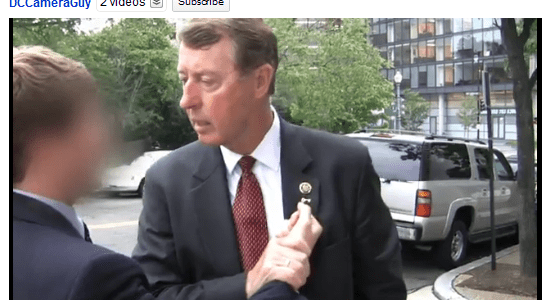
2010: A Generational Choice / Rep. Bob Etheridge covers the Who – Marco Rubio captured the themes of tea party movement in his impassioned web commercial for his successful Senate bid.  And Bob Etheridge’s hilarious confrontation of an investigative student underscored the Democrats’ arrogance, comfort with power, and lack of connection with voters.

Notably, all videos on this list save Senator-elect Rubio’s “A Generational Choice” were produced outside of the “official” campaigns, coming from interested and passionate citizens; in fact, two captured politicians in  moments when they let their guard down.  Yet intentionally or not, each video captured an important element of the election cycle.  Elections aren’t (usually) won or lost based on a two-minute internet video; but video can act as a signpost and give some indication of how a campaign is going.

This may be why there are so many homeless people in DC

A fascinating Washington Post story this morning chronicles the activism of Eric Sheptock, a self-described homeless homeless advocate.  Staying in shelters and using public computers, Sheptock has developed an online presence to give a voice to the plight of the homeless.

And if that hasn’t helped him land a job or a permanent place to stay, it’s because Sheptock wants it that way:

Sheptock, 41, wouldn’t take a 9-to-5 job that compromised his advocacy efforts or the long hours he spends tending to his digital empire, he says. He wouldn’t move out of the downtown D.C. shelter where he has slept for the past two years if it would make him a less effective voice for change.

“Too many homeless people have come to look up to me, and I can’t just walk away from them,” he says in a recent blog post titled “Tough Choices.” “My conscience won’t allow it.”

Having 5,000 friends on Facebook is more important to Sheptock than having $5,000 in the bank. And he lives with the consequences of that every day.

Though he doesn’t seem bothered by being unemployed and homeless, the consequences aren’t limited to Sheptock.  The article describes Sheptock sitting in a shelter’s computer lab, keeping up with his advocacy efforts while other homeless people look for jobs or take online typing courses.  The reality of limited resources means that every minute that Sheptock sits at the computer doing his advocacy work takes a minute away from someone taking the first small steps to escape the cycle of homelessness and poverty.

No matter how important Sheptock’s work is, the first question becomes about what that computer lab – or any other resources – are used for.  And that’s when the real shame of the article becomes apparent: Sheptock seems trapped by an advocacy culture that accepts homelessness as a permanent way of life.

Despite a violent childhood that resulted in what doctors assumed would be lifelong social and mental disabilities, Sheptock is clearly one bright cat.  He understands networking, he understands communication, and he understands the need to speak out for the voiceless.  With the right direction, Sheptock could lead an successful organization (measuring success as number of people helped rather than money, which is the yardstick Sheptock would most likely use).

Along the way, he could wind up with a steady job doing what he loves and a stable home.  Hopefully, Sheptock will get the help he needs to get there.

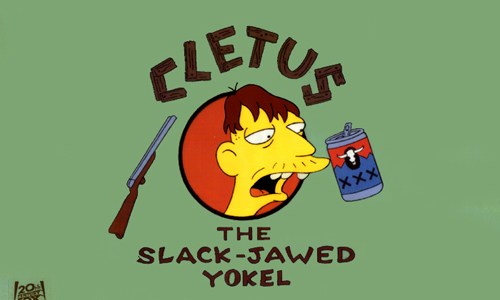
Sorry, Cletus, “open government” is closed to you

Amid the celebration of the President’s as-yet-unproven open government initiative this week came the concept of a tool for government to “elicit expert citizen participation.” From TechPresident:

Rather than throwing the doors open to public participation, the wisdom here is that crowdsourcing platforms can be targeted and nuanced enough to extract very high quality input from a select group of people.

If the “ExpertNet” program actually happens (it’s still in the early development stages), it would strike a bit of a blow against the concept of open government.  Though it could expand participation for certain citizens, the message to most people seems to be to keep your mouths shut and let the smart people take care of the country.

But, like any communication from the voters  that finds its way to a government agency, much depends on the person opening the mail.  So even if all citizens are allowed to participate, the pencil-pusher will separate the grain from the chaff.  At the risk of sounding cynical, bureaucrats (whether left or right) will consider the opinions they agree with to be more “expert.”

As for the other side… why would anyone need to hear from those slack-jawed yokels?

Media bias exposed!

Playing the Julian Assange to Fox News’ Western Civilization, Media Matters intercepted emails that showed media bias at Fox News:

At the height of the health care reform debate last fall, Bill Sammon, Fox News’ controversial Washington managing editor, sent a memo directing his network’s journalists not to use the phrase “public option.”

Instead, Sammon wrote, Fox’s reporters should use “government option” and similar phrases — wording that a top Republican pollster had recommended in order to turn public opinion against the Democrats’ reform efforts.

Sammon suggested various terms, which stressed that the public option would be government-run health insurance – when in reality, the public option would in fact be run by… well, the government.

But the intrepid bias-hunters at Media Matters have a point – words make a difference.  Media Matters’ counterpart on the right, Newsbusters, has taken this on by pointing out that maintaining current tax rates is not an increase in government spending – a misnomer used by CNN and other media outlets.  (As an aside, Republicans have failed miserably in defining the expiration of the “Bush Tax Cuts” as a de facto tax increase.)

While factually accurate, describing the public option as “government health care” does convey a negative connotation.  But maybe the question isn’t in the word choice among Fox News correspondents.  A better question, perhaps, might be posed to the Administration and the President: Why hide the government health care program behind euphemisms?

Shut up, I have freedom of speech

Don’t want to do business with WikiLeaks?  You might find your website getting hacked, like MasterCard or Paypal.  (And you might also get hacked if you represent women who are making accusations of rape, depending on whom they accused.)  Participants in what has been dubbed “Operation Payback” seem just organized enough to take some time off from complaining about not being able to get unlimited movies and music for free online to wreak a little bit of havoc.

The hackers’ concerns are echoed by DataCell, a company that helps WikiLeaks process payments.  DataCell is getting ready to sue Visa and MasterCard to force them to work with WikiLeaks, according to CEO Andreas Fink:

We strongly believe a world class company such as Visa should not get involved by politics and just simply do their business where they are good at. Transferring money. They have no problem transferring money for other businesses such as gambling sites, pornography services and the like so why a donation to a Website which is holding up for human rights should be morally any worse than that is outside of my understanding.

Visa is hurting Wikileaks and DataCell ehf in high figures. Putting all payments on hold for 7 days or more is one thing but rejecting all further attempts to donate is making the donations impossible. This does clearly create massive financial losses to Wikileaks which seems to be the only purpose of this suspension. This is not about the brand of Visa, this is about politics and Visa should not be involved in this.

To summarize what Fink appears to be driving in his sputtered sentence fragments: Visa should not be involved in politics, therefore Fink will use a political entity (the judicial system) to force them to do business with a political organization (WikiLeaks).  Fink and Operation Payback are each quick to defend WikiLeaks’s right to publish unpopular speech, but intolerant of other groups’ choices to simply take their business elsewhere.

The whole mess is a dress rehearsal for the coming clash on American internet regulations like net neutrality. If a site (like WikiLeaks) depends on other companies (like ISPs, hosting companies, and donation platforms) for their survival, will those companies be forced by law to support WikiLeaks and their mission?

The Fonz doesn’t need a handout

The headline, “Winkler honored by AARP” seems to bring on so many jokes (because really, how depressing that the Fonz is being honored by AARP?).

It time to replace the popular catchphrase “Aaaay” with “Heh?  Speak louder?”

It’s a good thing his office is in the bathroom.

Hope Fonzie didn’t break his hip when he jumped the shark.

Then I read the article, and it turns out I was wr… I was wr… well, you get the picture.  Henry Winkler has actually been an advocate for stroke victims.  And, much like the Fonz, he doesn’t go looking for handouts:

[U]nlike most celebrity visitors, he won’t be seeking any help from Capitol Hill. In fact, he doesn’t think he needs any.

“At the moment, you don’t need the government,” Winkler told POLITICO. “They’ve got their problems that they need to deal with. What we need is awareness – just person to person. Like playing Telephone, you just pass it on. … I am trying to pass it on, and it is really worthwhile to me.”

No word on whether a quick smack with the heel of Winkler’s fist to the annual appropriations bill could create a balanced budget (like when he ended segregation), but at least he’s doing his part.

The Politics of Public Comments

The White House’s Open Government Initiative – President Barack Obama’s directive to for more transparency and public involvement in the often-arcane machinations of the Executive Branch – celebrates its first birthday today. The initiative’s first year has been largely overshadowed by legislative fights, but the real test will come in 2011 – when the Obama Administration likely becomes the Ministry of Regulation.

The President faces a split Congress in 2011, and lawmaking wasn’t all that easy when he had strong majorities in both Houses. Beyond that, he faces the dual risks of losing his far-left base and alienating the middle by allowing the Republicans to play some offense with their House majority. Of course, any revolutionary bill passed by a Republican House will be shot down by the Democratic Senate – and then the Democrats become the sideline-sitting, Slurpee-sipping, “Party of No” just in time for the 2012 election – freeing them up to hand down edicts on everything from internet regulation to carbon emissions.

What is a President to do?

The answer lies in the alphabet soup of agencies throughout the Executive branch, including such classics as the FCC, the FTC, the SEC, and everyone’s favorite, the EPA. Each has regulatory authority delegated from Congress. And, unlike the President’s allies in Congress, bureaucrats will not have to face voters in 2012.

Regulatory agencies are not immune to public input, but they sure can make it a challenge.

For instance, anyone who has been involved in a land use issue which included federal oversight knows the mass of documents required. Each document (along with draft, final, and supplemental versions) must have its own public comment period, where citizens can submit their thoughts.

In theory, that should mean more avenues for input; in practice it is confusing and redundant. Making the process more complex is the fact that each agency may count comments differently; a regulator has the discretion to decide if a comment should be dismissed for being immaterial. Individual bureaucrats have tremendous interpretive power over the public input that crosses their desk.

Is the grassroots wave against big government – and the nascent GOP House majority they produced – already backed into a corner? Far from it.

The American people haven’t fallen back in love with Washington quite yet, so the electorate is likely to listen to the case against shadow laws via bureaucracy. Grassroots activists should participate in comment periods whenever they can – and make sure elected policymakers get a copy of the same letter or message that went to the regulators. (It isn’t as much fun as a protest or an angry phone call to your local Congressional office, but it’s still important.)

House Republicans can and will schedule oversight hearings. These hearings should include scrutiny over public participation opportunities Members of Congress should hold regulators accountable for providing opportunities for public access to the process – and for being receptive to the will of the people.

The Administration, which so dearly values open government, will be happy to comply – right?

Cross-posted at Pundit League.
How the GOP could heart Huckabee


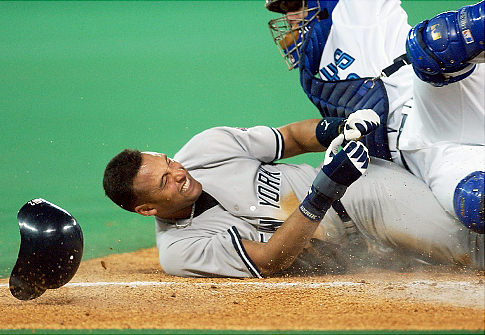
(Image from the NY Daily News) Ken Huckaby injures Derek Jeter with a knee to the shoulder on Opening Day, 2003. Though this play had no material effect on the Yankees' 2003 season or Jeter's career and Huckaby is no relation to Mike Huckabee, the world needs to remember that this happened.

In 2008, Republican Presidential candidates climbed all over one another to compare themselves to Ronald Reagan.  It’s a sorry speech to give when the best case you have to convince voters is to try to reduce a dead President (even a great one) to a buzzword.  But if Mike Huckabee does find a way to the Republican nomination (and Politico reports the polls look good for him) he would at least be able to draw a comparison between himself and Reagan on their respective political paths.


During his oh-so-close 1976 primary challenge to former President Gerald Ford, Reagan was clearly identified in the mold of Barry Goldwater’s limited government, libertarian-themed brand of conservatism.  His 1980 path to victory was made possible by heavy inroads to southern social conservatives – then called the “Moral Majority” and today categorized as “values voters” – and convincing them to abandon favorite son Jimmy Carter.  Huckabee’s second-place showing in 2008 came from conservatives uneasy about supporting John McCain (or socially liberal Rudy Giuliani or Mormon Mitt Romney).

After being the voice of social conservatives in 2008, Huckabee’s path to the nomination in 2012 will mean courting the small-government voices – who, like the values voters from 1976-1980, have become more organized and vocal through the tea party movement.

From a policy perspective, that may not be hard for Huckabee.  Other candidates (as Politico notes) supported TARP while Huckabee opposed it, and his chief rival Romney has the albatross of his Massachusetts health care plan.

Easy right?  Not so fast.  For as much hype as the tea party received, the Club for Growth flexed some pretty big muscles in the 2010 thanks to their small-government, anti-establishment message taking a strong foothold among grassroots activists – and the Club is no friend to Huckabee.  While the Club as an organization probably couldn’t make or break a Huckabee candidacy, garnering support among Club supporters will be critical if Huckabee wants to have a legitimate comparison between himself and the Great Communicator.