And now, the real news about the fake news

The Onion debuts two cable television programs this month.  The fake newspaper turned fake internet news site presents a unique and specific genre of comedy – the obviously false presented as seriously real.  It’s similar but a bit different from slapstick comedies like Airplane! or Spaceballs.  It’s closer to Saturday Night Live’s Weekend Update as delivered by the more deadpan performers, like  Kevin Nealon in the early 1990s.  The 1970s spoof talk show Fernwood 2 Night and the long-forgotten short-lived Nick at Night television review series On the Television may be the best examples, even if short-lived.  Because the audience is in on the joke but the performers are apparently not, it depends as much on performance as it does on clever writing.

Since this type of humor is so specific, it’s unsurprising that the Onion’s television ancestors met with limited success.  What has given the Onion its staying power?

The Onion – which started as a small, regionally distributed newspaper in 1988 – became an early example of the internet’s power of viral distribution.  It may be difficult for a network television show to find the audience it needs to build a niche following; the Onion’s following grew over time as its stories were forwarded by email.  When the Onion’s television shows air this month, they will have already recruited their niche audience online over approximately 15 years.

There’s one final layer to peel back, and that’s the Onion’s business model based on generating large amounts of free, high quality content.  The term “viral growth” is overused, but is applicable to the Onion’s rise through virtual word-of-mouth.  The content brought traffic, and the traffic brought money – both in terms of advertising, book deals, and now television shows.  None of it would have worked without something that was worth sending in an email to a friend.  Funny always came first – and the money followed.  Other small, regionally distributed newspapers who are struggling may want to take note.
The era of the Citizen-[INSERT PROFESSION HERE]

First, came the citizen-journalists – the bloggers in their pajamas whose reporting overturned Walter Cronkite’s old chair and dumped out Dan Rather.

Then came the citizen-politicos – the self-organizing crusaders who organized largely online but made a difference in the real world, giving alternating advantages to the left in 2006 and 2008 and the right in 2010.

And now come… the citizen scientists.  An English gas worker has discovered four new planets by analyzing public data at his home computer.  No telescope, no university observatory, no office – just a proficiency for math and the love of the game.  It’s legit, too, as the University of California has given the discovery a seal of approval.

This may explain why people have been slow to support environmental regulations with drastic economic impacts.  The previous argument – “Trust us!  We’re SCIENTISTS!” – can’t carry weight.


Revisiting Willie Horton

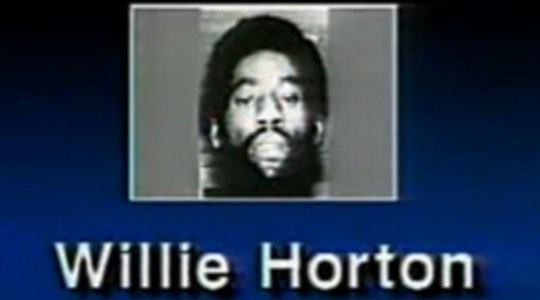
The Boston Herald reported that a Massachusetts cop-killer could prove to be “Mitt Romney’s Willie Horton.”  According to Politics Daily, a sex offender in Minnesota just may end up as “Tim Pawlenty’s Willie Horton.”  Last year, Michelle Malkin chronicled a pair of violent criminals vying for the title of “Mike Huckabee’s Willie Horton.”

The stories themselves are sickening, but will likely have little impact on the 2012 primaries.  Still, the coverage highlights something interesting in the way Willie Horton’s name is invoked.  In each case, a criminal who was pardoned by a governor committed a second offense – mimicking Willie Horton, who incredibly got a weekend off from a Massachusetts prison while Michael Dukakis was governor and used his time off to commit more violent crimes.

For these Republican candidates, referencing Horton alludes to incompetence in governing.

But when Sharron Angle used extremely questionable imagery in an ad attacking Harry Reid, Horton was brought up again.  In 2006, a hilarious ad against hard-partying former Congressman Harold Ford incredibly led to the H-word being bandied about by a few racial arsonists.

In these cases, Horton is synonymous with political dirty tricks – and worse yet, dirty tricks which prey upon voters’ racism.  This, of course, goes back to the famous 1988 attack add on Dukakis:

This might simply be the observation of someone who didn’t grow up in the South, but pictures of Horton are not very scary.  The ad’s shock value lies in the subtitles, which graphically detail Horton’s crimes.  Horton’s race is irrelevant if the commercial’s impact relies on the Horton’s crimes, and the breakdown in law enforcement governance that allowed them to happen.

So either Willie Horton symbolizes race baiting, or Willie Horton symbolizes incompetence.  It cannot be both.

Now, if you want a really racist commercial… well, there’s always room for Jello.


Why 2010 is the Year of Facebook

Time Magazine ignited some controversy this month by naming Mark Zuckerberg their Person of the Year.  Zuckerberg deserved the award, said Time, for “connecting more than half a billion people and mapping the social relations among them, for creating a new system of exchanging information and for changing how we live our lives.”

Indeed, Zuckerberg did all that – but he arguably did so in 2003, when he invented Facebook in his Harvard dorm room.  So why is he the person of the year seven years after actually making this contribution to humanity?  Or did Time discover Facebook only weeks after their grandmother, as “Julian Assange” suggested?

There are actually two questions here, so there are naturally two answers.  Question 1 is why Time gave Zuckerberg the award this year; and Question 2 is why 2010 is The Year of Facebook.

Culturally speaking, the last half of 2010 is a perfect storm of Facebook hype.  The Social Network was a big hit and created some preliminary Oscar buzz.  The next time you watch live TV, watch how many commercials end with URLs for a Facebook page.  And Zuckerberg scored headlines with his pledge to donate half his fortune to charity and $100 million to Brick City, NJ.  The success of social gaming in 2010 is linked directly to those games using Facebook as a platform for popularity – even non-gamers have seen their friends’ Farmville, Cityville, or Mafia Wars updates pop up in their own news feeds.

In short, Facebook is everywhere in a way it hasn’t been in years past.  But why is 2010 REALLY the Year of Facebook?  It turns out, there are some numbers to back it up.

Facebook’s traffic numbers surpassed Google’s in 2010.  That indicates a huge difference in how people are consuming information – instead of searching the internet and relying on Google’s algorithms to tell them what’s important, they are relying more and more on friends (a point I made yesterday in a post on Pundit League).  Trusting friends is something people are most likely predisposed to do; Facebook makes it easier to do that.

More important, Facebook continues to report increases in ad revenue.  It’s one thing for a website to have a good and popular idea; it’s quite another for a website to make money.  That Facebook has proved it could do the latter is no small feat and guarantees solvency for the foreseeable future.

So 2010 was more than just the year when America collectively noticed Facebook; it was the year when Facebook set down stakes as a permanent entity that gave legitimacy to its foothold in the public consciousness and culture.

And for that, Mark Zuckerberg really is the Person of This Year

Finally, Larry David can rest easy

Far be it from me to cast aspersions on a man in a cape, but I think Larry David’s New York Times column “supporting” the extension of the current tax rates might have been facetious.  (For David, of course, a higher tax rate would have minimal impact thanks to the residual checks that keep rolling in every time a rerun of Seinfeld is replayed.)

Well, now David and other folks who feel like they are earning too much can give back thanks to GiveItBackForJobs.org.  The site helps you calculate how much the government is allowing you to keep thanks to the extended tax rates, and lets you donate that money to a charity:

Americans who have the means should refuse to surrender to Senate Republicans. We should act, together, to give back our Bush tax cuts, by making donations to organizations that promote fairness, economic growth, and a vibrant middle class. GiveItBackforJobs enables joint action, by all visitors to this site, to redirect our Bush tax cuts to the wise and just programs that our government would promote if it had not been hijacked. As more and more Americans do so, GiveItBackforJobs will begin to replicate good government policy, outside the government and free from the grip of Senate Republicans.

You tell ’em!

Digging around the site, one thing stuck out to me (and also to the Wall Street Journal’s James Taranto): the organizers are all Ivy Leaguers, either professors or graduate students.  Clearly, these are smart people who understand that the economy will only grow if the people who are getting these tax cuts do something with the money they receive.

As a humble, state-educated supporter of their efforts, I submit the following suggestions for how the super-rich fat cats can help give back their tax cuts to create jobs and/or advance the social good:

1.  If they own a business, hire more people for crying out loud!

2.  Spend money on goods and services.  This will create more jobs for the people who produce them.

3.  Whatever you do, don’t give your money to some willy-nilly, inefficient group with poor oversight and accountability that wastes billions upon billions of dollars each year.

$#!% Ed Rendell says

Outgoing Pennsylvania Governor Ed Rendell was displeased by the cancellation of the Sunday night Eagles-Vikings game:

“My biggest beef is that this is part of what’s happened in this country,” Rendell said.

“We’ve become a nation of wusses. The Chinese are kicking our butt in everything,” he added. “If this was in China do you think the Chinese would have called off the game? People would have been marching down to the stadium, they would have walked and they would have been doing calculus on the way down.”

Because, as we all know, Asians are good at math, right?  While the Governor talks off the cuff somewhat frequently – especially now that he probably isn’t facing re-election, it’s somewhat incredulous that no one is complaining about that calculus remark, isn’t it? It’s a good thing he didn’t go with any of these rejected lines:

  • “If this was in Ireland, people would have been stumbling down to the stadium, taking occasional breaks to urinate in the snow, and singing ‘Fields of Athenry’ the whole way down.”
  • “If this was in Germany, people would be goose-stepping down to the stadium, taking over the Polish section of Philadelphia on the way down.”
  • “If this was in China, people would have been marching down to the stadium, doing calculus, because the murderous Communist regime would beat them to death if they didn’t.”

Still, the Chinese stereotyping wasn’t the dumbest thing about Rendell said.  For that, you have to consider that, in the Governor’s mind, cancelling a football game symbolizes a nation lacking in backbone.

See, if I were looking for an example of a lack of discipline, I might pick having a state government that’s $8.4 billion in debt, or a state debt tally that grew 39% during its current governor’s eight-year term.  In fairness, the governor that approved all that spending isn’t necessarily a wus; maybe he’s just bad at math.

Too bad he isn’t Chinese.

Obama’s play action

The big story at the infrequently traveled intersection of sports and politics this week is the President’s congratulatory phone call to Philadelphia Eagles owner Jeffrey Lurie about installing renewable energy equipment at Lincoln Financial Field.  During their discussion, they also mentioned quarterback Michael Vick, which seems to be drawing more attention.

There’s no word yet on whether the President will be calling the other team just north of DC on I-95, the Baltimore Ravens.  While the gave Vick a second chance, the Ravens have taken in wide receiver Donte’ Stallworth, who served a month for DUI manslaughter.  They have also stuck by linebacker Ray Lewis, who beat the rap on murder charges by rolling on his accomplices and went on to have an excellent career and win a Superbowl.  (By the way, did you know that a group of ravens is actually called a murder?)  On the other hand, Obama might be slow getting there – after all, the Eagles really gave Vick his second chance about a year and a half ago.

So why make this call now?

A possible explanation is to give his enemies something to talk about, and allow them to use a slow news cycle to work themselves into a lather about something that is, essentially, a non-issue.  Coming after a productive lame duck session, this could permit the administration to take a high road while its opponents chatter about Vick and dogfighting.  It would be the messaging equivalent of a draw or a play action pass – tricking the opposition into being out of position.

Of course, this isn’t a football game, but electoral politics – and voters don’t largely pay attention.  Riding a winning streak as the President is, why expose your administration to negative messages by wading into issues that people actually care about?

Joanne Bamberger of AOL’s Politics Daily points out that Pennsylvania’s electoral votes will be in serious play in 2012, and suggests Obama is building good will now.  That certainly makes sense, but 2012 is still a long way away, and making nice with fickle Eagles fans now won’t necessarily pay dividends in 22 months.  Heck, if Vick throws four interceptions in a playoff game, or isn’t playing with the Eagles next year, those comments may do nothing in 22 months. Much more important to Obama, as Bamberger alludes, is Lurie’s checkbook – which, when not being used to pay rehabilitating NFL players, makes large donations to Democrat presidential candidates.  And keep in mind that Lurie, and not the administration, made the details of the conversation public.

It is most likely that the President did not intend for the conversation to be public – not that it was secret, but just that it wasn’t intended as a public statement.  And, in that private conversation – which was, remember, also about renewable energy – the President took some time to blow even more smoke up the rear end of a potential donor.

It must have worked – otherwise, Lurie wouldn’t be so proud about spilling the beans.